

Garage doors represent one of the largest moving objects in your home, weighing between 150 and 400 pounds depending on materials and size. Each year, thousands of Americans suffer injuries related to garage door malfunctions, with approximately 20,000 emergency room visits documented according to the U.S. Consumer Product Safety Commission. Understanding and implementing proper garage door safety practices protects your family, prevents costly repairs, and extends the lifespan of your system. Whether you're a homeowner on Bainbridge Island or managing commercial properties throughout Kitsap County, these safety principles apply to every garage door system.
Understanding Garage Door Safety Hazards
The mechanics of modern garage doors involve several components that can pose risks when improperly maintained or operated. Springs store tremendous tension energy, cables hold hundreds of pounds under load, and automatic openers move heavy panels along tracks multiple times daily.
Common Injury Scenarios
Crushing injuries occur when individuals fail to keep hands and fingers clear of door sections, hinges, and tracks during operation. The pinch points between door panels create particular danger as sections fold during opening and closing cycles.
Entrapment incidents happen when garage doors close on people, vehicles, or pets. These situations often result from malfunctioning safety sensors or improperly adjusted force settings on automatic openers.
Spring-related accidents represent some of the most severe garage door injuries. Torsion springs operate under extreme tension and can cause serious harm if they break suddenly or if someone attempts DIY repairs without proper knowledge and tools.
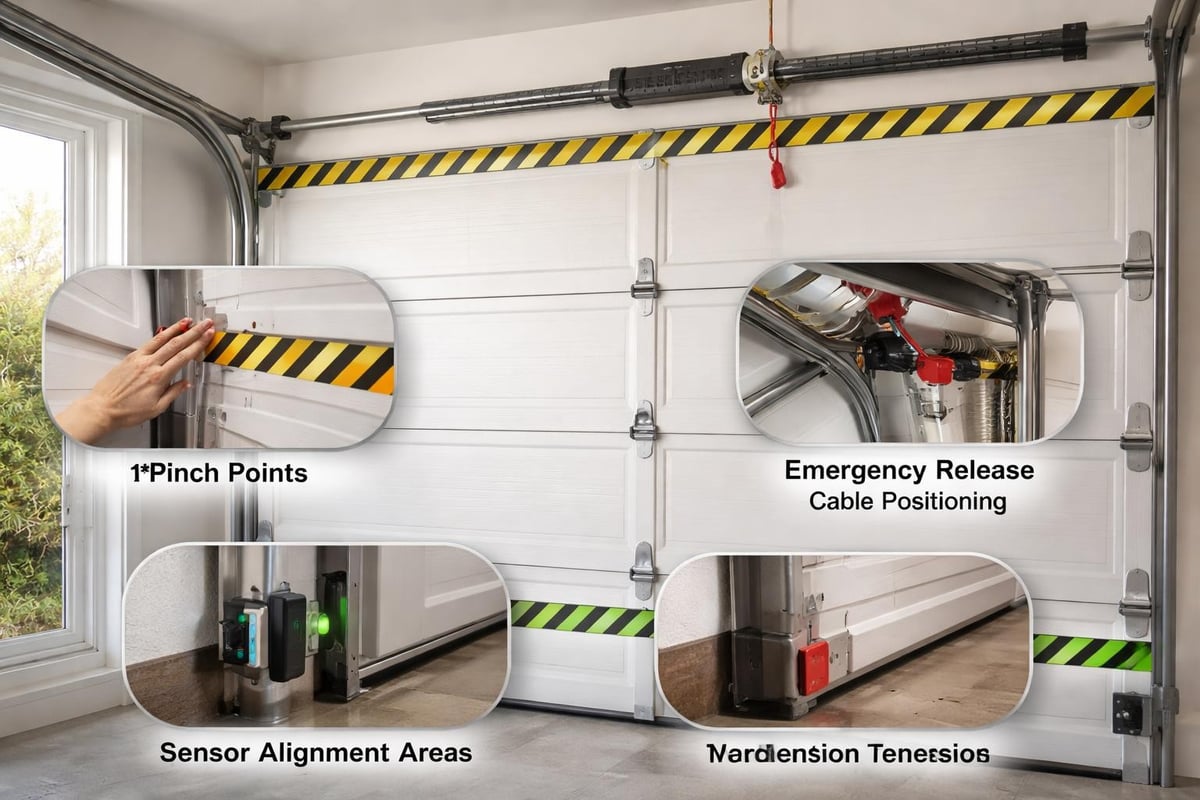
According to safety guidelines from the Door & Access Systems Manufacturers Association, proper installation and regular maintenance significantly reduce these risks. Professional technicians understand load calculations, spring tension requirements, and safety feature calibration that keep systems operating safely.
Critical Safety Features Every Garage Door Needs
Modern garage door systems incorporate multiple safety mechanisms designed to prevent injuries and property damage. The U.S. Consumer Product Safety Commission mandated specific safety features for automatic garage door openers manufactured after 1993, making these components standard on contemporary systems.
Auto-Reverse Mechanisms
Two distinct auto-reverse systems work together to stop and reverse door movement when obstructions are detected:
- Photoelectric sensors project an invisible beam across the door opening, typically six inches above the floor
- Mechanical force sensors detect resistance when the door contacts an object during closing
- Timer mechanisms reverse the door if closing takes longer than expected, indicating potential obstruction
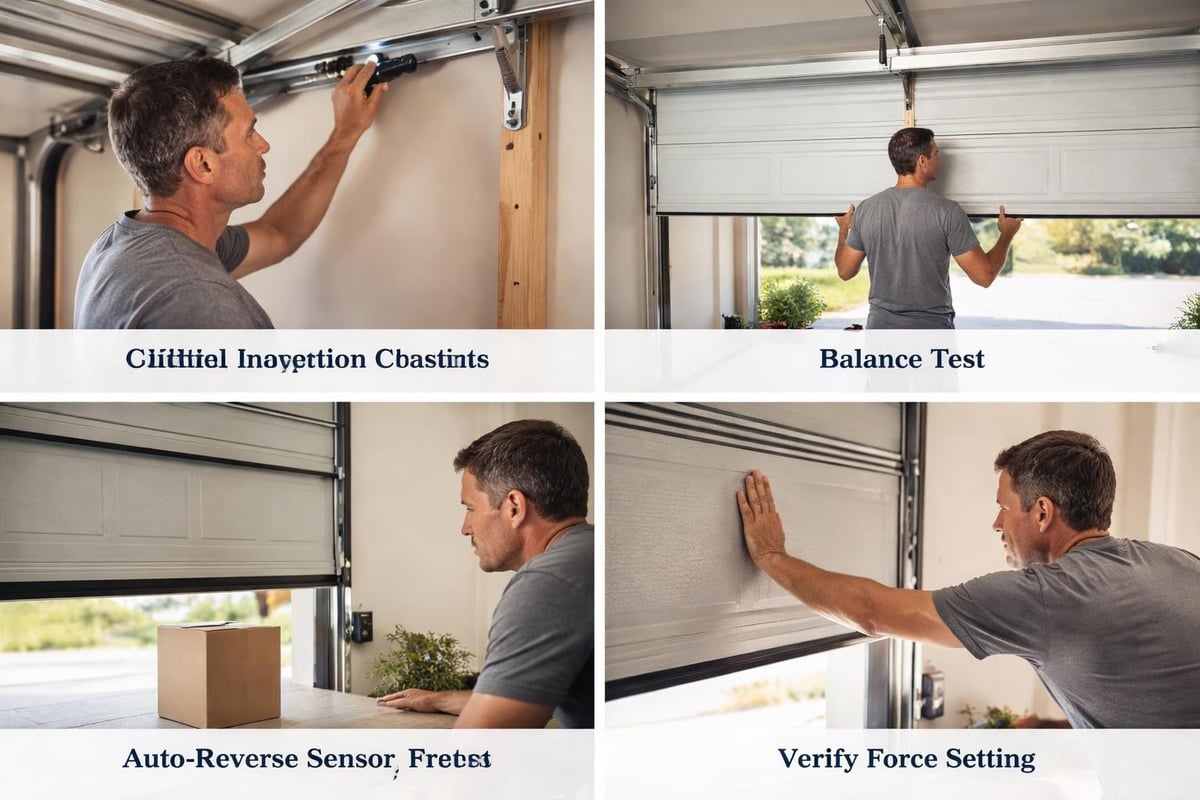
Testing these features monthly ensures they function correctly. Place a solid object like a cardboard box in the door's path and initiate closing. The door should reverse immediately upon contacting the object or breaking the sensor beam.
Emergency Release Systems
Every automatic garage door opener includes a manual release mechanism, usually a red handle hanging from a cord attached to the trolley carriage. This release disconnects the door from the opener, allowing manual operation during power outages or system failures.
Important emergency release considerations:
- Test the release mechanism quarterly to ensure smooth operation
- Keep the handle accessible but high enough that children cannot reach it
- Never pull the release cord while the door is moving
- Understand that releasing a door in the open position without proper counterbalance can cause rapid, dangerous closing
The safety information from Amarr emphasizes that homeowners should familiarize all household members with the emergency release location and proper operation procedures.
Monthly Testing Procedures for Optimal Garage Door Safety
Regular testing identifies potential safety issues before they become dangerous situations. Dedicate fifteen minutes each month to performing these essential checks, preferably on the same calendar day to establish a consistent routine.
Visual Inspection Protocol
Begin with the door in the closed position and examine all visible components systematically. Look for:
- Frayed or damaged cables showing wear, rust, or broken strands
- Worn rollers with cracks, chips, or wobbling during operation
- Loose hardware including bolts, brackets, and track fasteners
- Track alignment issues such as gaps, bends, or separation from mounting surfaces
- Weather seal condition checking for cracks, gaps, or deterioration
Document any concerns and contact professional garage door repair services for evaluation. Many issues that seem minor can escalate rapidly under the stress of daily operation.
Balance Test Procedure
A properly balanced garage door remains stationary when stopped halfway through its travel range. Imbalanced doors place excessive strain on openers and create safety hazards.
Step-by-step balance testing:
- Disconnect the opener using the emergency release handle
- Manually lift the door to approximately waist height
- Release the door gently and observe its movement
- Note whether it stays in position, rises, or falls
- Reconnect the opener after testing
| Test Result | Indication | Action Required |
|---|---|---|
| Door stays in place | Proper balance | No adjustment needed |
| Door rises upward | Spring tension too high | Professional adjustment required |
| Door falls downward | Insufficient spring tension | Professional adjustment required |
| Door moves erratically | Multiple issues possible | Professional inspection needed |
Spring adjustment and repair should only be performed by trained technicians due to the extreme forces involved. According to Wikipedia’s garage door safety section, improper spring work causes numerous serious injuries annually.
Sensor Alignment Verification
Photoelectric sensors require precise alignment to function correctly. Environmental factors including temperature changes, vibration, and accidental contact can shift sensor position over time.
Test sensor alignment by closing the door and passing your leg through the sensor beam path. The door should immediately reverse. If it continues closing, check that sensor lights are illuminated (typically green or amber) and that lenses are clean and unobstructed.
Child Safety and Garage Door Operation
Children face particular risks around garage doors due to their size, curiosity, and incomplete understanding of mechanical dangers. The Albertson Fire Department’s safety recommendations emphasize that adult supervision and education form the foundation of child safety around garage doors.
Wall Control and Remote Safety
Mount wall-mounted control buttons at least five feet above the floor, placing them out of reach for young children while remaining accessible for adults. This height prevents children from operating the door unsupervised while still allowing convenient access for household members.
Remote control security measures include:
- Storing remotes in vehicles rather than leaving them accessible to children
- Using keychain remotes that adults carry rather than leaving openers in cup holders
- Enabling vacation mode on openers when away for extended periods
- Installing modern openers with rolling code technology to prevent signal copying
Modern garage door opener systems often include smartphone connectivity and integrated cameras, allowing parents to monitor garage door status remotely and receive alerts when the door operates.
Teaching Garage Door Awareness
Children old enough to understand should learn specific garage door safety rules:
- Never run under a moving garage door
- Keep fingers away from door sections, especially between panels
- Never hang from or play with garage door handles
- Always notify an adult before entering or exiting through the garage
- Understand that garage doors are not toys or play equipment
Consider posting simple, illustrated safety rules near the interior garage door entry point as a visual reminder for children and visitors.
Professional Installation and Maintenance Benefits
While homeowners can perform basic maintenance tasks like cleaning tracks and lubricating moving parts, professional service ensures critical safety components receive proper attention. GarageTek’s installation guidelines highlight that proper installation prevents many common safety issues from developing.
What Professional Inspections Cover
Certified technicians evaluate aspects of garage door safety that require specialized knowledge and equipment. Annual professional inspections typically include:
- Spring tension measurement and adjustment using calibrated tools
- Cable condition assessment identifying internal wire damage not visible to homeowners
- Opener force setting calibration ensuring proper sensitivity to obstructions
- Track alignment verification using levels and measurements for precision
- Hardware torque specifications tightening fasteners to manufacturer requirements
- Safety sensor calibration adjusting beam height and alignment tolerances
Professional services also identify components approaching the end of their service life, allowing proactive replacement before failures occur. This preventive approach saves money compared to emergency repairs and reduces safety risks from unexpected component failures.
When to Upgrade Garage Door Openers
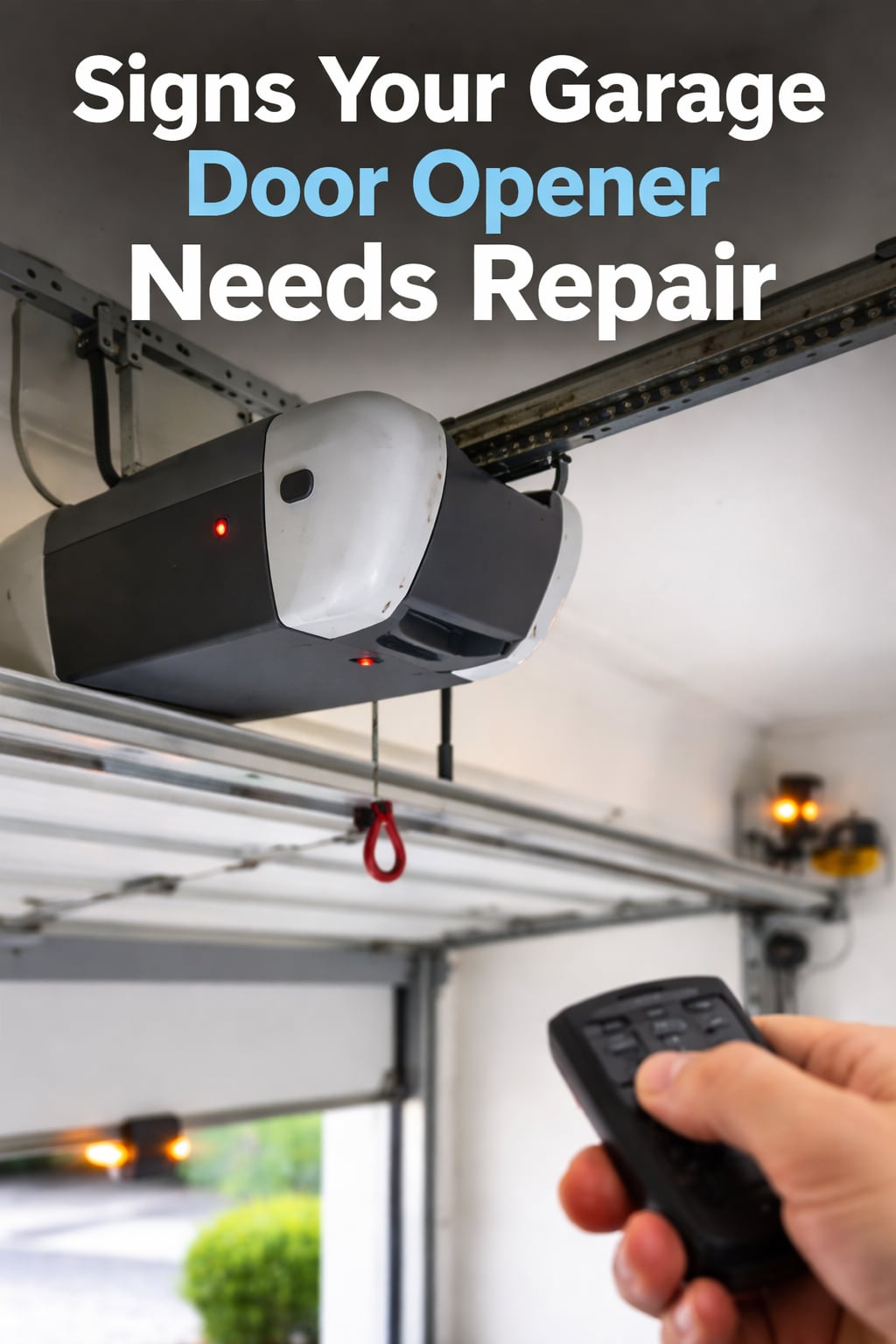
Older garage door openers manufactured before 1993 lack modern safety features required by current regulations. Professional garage door opener installation provides immediate safety improvements through contemporary systems equipped with photoelectric sensors, enhanced force sensitivity, and rolling code security.
Contemporary openers offer additional safety advantages including battery backup for operation during power outages, integrated lighting with motion sensors, and smartphone connectivity for remote monitoring. Belt-drive systems operate quietly, reducing noise-related disturbances while maintaining full safety functionality.
Seasonal Maintenance for Garage Door Safety
Kitsap County's climate presents specific challenges for garage door systems, with moisture, temperature fluctuations, and salt air affecting component longevity. Adapting maintenance routines to seasonal conditions preserves safety features and extends system life.
Spring Preparation Tasks
As temperatures warm, perform these maintenance activities:
- Lubricate moving parts including rollers, hinges, and springs with silicone-based lubricant
- Clean and lubricate tracks removing accumulated debris and applying appropriate lubricants
- Test weather seals ensuring bottom seals make complete contact across the garage floor
- Verify sensor function as spring cleaning activities may disturb alignment
Spring also provides an ideal time for professional inspections before the busy summer season. Balanced Garage Doors’ safety guide recommends scheduling annual professional service during mild weather months.
Winter Weather Considerations
Cold temperatures affect garage door operation through several mechanisms. Metal components contract, lubricants thicken, and weather seals become less pliable, all impacting smooth operation and safety.
Winter safety preparations:
- Switch to cold-weather lubricants rated for temperatures below 32°F
- Inspect weather seals for cracks caused by cold-induced brittleness
- Test auto-reverse features more frequently as snow and ice can interfere with sensors
- Keep the door's bottom seal clear of ice buildup that can damage the door or opener
Never force a frozen garage door open, as this can damage springs, cables, or the opener mechanism. If the door resists opening, check for ice along the bottom seal and carefully remove any frozen connections.
Common Safety Mistakes Homeowners Make
Even well-intentioned homeowners sometimes engage in practices that compromise garage door safety. Understanding these common errors helps you avoid potentially dangerous situations.
DIY Repair Pitfalls
Door Systems Metro Boston’s safety information identifies spring repair as the most dangerous DIY attempt. Garage door springs store enough energy to lift several hundred pounds, and improper handling can result in severe injuries.
Other risky DIY activities include:
- Adjusting opener force settings without proper testing protocols
- Replacing cables without appropriate tools and safety equipment
- Attempting track realignment without understanding structural requirements
- Modifying safety sensors or bypassing safety features
Professional technicians undergo training specific to garage door mechanics and safety procedures. Their expertise prevents injuries and ensures repairs meet manufacturer specifications and local building codes.
Ignoring Warning Signs
Garage doors communicate impending failures through various symptoms that require prompt attention:
| Warning Sign | Potential Issue | Safety Risk |
|---|---|---|
| Loud grinding noises | Worn rollers or bearings | Door derailment possible |
| Jerky operation | Spring imbalance or track issues | Sudden failure risk |
| Slow response time | Opener motor problems | Incomplete closing hazard |
| Visible cable fraying | Cable approaching failure point | Complete door collapse possible |
| Door reverses randomly | Sensor misalignment or opener issues | Entrapment or closure failure |
Addressing these symptoms promptly through professional garage door services prevents minor issues from escalating into dangerous failures or costly emergency repairs.
Advanced Safety Features in Modern Systems
Technological advances continue improving garage door safety through intelligent systems and enhanced monitoring capabilities. Homeowners replacing older systems benefit from these contemporary safety innovations.
Smart Opener Technology
Modern smart openers integrate multiple safety enhancements beyond basic auto-reverse functions. These systems include:
- Real-time operation monitoring through smartphone applications
- Alert notifications when the door opens, closes, or remains open beyond set timeframes
- Integrated cameras providing visual confirmation before closing
- Geofencing capabilities that notify homeowners when garage doors operate while they're away
- Scheduled operation limits preventing door operation during specific hours
These features particularly benefit families with teenagers learning to drive or households managing property access for service providers and contractors.
Battery Backup Systems
Power outages create safety concerns when garage doors become the primary entry point but cannot be operated automatically. Battery backup systems maintain full opener functionality during electrical failures, ensuring:
- Reliable exit capability during emergencies
- Continued sensor operation for safety
- Maintained security through controlled access
- Normal operation without manual release procedures
For homeowners throughout Kitsap County, where winter storms occasionally cause extended power outages, battery backup provides peace of mind and continued safety protection.
Commercial Garage Door Safety Considerations
Business owners and property managers face additional safety requirements for commercial garage doors, which typically operate more frequently and serve larger openings than residential systems. Amarr’s comprehensive safety tips apply equally to commercial contexts, though commercial applications require enhanced protocols.
High-Cycle Component Selection
Commercial garage doors often operate dozens of times daily, requiring components rated for higher cycle counts. Standard residential springs typically last 10,000 to 15,000 cycles, while commercial applications may require 25,000-cycle or 100,000-cycle springs depending on usage patterns.
Commercial safety enhancements include:
- Heavy-duty track systems designed for frequent operation
- Commercial-grade openers with advanced safety features
- Redundant safety sensors for increased reliability
- Professional maintenance contracts ensuring regular inspections
Businesses should maintain detailed service records documenting all inspections, repairs, and safety tests. These records demonstrate due diligence and help identify patterns that might indicate systemic issues requiring attention.
Employee Training Requirements
Commercial property managers should establish formal training programs ensuring all employees understand garage door safety protocols. Training should cover emergency procedures, proper operation techniques, and reporting processes for identifying safety concerns.
Regular safety audits verify that commercial garage door systems meet current safety standards and regulations, protecting both employees and customers from preventable injuries.
Creating a Garage Door Safety Plan
Comprehensive garage door safety requires planning, documentation, and consistent execution. Developing a written safety plan ensures all household members understand their responsibilities and know how to respond during emergencies.
Documentation Components
Your garage door safety plan should include:
- Testing schedule with monthly, quarterly, and annual tasks clearly defined
- Emergency contacts for professional repair services available 24/7
- Manufacturer information including model numbers and warranty details
- Maintenance history tracking all service, repairs, and component replacements
- Safety feature locations noting sensor positions, emergency releases, and control locations
Store this documentation in an accessible location and ensure all adult household members know where to find it. Digital copies provide backup access through cloud storage or email.
Emergency Response Procedures
Establish clear procedures for common garage door emergencies:
- Door won't close: Check for obstructions, verify sensor alignment, test manual operation
- Door closes partially then reverses: Examine tracks for debris, check spring balance, verify opener settings
- Loud noise during operation: Stop using the door immediately and contact professionals
- Door falls rapidly: This indicates spring failure and requires immediate professional attention
- Remote control malfunction: Use wall controls, check batteries, and verify no interference sources
Never attempt to use a garage door exhibiting serious malfunctions. The risks of injury far outweigh the inconvenience of temporary access limitations.
Garage door safety requires ongoing attention, regular testing, and professional maintenance to protect your family and property from preventable accidents. By implementing monthly inspection routines, educating household members about proper operation, and addressing warning signs promptly, you create a safe environment while extending your garage door system's lifespan. NextLevel Garage Co. serves homeowners and businesses throughout Kitsap County with professional garage door installation, repair, and maintenance services designed to keep your system operating safely and reliably. Contact our team today for comprehensive safety inspections and expert service that prioritizes your family's protection.
One Response