

Your garage door serves as more than just an entryway for vehicles. It protects your belongings, enhances curb appeal, and often represents one of the largest moving components of your home. When signs of wear, damage, or inefficiency appear, garage door replacment becomes a critical home improvement investment that affects both functionality and property value. Understanding the replacement process, knowing when to take action, and selecting the right professionals ensures you make informed decisions that benefit your home for years to come.
Recognizing When You Need Garage Door Replacment
Several clear indicators signal that repair is no longer sufficient and full replacement is necessary. Frequent breakdowns that require repeated service calls often cost more over time than investing in a new system. Visible damage such as dents, cracks, or panels separating from the frame compromises both security and insulation.
Safety and Structural Concerns
Safety issues demand immediate attention. If your door fails to reverse when meeting resistance, exhibits spring problems repeatedly, or shows signs of dry rot in wooden components, these conditions create hazardous situations for your family. The International Door Association provides comprehensive safety guidelines that homeowners should review regularly.
Structural concerns extend beyond cosmetic appearance:
- Foundation shifting causing misalignment that can't be corrected
- Rust or corrosion compromising steel doors in coastal climates
- Warping or bowing affecting door operation and seal integrity
- Broken or missing hardware that indicates overall system deterioration
Water intrusion around the door frame signals seal failure. Energy bills rising without explanation may indicate lost insulation efficiency.
Understanding Material Options for Your Replacement Door
Modern garage doors come in diverse materials, each offering distinct advantages. Steel doors dominate the residential market due to their durability, low maintenance requirements, and affordability. They resist warping, provide excellent security, and accept various finishes including wood-grain textures.
Comparing Popular Door Materials
| Material | Durability | Maintenance | Insulation | Cost Range |
|---|---|---|---|---|
| Steel | Excellent | Low | Good-Excellent | $$ – $$$ |
| Aluminum | Good | Low | Fair | $$ – $$$$ |
| Wood | Good | High | Fair-Good | $$$ – $$$$$ |
| Fiberglass | Fair-Good | Low | Fair | $$ – $$$ |
| Composite | Excellent | Low | Good | $$$ – $$$$ |
Aluminum doors work well for contemporary designs and resist rust, making them suitable for humid climates. However, they dent more easily than steel and provide less insulation. Wood doors deliver unmatched aesthetic appeal and customization potential but require regular maintenance including staining, sealing, and painting.
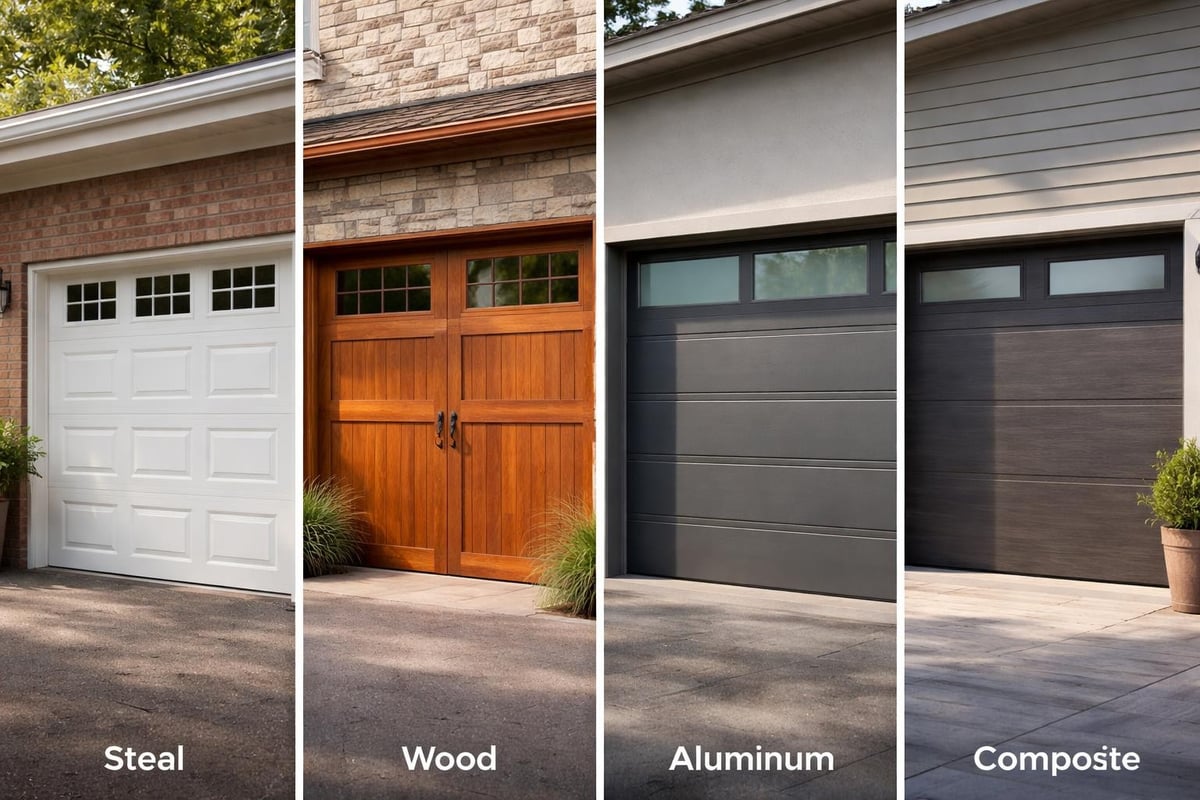
Fiberglass doors resist salt air corrosion exceptionally well, making them ideal for coastal properties like those on Bainbridge Island. Composite materials combine wood's appearance with enhanced durability and weather resistance. The Garage Door Handbook offers detailed specifications for each material type to support your research.
Evaluating Design Styles and Aesthetic Impact
Your garage door significantly influences your home's exterior appearance. Traditional raised-panel designs complement most architectural styles and remain popular across residential neighborhoods. Carriage house styles add character with decorative hardware and vintage-inspired elements that enhance curb appeal.
Contemporary homes benefit from modern flush-panel doors featuring clean lines and minimal ornamentation. Full-view glass doors create dramatic visual impact while allowing natural light into your garage space. Consider how your garage door replacment choice coordinates with existing architectural features including siding, trim, and roofing materials.
Color selection extends beyond personal preference. Neutral tones provide timeless appeal and broad market acceptance. Bold colors make statements but may limit future buyer interest. Many homeowners choose colors that complement their home's accent colors rather than matching the primary siding color.
Window Configurations and Natural Light
Window placement affects both aesthetics and functionality:
- Top-row windows maintain privacy while adding visual interest
- Full-length windows maximize light but reduce privacy and insulation
- Decorative glass balances light transmission with visual screening
- Insulated glass packages improve energy efficiency in windowed doors
Professional installers can help you choose the right garage door that aligns with your home's style and your practical needs.
Insulation and Energy Efficiency Considerations
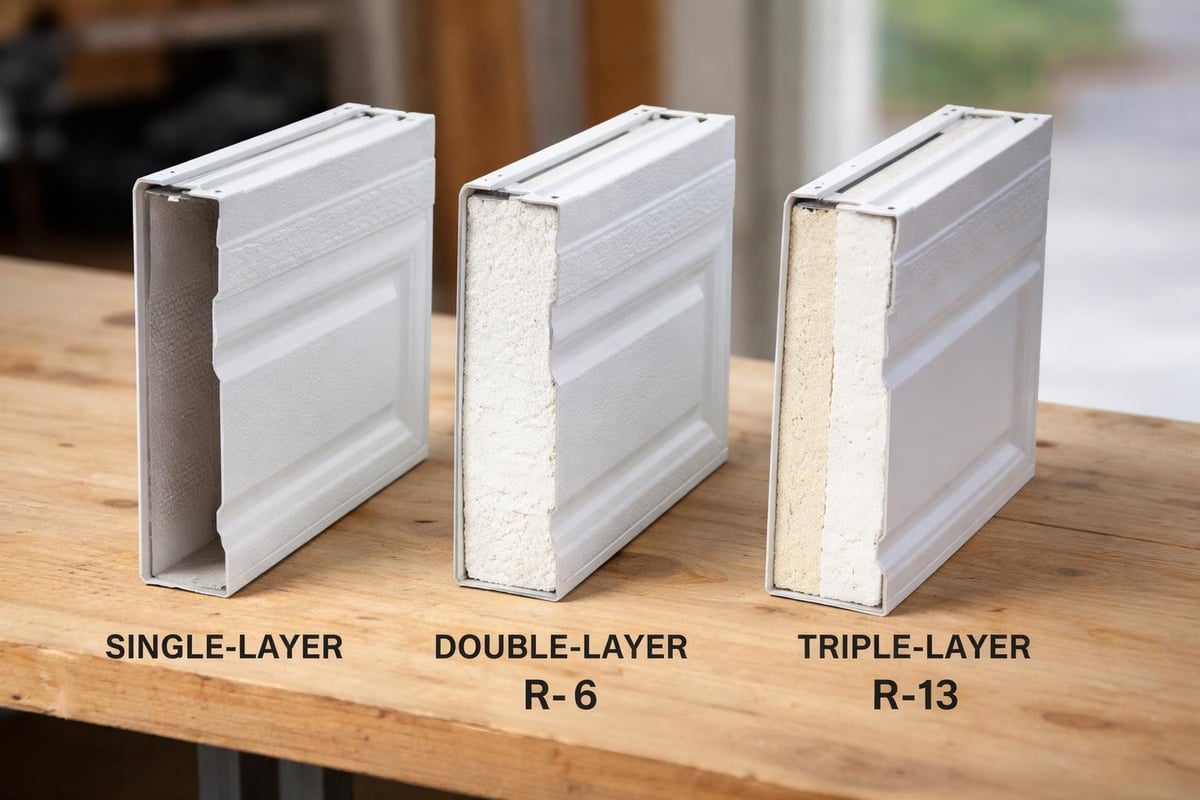
R-value measures insulation effectiveness, with higher numbers indicating better thermal performance. Uninsulated doors typically rate around R-0, while heavily insulated models reach R-18 or higher. Climate conditions in Kitsap County make insulation valuable for temperature regulation and energy conservation.
Single-layer doors consist of a single panel without insulation backing. They cost less initially but provide no thermal protection. Double-layer doors add insulation between an exterior steel panel and interior backing. Triple-layer construction sandwiches insulation between steel skins, delivering maximum efficiency and structural strength.
Benefits of Proper Insulation
Energy efficiency directly impacts comfort and operating costs. Insulated doors reduce heat transfer, keeping attached garages and adjacent living spaces more comfortable. They also minimize condensation buildup, protect stored items from temperature extremes, and reduce noise transmission.
Polyurethane foam insulation outperforms polystyrene panels in both R-value and structural reinforcement. The foam bonds to door panels, adding rigidity and reducing operational noise. According to research from the Door & Access Systems Manufacturers Association, insulated garage door replacment can provide measurable returns through improved home energy efficiency.
Professional Installation Process and Timeline
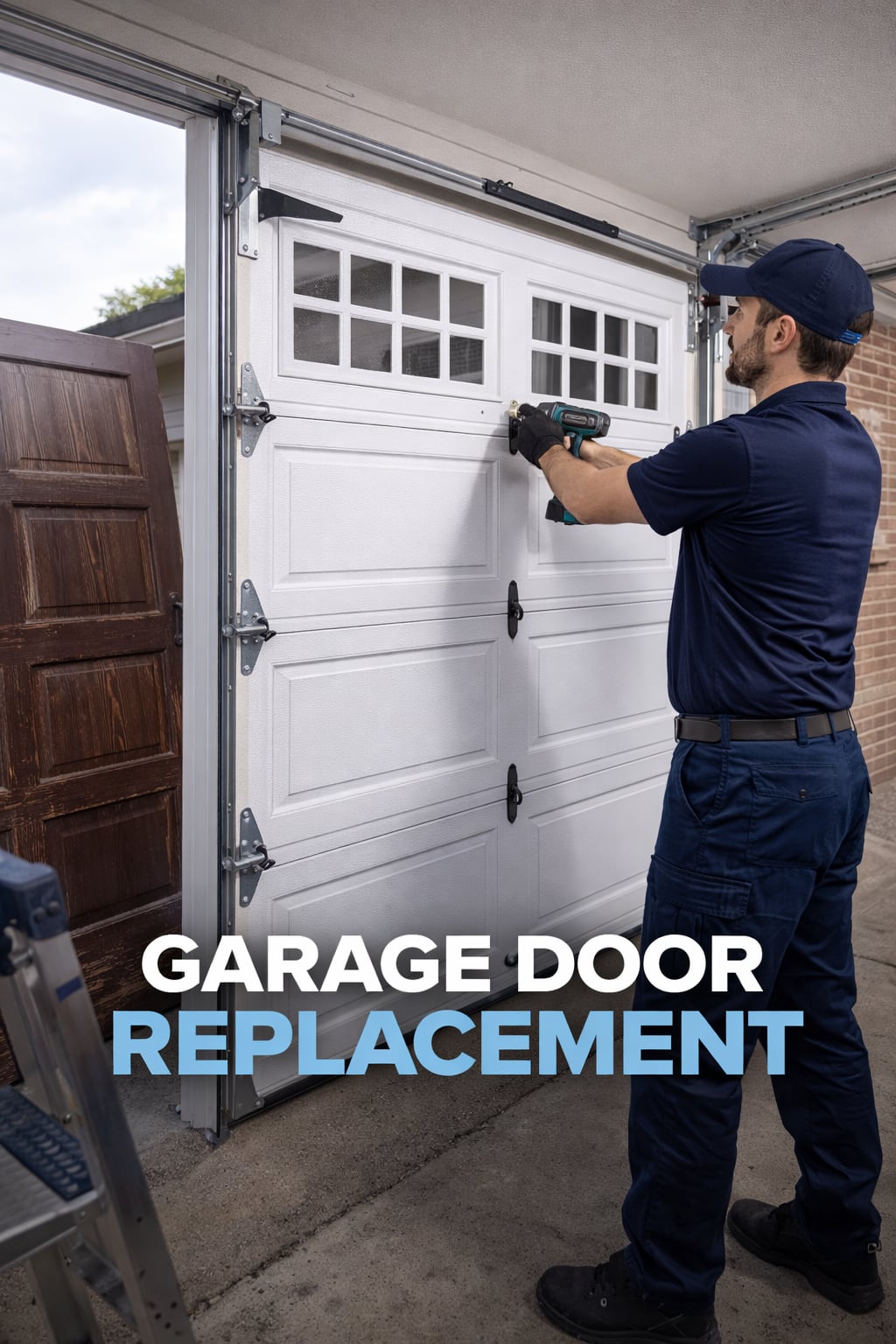
Quality installation ensures your new door operates safely and efficiently for its entire lifespan. Professional installation typically requires four to six hours for a standard two-car garage door replacment. Complex installations with custom features or structural modifications may extend to a full day.
The process begins with precise measurements. Even slight variations can cause operational problems. Professionals verify opening dimensions, headroom clearance, and side room requirements. They assess the condition of framing, evaluate spring requirements based on door weight, and confirm opener compatibility.
Step-by-Step Installation Sequence
- Remove the existing door and dispose of old components responsibly
- Inspect and prepare the opening including frame repairs if needed
- Install new tracks ensuring proper alignment and level positioning
- Assemble and position panels starting from the bottom section
- Install spring system with proper tension for door weight
- Mount and adjust hardware including rollers, hinges, and cables
- Connect opener system and program safety features
- Test operation through multiple complete cycles
- Adjust force settings to meet safety standards
- Review operation with homeowner and provide maintenance guidance
Garage Door Installation services from experienced professionals include removing old materials, proper disposal, and ensuring all components meet manufacturer specifications. Professional installers understand the critical importance of spring tension, track alignment, and safety sensor positioning.
Cost Factors and Budget Planning
Garage door replacment costs vary significantly based on size, material, insulation level, and design complexity. Basic single-car steel doors start around $600-$1,000 including installation. Standard two-car insulated steel doors typically range from $1,200-$2,500. Premium materials and custom designs can exceed $5,000-$8,000 or more.
Additional factors affecting final costs include:
- Opener replacement if your existing unit is incompatible or outdated
- Structural repairs to framing or header components
- Electrical work for new outlets or circuit upgrades
- Custom hardware and decorative elements
- Window additions or specialty glass options
- Smart technology integration for remote monitoring
Understanding Return on Investment
Garage door replacment consistently ranks among the highest-ROI home improvements. Current market data shows homeowners recoup 85-95% of replacement costs upon resale. Beyond financial returns, new doors provide immediate benefits including improved security, enhanced aesthetics, and better energy efficiency.
Financing options make quality doors accessible. Many manufacturers and contractors offer payment plans. Home equity lines, personal loans, and credit programs provide additional funding sources. Comparing total costs rather than just upfront pricing helps identify the best long-term value.
Selecting a Qualified Contractor
Choosing the right professional determines your project's success. Research starts with verification of proper licensing, insurance coverage, and local business standing. Selecting a trusted garage door company requires evaluating multiple factors beyond price alone.
Experience matters significantly in garage door work. Companies with established track records understand local building codes, climate considerations, and product performance characteristics. They maintain relationships with quality manufacturers and access ongoing technical training.
Request and check references from recent customers. Online reviews provide insight into customer service quality, project completion rates, and problem resolution approaches. The guide to choosing garage door companies emphasizes the importance of thorough contractor evaluation.
Key Questions for Potential Contractors
- How long have you been performing garage door replacment work?
- What brands and models do you recommend for my specific needs?
- Does your estimate include all materials, labor, and disposal fees?
- What warranty coverage applies to both products and installation?
- How do you handle unexpected complications or additional costs?
- Can you provide proof of current licensing and insurance?
- What is your typical timeline from order to installation?
Local companies serving Kitsap County understand regional weather patterns, building requirements, and common architectural styles. They respond quickly to questions and provide accessible service for future maintenance needs.
Warranty Coverage and Long-Term Protection
Comprehensive warranty coverage protects your investment. Manufacturer warranties cover defects in materials and workmanship, typically ranging from one year for basic components to lifetime coverage for major structural elements. Installation warranties guarantee proper workmanship and usually extend one to five years.
Read warranty terms carefully. Understand what circumstances void coverage, required maintenance procedures, and claim processes. Some warranties transfer to new homeowners while others remain with the original purchaser. Premium doors often include better warranty terms reflecting manufacturer confidence in product durability.
Maintenance Requirements for Warranty Compliance
Regular maintenance preserves performance and ensures warranty validity:
- Monthly visual inspections checking for wear, damage, or unusual operation
- Quarterly lubrication of moving parts including rollers, hinges, and springs
- Semi-annual balance tests verifying proper spring tension
- Annual professional inspection identifying potential issues before failure
Documentation matters for warranty claims. Keep installation receipts, warranty certificates, and maintenance records organized. Photograph any damage immediately and contact your contractor before attempting repairs. For comprehensive guidance, visit NextLevel Garage Co. for professional maintenance services.
Smart Technology Integration Options
Modern garage doors accommodate advanced technology features enhancing convenience and security. Smartphone control allows operation from anywhere, providing peace of mind when traveling or away from home. Automatic closing timers prevent accidentally leaving doors open overnight or when departing.
Battery backup systems maintain operation during power outages. This feature proves particularly valuable in areas experiencing frequent weather-related power interruptions. Integrated security cameras monitor garage access and provide recorded evidence of any unauthorized entry attempts.
Popular Smart Features for 2026
| Feature | Benefit | Approximate Cost |
|---|---|---|
| Wi-Fi Connectivity | Remote access and monitoring | $50-$150 |
| Battery Backup | Operation during outages | $75-$200 |
| Integrated Camera | Visual monitoring and recording | $100-$300 |
| Voice Control | Hands-free operation | $0-$50 (with existing system) |
| Activity Alerts | Notification of door operation | Included with Wi-Fi |
| Guest Access Codes | Temporary entry for visitors | Included with smart openers |
The GarageDoorGuides Knowledge Center provides detailed information about integrating smart technology with various door systems. Compatibility varies by opener model, so verify specifications before purchasing add-on features.
Timing Your Replacement Project
Seasonal considerations affect both installation conditions and pricing. Spring and fall offer ideal weather conditions for installation work, with moderate temperatures and lower precipitation risks. However, these peak seasons may result in longer wait times and higher demand-based pricing.
Winter installations present challenges including cold temperatures affecting materials and installation crews. Some adhesives and sealants require specific temperature ranges for proper application. However, off-season scheduling often provides better availability and potential cost savings.
Summer projects benefit from long daylight hours and warm weather but compete with other home improvement projects for contractor availability. Emergency replacements driven by damage or failure obviously cannot wait for optimal timing, emphasizing the value of proactive maintenance and repairs.
Environmental and Sustainability Factors
Eco-conscious homeowners increasingly consider environmental impact when selecting garage door replacment options. Recycled steel content in door panels reduces resource consumption. Energy-efficient insulation decreases heating and cooling demands. Low-VOC finishes minimize harmful emissions.
Disposal of old doors affects environmental footprint. Responsible contractors recycle metal components and properly dispose of other materials according to local regulations. Some door manufacturers participate in take-back programs, reclaiming materials for reuse in new products.
Longevity represents a crucial sustainability factor. Investing in durable, high-quality doors reduces replacement frequency and associated environmental costs. Proper maintenance extends service life, maximizing the return from embodied energy and materials.
Local Building Codes and Permit Requirements
Building departments enforce codes ensuring safety and structural integrity. Most jurisdictions require permits for garage door replacment, particularly when modifying openings or electrical systems. Permit processes verify work meets current standards and allow inspection of completed installations.
Wind load ratings matter significantly in areas experiencing strong storms. Coastal locations may require reinforced construction and specific attachment methods. Fire ratings apply when doors connect garages to living spaces, requiring specific materials and construction methods.
Professional contractors handle permit applications and coordinate inspections as part of their service. They understand local requirements, maintain relationships with building officials, and ensure compliance with all applicable codes. For emergency garage door situations, understanding permit requirements prevents delays in restoring security and functionality.
Common Mistakes to Avoid
Homeowners often make preventable errors when planning garage door replacment projects. Prioritizing price over quality frequently results in premature failure, additional costs, and safety concerns. Cheap doors use inferior materials, inadequate insulation, and basic hardware that wears quickly.
Ignoring professional installation in favor of DIY approaches creates serious risks. Spring systems contain tremendous stored energy requiring specialized tools and knowledge for safe handling. Improper installation leads to operational problems, safety hazards, and voided warranties.
Neglecting to verify contractor credentials exposes homeowners to fraud, poor workmanship, and liability issues. Unlicensed contractors may lack proper insurance, leaving property owners responsible for injuries or property damage occurring during installation.
Overlooking long-term costs by focusing solely on initial purchase price ignores energy efficiency, maintenance requirements, and expected lifespan. A moderately more expensive door with better insulation and durability often provides superior value over its service life.
Coordinating With Related Home Projects
Garage door replacment often aligns well with other exterior improvements. Repainting or residing creates opportunities to refresh your home's appearance comprehensively. Coordinating colors and finishes ensures cohesive design throughout your property.
Driveway replacement or resurfacing pairs logically with door installation, as both projects involve access to the garage area. Combined scheduling may reduce overall disruption and potentially lower costs through coordinated contractor scheduling.
Interior garage improvements including professional floor coatings and custom storage solutions transform your garage into functional, attractive space. Completing door replacement first prevents damage to newly finished surfaces during installation work.
Investing in garage door replacment delivers immediate improvements in functionality, security, and curb appeal while providing long-term value through energy efficiency and reduced maintenance costs. Understanding your material options, evaluating design choices, and selecting experienced professionals ensures successful project outcomes. When you're ready to explore your garage door options with a trusted local partner, NextLevel Garage Co. serves Bainbridge Island and throughout Kitsap County with professional installation services, quality products, and the clear communication you deserve for this important home improvement investment.