

When your garage door will not open, it creates more than just an inconvenience. It can trap your vehicle inside, expose your home to security risks, and disrupt your entire daily routine. For homeowners throughout Kitsap County and Bainbridge Island, a malfunctioning garage door demands immediate attention and a systematic approach to diagnosis. Understanding the underlying causes and knowing which issues you can address yourself versus when to call professionals can save you time, money, and frustration.
Common Power-Related Issues
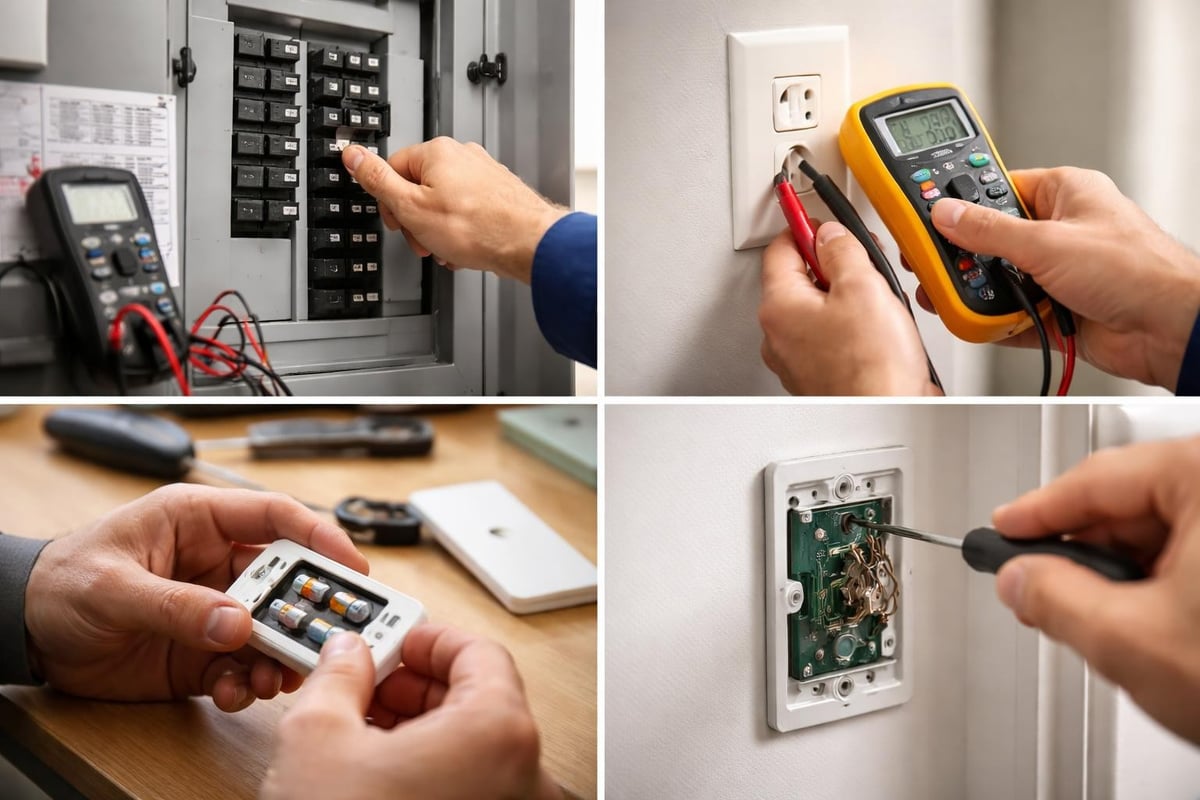
The first step when your garage door will not open involves checking the most obvious culprits: power supply problems. Many garage door failures stem from electrical issues that have simple solutions.
Circuit Breaker and Power Supply
Before investigating mechanical components, verify that your garage door opener is receiving power. Check your home's circuit breaker panel for any tripped breakers. A tripped breaker appears in a middle position between "on" and "off," or may be fully switched to "off." Reset it by switching it completely off and then back on.
Examine the outlet where your opener plugs in. Test it with another device to confirm it's functioning properly. The Home Depot’s troubleshooting guide recommends checking for GFCI outlets in newer installations, which may have tripped and require resetting.
Common power-related symptoms include:
- Complete silence when pressing the wall button or remote
- No lights on the opener unit
- Digital display screen completely dark
- Keypad unresponsive to touch or code entry
Remote Control and Wall Button Problems
Sometimes the garage door will not open because the signal never reaches the opener unit. Replace batteries in your remote controls and keypad, as weak batteries often cause intermittent or complete failure.
If the wall button works but remotes don't, you may need to reprogram them. Consult your opener's manual for the specific procedure, which typically involves pressing a "learn" button on the unit and then the remote button within 30 seconds.
Safety Sensor Misalignment and Obstruction
Modern garage door openers include photo-eye safety sensors that prevent the door from closing on objects, pets, or people. These same sensors can prevent opening if they're malfunctioned or misaligned.
Understanding Photo-Eye Sensors
Located on either side of your garage door near the floor, these sensors emit an invisible beam across the doorway. When this beam is interrupted or the sensors are misaligned, your garage door will not open or close properly. Liberty Home Guard explains that blocked sensors rank among the most frequent causes of garage door malfunctions.
Each sensor typically has an LED indicator light. When properly aligned, both lights remain solid. Blinking or dim lights indicate a problem requiring attention.
| Sensor Light Status | Problem Indicated | Solution |
|---|---|---|
| Both solid | Properly aligned | No action needed |
| One blinking | Misalignment | Adjust sensor position |
| Both off | Power issue | Check wiring connections |
| One dim | Dirty lens | Clean with soft cloth |
Cleaning and Realigning Sensors
Dirt, spider webs, or moisture can obstruct the sensor beam. Gently clean both sensor lenses with a soft, dry cloth. Avoid using harsh chemicals that might damage the lens.
If cleaning doesn't resolve the issue, check sensor alignment. Loosen the mounting brackets slightly and adjust the sensors until both LED lights remain solid. The sensors must point directly at each other to maintain the beam.
Broken or Damaged Springs
When your garage door will not open and you hear the opener motor running but see no movement, broken springs are the likely culprit. Garage door springs bear enormous tension and eventually wear out from repeated cycles.
Torsion vs. Extension Springs
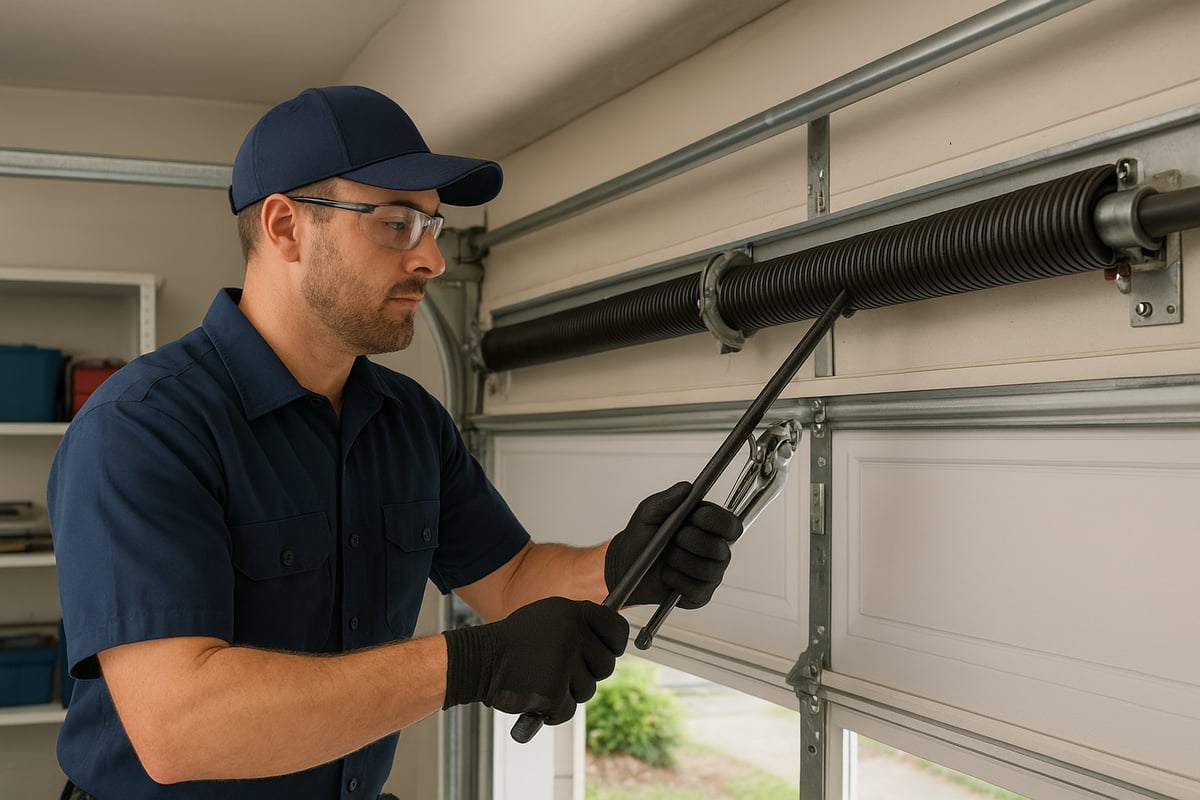
Torsion springs mount on a bar above the door and twist to provide lifting force. When broken, you'll see a visible gap in the spring coil. These springs are extremely dangerous and should only be replaced by professionals.
Extension springs run along the horizontal tracks on both sides. A broken extension spring hangs loose and may have a safety cable running through it. While slightly less dangerous than torsion springs, they still require professional expertise for safe replacement.
A typical garage door spring lasts 10,000 to 15,000 cycles. For a family using their garage twice daily, this translates to roughly seven to ten years. Professional garage door spring repair restores proper balance and ensures safe operation while eliminating the significant safety risks of DIY spring replacement.
Spring replacement involves specialized tools, precise measurements, and understanding of dangerous tension forces. Attempting this repair without proper training can result in severe injury or property damage.
Track Misalignment and Obstruction
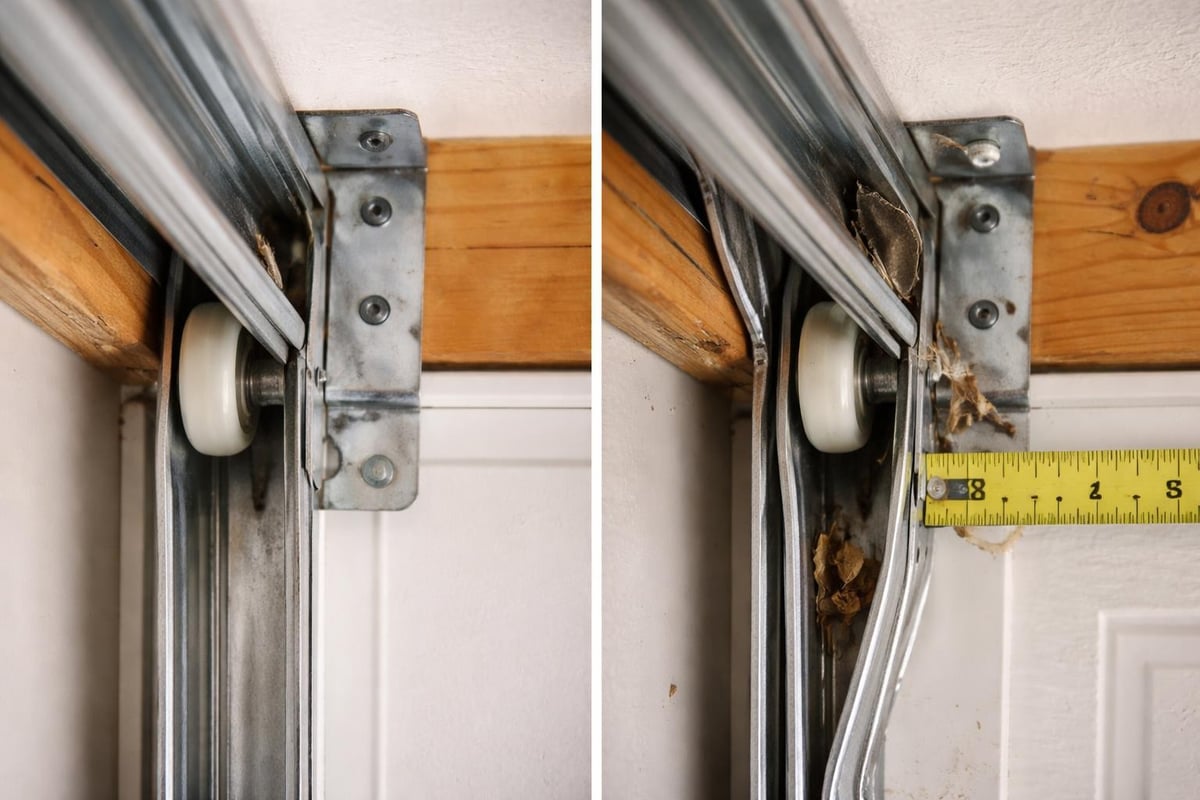
Garage door tracks guide the door's movement, and any deviation from perfect alignment causes operational problems. If your garage door will not open smoothly or makes grinding noises, examine the tracks carefully.
Identifying Track Problems
Visually inspect both vertical and horizontal track sections. Look for:
- Gaps between rollers and track
- Bent or warped sections
- Loose mounting brackets
- Objects or debris in the track path
- Rust or corrosion preventing smooth movement
Minor misalignments sometimes create enough friction to prevent the door from opening, especially if combined with other issues like worn rollers or inadequate lubrication.
Track Maintenance and Repair
Clean tracks thoroughly using a damp cloth to remove dirt, grease, and debris. Apply a silicone-based lubricant to the tracks, rollers, and hinges. Avoid using WD-40 or similar products, as they attract dirt and create sticky residue over time.
For minor bends, you might gently tap the track back into position using a rubber mallet. However, severely damaged tracks require professional replacement to ensure safe operation. Professional garage door repair services have the expertise to properly align tracks and replace damaged sections.
Opener Force Settings and Limit Adjustments
Your garage door opener includes adjustable settings that control how much force it applies and where it stops during operation. Incorrect settings can prevent your garage door from opening completely or at all.
Force Adjustment Requirements
North Penn Now highlights that improper force settings rank among frequent causes of garage door failures. Openers include force adjustment dials or screws, typically labeled "up force" and "down force."
If the force is set too low, the opener won't apply enough power to lift the door. If set too high, it may not detect resistance properly, creating safety concerns. Most manufacturers recommend setting force to the minimum level that reliably operates the door.
Testing force settings involves a simple procedure:
- Close the door completely
- Attempt to lift it manually (after pulling the emergency release)
- The door should lift smoothly with moderate effort
- Adjust opener force if the door feels too heavy or too light
Limit Switch Configuration
Limit switches tell the opener when to stop moving. If your garage door will not open fully or stops partway, limit switches require adjustment. This instructional video demonstrates the proper procedure for adjusting opener settings.
Locate the limit adjustment screws on your opener unit, usually marked "up limit" and "down limit." Make small adjustments (quarter-turn increments) and test after each change. The door should open completely and close fully without reversing.
Disconnected or Broken Cables
Lift cables work in conjunction with springs to raise and lower your door. When a cable breaks or comes off its drum, your garage door will not open properly or may hang unevenly.
Cable Inspection Points
Examine cables at several critical points:
- Bottom brackets: Where cables attach to the door
- Cable drums: Where cables wind around drums at the top
- Along the track: Checking for fraying or damage
- Pulleys: Verifying cables run smoothly through pulleys (extension spring systems)
A broken cable appears obviously damaged with visible fraying or complete separation. A disconnected cable has come off its drum or pulley but remains intact. Both situations require immediate professional attention.
Never attempt to operate a garage door with a broken or disconnected cable. The door's weight becomes unevenly distributed, creating severe safety hazards and potential for additional damage.
Manual Release and Mechanical Problems
Understanding your garage door's manual release mechanism helps during power outages and reveals certain mechanical issues. When your garage door will not open using the opener, the manual release provides an alternative.
Using the Emergency Release
The emergency release typically consists of a red handle attached to a rope or cable hanging from the opener's trolley. Pulling this handle disconnects the door from the opener, allowing manual operation.
Important safety considerations:
- Only use the emergency release when the door is fully closed
- Never pull the release with the door in a raised position
- Ensure no obstructions are under the door
- Have another person assist with heavy or unbalanced doors
After manually opening the door, attempt to lift it to shoulder height and release. A properly balanced door should stay in place or move slowly. If it falls quickly or feels extremely heavy, springs need attention.
Identifying Mechanical Failures
Wallen Garage Doors identifies six common reasons for garage door failures, many involving mechanical components. When testing manual operation, listen and feel for:
- Grinding or scraping sounds indicating track problems
- Binding or catching at specific points
- Extreme heaviness suggesting spring failure
- Uneven movement showing cable or balance issues
Mechanical problems often require professional diagnosis. What appears as one issue may actually be a symptom of multiple component failures requiring comprehensive repair.
Weather-Related Issues
Temperature extremes and weather conditions significantly impact garage door operation, particularly in the Pacific Northwest climate. Understanding these effects helps you address seasonal problems.
Cold Weather Complications
In freezing temperatures, several issues can prevent your garage door from opening:
- Frozen threshold: The door's bottom seal freezes to the garage floor
- Contracted metal components: Springs lose tension in extreme cold
- Thickened lubricants: Grease becomes stiff and inhibits movement
- Ice in tracks: Accumulation prevents smooth roller movement
Gently chip away ice from the door bottom using a plastic scraper. Never force the door open, as this can damage the bottom seal or bend panels. Apply heat using a hair dryer to thaw frozen components gradually.
Heat and Humidity Effects
Summer conditions create different challenges. Metal components expand, potentially causing binding. Humidity can affect wooden doors, causing them to swell and stick. Ensure adequate lubrication during summer months to compensate for increased friction.
Professional Diagnosis and Repair
Certain situations absolutely require professional expertise. Uplift Garage emphasizes the importance of professional assistance for complex repairs, particularly those involving dangerous components.
When to Call Professionals
Contact experienced technicians when encountering:
- Broken or damaged springs
- Severely bent or damaged tracks
- Cable failures or disconnections
- Opener motor malfunctions
- Structural damage to door panels
- Persistent problems after basic troubleshooting
Professional technicians possess specialized tools, replacement parts, and safety equipment necessary for dangerous repairs. They can also identify underlying problems that DIY troubleshooting might miss.
For homeowners in Kitsap County, working with local experts ensures familiarity with regional climate challenges and building codes. Emergency garage door repair services provide rapid response when your garage door will not open and you need immediate access.
Preventive Maintenance Benefits
Regular professional maintenance prevents many common problems. A comprehensive inspection includes:
| Maintenance Task | Frequency | Benefit |
|---|---|---|
| Spring tension check | Annually | Prevents sudden failures |
| Track alignment | Annually | Ensures smooth operation |
| Roller inspection | Every 6 months | Identifies wear early |
| Sensor testing | Every 6 months | Maintains safety features |
| Lubrication service | Quarterly | Reduces friction and noise |
Professional maintenance extends component lifespan, improves reliability, and often costs significantly less than emergency repairs.
Opener Motor and Drive System
The opener motor itself can fail, preventing your garage door from opening even when power, sensors, and mechanical components function properly. Understanding drive system types helps identify motor-related problems.
Drive System Types
Chain-drive systems use a metal chain similar to bicycle chains. They're durable and affordable but noisier than alternatives. Listen for grinding sounds that indicate chain wear or improper tension.
Belt-drive systems operate quietly using a rubber belt. They require less maintenance but eventually stretch or crack from age and use. Examine belts for visible cracks, fraying, or looseness.
Screw-drive systems use a rotating threaded rod. They have fewer moving parts but can bind if lubrication is inadequate or the rod becomes dirty.
Wall-mount (jackshaft) systems mount beside the door rather than overhead. They offer quiet operation and save ceiling space but cost more initially.
When considering a new opener, professional garage door opener installation ensures proper mounting, force adjustment, and safety sensor setup for reliable long-term performance.
Motor Gear and Capacitor Failure
Inside the opener, plastic gears can strip from years of use or sudden stress. A whirring motor that doesn't move the door often indicates stripped gears. The motor capacitor, which provides starting power, can also fail, preventing the motor from running.
Balanced Garage Doors provides emergency tips that include checking for motor overheating, which causes automatic shutdown. Allow the motor to cool for 15-20 minutes before attempting operation again.
Lock and Latch Mechanisms
Sometimes your garage door will not open because manual locks or latches are engaged, physically preventing movement even when the opener functions correctly.
Manual Lock Inspection
Side-mounted manual locks feature a handle on the inside that rotates to extend bars into the horizontal track. If someone accidentally engaged this lock, the opener cannot overcome the mechanical obstruction.
Check both sides of your garage door for lock bars extending into the tracks. Rotate the lock handle to the unlocked position and ensure both bars fully retract.
Automatic Lock Features
Some newer openers include automatic lock functions that engage when the door closes. If this feature malfunctions or activates incorrectly, it prevents opening. Consult your opener manual for the procedure to disengage automatic locks.
Remote controls sometimes include lock buttons that intentionally disable all opening methods except the wall button. Verify that the lock function isn't activated on your remote or keypad.
Diagnosing Unusual Sounds and Behaviors
The sounds your garage door makes when attempting to open provide valuable diagnostic information. Different noises indicate specific problems requiring targeted solutions.
Sound-Based Diagnosis
Grinding or scraping: Indicates track problems, damaged rollers, or inadequate lubrication. Inspect tracks and roller condition immediately.
Loud banging: Suggests broken springs or cables. Stop operation immediately and contact professionals.
Clicking without movement: Points to motor or gear problems within the opener unit.
Squeaking or squealing: Shows the need for lubrication on rollers, hinges, and springs.
Rhythmic thumping: Indicates bent track sections or damaged door panels requiring realignment or replacement.
Intermittent Operation Patterns
If your garage door will not open consistently but works occasionally, you're likely dealing with:
- Weak remote batteries providing intermittent signal
- Loose wiring connections that make and break contact
- Failing sensors that work when conditions are just right
- Worn gears that catch and slip unpredictably
Intermittent problems often worsen over time. Address them promptly to prevent complete failure at inconvenient moments.
Addressing a garage door that will not open requires systematic troubleshooting, starting with simple power checks and progressing to more complex mechanical inspections. While many issues respond to DIY solutions like cleaning sensors or replacing batteries, problems involving springs, cables, or major mechanical components demand professional expertise for safe, reliable repairs. When you need expert assistance with your garage door problems, NextLevel Garage Co. provides comprehensive residential and commercial garage door repair services throughout Kitsap County, combining technical expertise with responsive, transparent service to get your door operating smoothly again.