

When your garage door motor fails, it disrupts your daily routine and compromises your home's security. Understanding the fundamentals of garage door motor repair helps homeowners on Bainbridge Island and throughout Kitsap County make informed decisions about maintenance, troubleshooting, and professional service. This comprehensive guide explores common motor issues, repair strategies, and practical solutions for keeping your garage door operating smoothly in 2026.
Understanding Garage Door Motor Systems
Modern garage door motors, also called garage door openers, serve as the powerhouse behind automated door operation. These sophisticated systems combine electrical components, mechanical drives, and safety features to lift and lower doors weighing several hundred pounds.
Core Components of Garage Door Motors
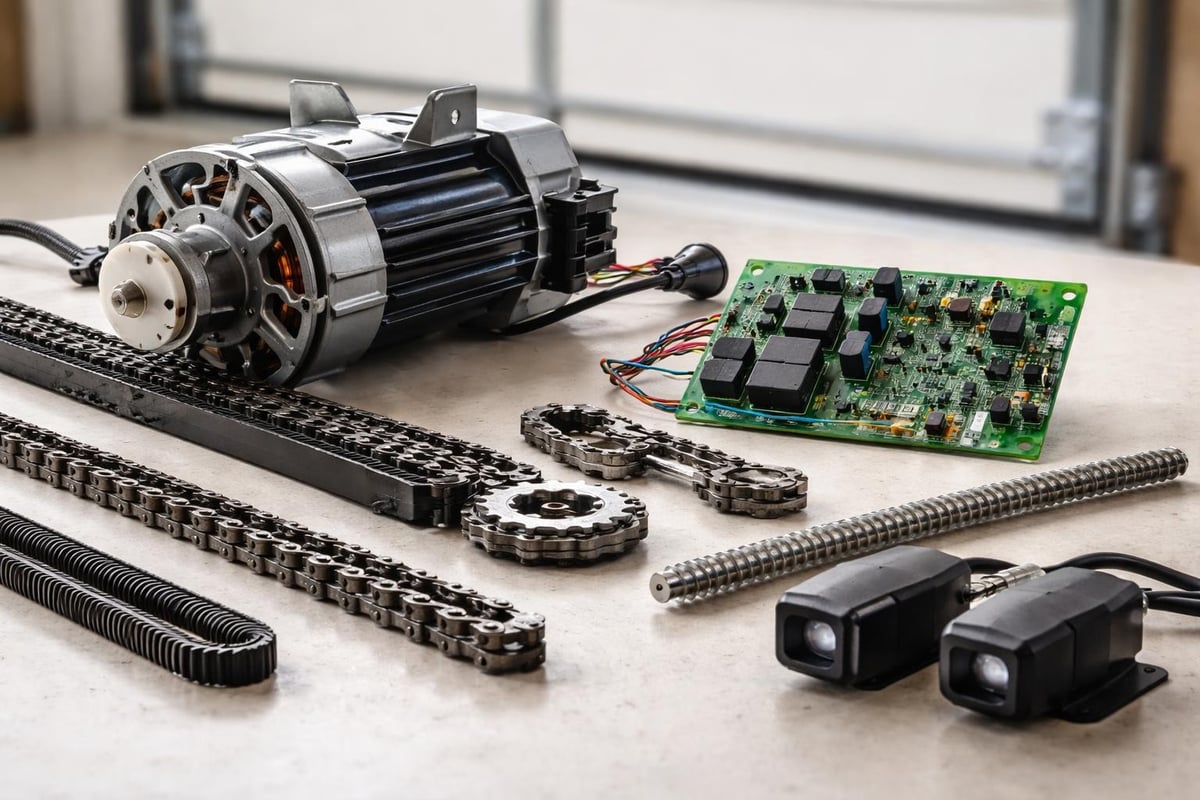
The typical motor assembly includes several interconnected parts that work together seamlessly. The motor unit itself provides the electrical power, while the drive mechanism translates that power into lifting force. Circuit boards manage programming and safety protocols, and sensors detect obstructions to prevent accidents.
Essential motor components include:
- Motor housing and electrical unit
- Drive system (belt, chain, or screw)
- Trolley and carriage assembly
- Logic board and capacitor
- Safety sensors and photoelectric eyes
- Limit switches and force settings
Understanding these components helps identify where problems originate. The Home Depot’s troubleshooting guide provides detailed information about how these systems function together.
Types of Drive Mechanisms
Drive systems significantly impact repair needs and motor longevity. Chain-drive openers use a metal chain to pull the trolley along the rail, creating more noise but offering durability and affordability. Belt-drive systems provide quieter operation using reinforced rubber belts, while screw-drive mechanisms feature a threaded steel rod that rotates to move the trolley.
Each system presents unique maintenance requirements and potential failure points. Chain drives need regular lubrication, belt drives can stretch over time, and screw drives may accumulate debris along the rod. Recognizing your drive type helps determine appropriate garage door motor repair approaches.
Common Motor Failure Symptoms
Identifying motor problems early prevents complete system failure and more expensive repairs. Several warning signs indicate your garage door motor needs attention.
Motor Runs But Door Doesn't Move
This frustrating scenario often points to a disconnected trolley or broken drive component. When the motor runs but the door won’t open, check whether someone accidentally pulled the emergency release cord. Inspect the drive chain, belt, or screw for breaks or disconnections.
Stripped gears inside the motor housing also cause this problem. The motor spins freely without engaging the drive mechanism. Professional assessment determines whether gear replacement is cost-effective compared to full motor replacement.
Complete Motor Failure
When the motor doesn't respond at all, electrical issues are likely culprits. Test your remote batteries first, then check the wall button. Verify the motor unit receives power by inspecting circuit breakers and GFCI outlets.
| Electrical Issue | Quick Check | Solution |
|---|---|---|
| Dead remote | Test wall button | Replace batteries |
| Tripped breaker | Check electrical panel | Reset breaker |
| Burned capacitor | Listen for humming | Replace capacitor |
| Faulty logic board | Test with backup remote | Board replacement |
Internal capacitor failure represents a common electrical problem. The capacitor stores energy to help the motor start. When it burns out, the motor may hum without turning. This component requires professional replacement for safety reasons.
Intermittent Operation
Motors that work sporadically indicate loose wiring, failing sensors, or temperature-sensitive component issues. Cold weather particularly affects older motors, as lubricants thicken and electrical connections contract.
Sensor misalignment causes frequent reversals or stops mid-cycle. Clean sensor lenses and verify they face each other directly. Common garage door issues often stem from simple sensor problems rather than motor failure.
DIY Troubleshooting Steps
Homeowners can safely diagnose many garage door motor problems before calling professionals. These systematic checks identify straightforward issues and help you communicate effectively with technicians.
Safety First Protocols
Before any troubleshooting:
- Disconnect power at the circuit breaker
- Never touch springs or cables under tension
- Keep children and pets away from the work area
- Use a sturdy ladder on level ground
- Wear safety glasses when working overhead
Always remember that garage door repair involves heavy components and stored energy. Some tasks absolutely require professional expertise.
Basic Diagnostic Process
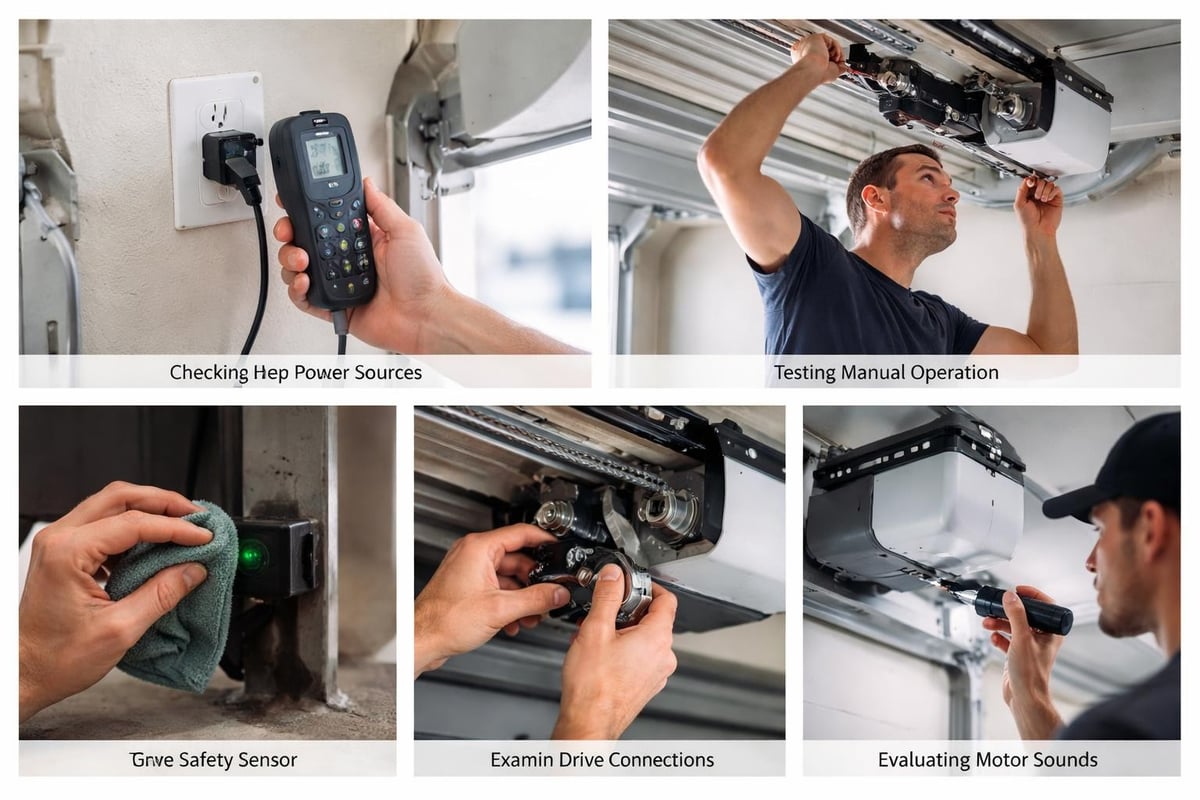
Start with the simplest explanations. Confirm power reaches the opener by testing the outlet with another device. Check that your remote control has fresh batteries and the wall button responds when pressed.
Examine the photo-eye sensors mounted on either side of the door opening. Wipe lenses clean and ensure nothing blocks the beam path. Misaligned sensors prevent the door from closing, a safety feature often mistaken for motor problems.
Test the manual release by pulling the emergency cord. If the door moves smoothly by hand, the motor likely functions properly and the issue lies elsewhere in the system. Difficulty moving the door manually suggests spring problems or track issues rather than motor failure.
When Professional Help Is Needed
Certain symptoms demand immediate professional attention. Burning smells, sparks, or smoke indicate serious electrical problems requiring expert garage door motor repair. Grinding metal sounds suggest broken gears that can damage other components if operation continues.
For complex electrical diagnostics and motor replacement, professional garage door opener services provide the expertise and tools necessary for safe, lasting repairs. Attempting advanced repairs without proper training creates safety hazards and may void warranties.
Cost Factors in Motor Repair
Understanding repair economics helps homeowners make informed decisions between repair and replacement. Several variables influence final costs.
Repair vs. Replacement Analysis
Minor repairs like sensor realignment or capacitor replacement typically cost between $100 and $250 for parts and labor. Circuit board replacement ranges from $200 to $400 depending on the opener model. Complete motor replacement starts around $300 for basic units and exceeds $600 for premium models with advanced features.
Garage door repair costs in 2026 reflect increased labor rates and supply chain adjustments. However, professional service prevents recurring problems and ensures warranty coverage.
Consider replacement when:
- Repair costs exceed 50% of replacement value
- Motor is over 15 years old
- Multiple components have failed
- Modern safety features are lacking
- Energy efficiency improvements are desired
Age significantly impacts repair decisions. Motors manufactured before 2010 lack modern safety features like battery backup and smartphone integration. Upgrading provides enhanced security and convenience beyond simple functionality restoration.
Labor and Service Charges
Professional garage door motor repair includes diagnostic fees, labor charges, and parts costs. Diagnostic fees typically range from $75 to $150 but often apply toward repair costs. Emergency service outside business hours commands premium rates, sometimes 50% to 100% higher than standard pricing.
Geographic location affects pricing substantially. Kitsap County service rates reflect local labor markets and travel distances between service calls. Requesting detailed estimates from licensed contractors prevents surprise charges and enables comparison shopping.
Preventive Maintenance Strategies
Regular maintenance extends motor lifespan and reduces unexpected failures. Implementing a consistent care schedule saves money and prevents inconvenient breakdowns.
Monthly Inspection Checklist
Dedicate 15 minutes monthly to basic garage door system checks. Visual inspections catch developing problems before they cause motor stress or complete failure.
- Test door balance by disconnecting the opener and manually lifting the door halfway
- Listen for unusual noises during operation
- Verify sensors align properly and lenses remain clean
- Check remote batteries and test all control buttons
- Observe door movement for jerking or hesitation
Balanced doors reduce motor strain significantly. If your door doesn't stay in place when manually opened halfway, spring adjustment is needed. Operating the motor with unbalanced springs accelerates wear and leads to premature failure.
Seasonal Maintenance Tasks
Spring preparation:
- Lubricate all moving parts with silicone-based spray
- Tighten mounting brackets and hardware
- Clean tracks and remove debris
- Test auto-reverse safety feature
Fall winterization:
- Check weatherstripping for gaps
- Apply lithium grease to screw-drive mechanisms
- Test operation in cold temperatures
- Inspect wiring for damage from rodents
Temperature extremes challenge motor performance. Proper lubrication ensures smooth operation during Kitsap County's rainy winters and dry summers. Year-round garage door maintenance protects your investment and maintains reliable performance.
Professional Motor Replacement Process
When repair isn't viable, professional installation of a new garage door motor ensures optimal performance and safety compliance. Understanding the replacement process helps set appropriate expectations.
Selecting the Right Motor
Choosing an appropriate replacement motor involves matching horsepower to door weight and size. Residential single-car doors typically require 1/2 horsepower, while double doors need 3/4 to 1 horsepower. Oversized or insulated doors may demand 1.5 horsepower for reliable operation.
Modern motors offer features unavailable in older units. Battery backup systems maintain operation during power outages, essential for garages serving as primary home entrances. Wi-Fi connectivity enables smartphone control and activity monitoring. Rolling code technology prevents signal interception for enhanced security.
For homeowners ready to upgrade their entire system, Garage Door Opener Installation provides professional installation of belt-drive, chain-drive, and wall-mounted jackshaft systems with proper force adjustments and safety testing.
Installation Quality Factors
Professional installation goes beyond simply mounting the motor. Technicians precisely adjust limit switches to prevent overtravel damage, calibrate force settings to stop if the door encounters resistance, and thoroughly test safety sensor alignment.
| Installation Step | Why It Matters | Common DIY Mistake |
|---|---|---|
| Rail alignment | Prevents binding and motor strain | Improper angle causes premature wear |
| Limit setting | Stops door at correct positions | Overtraveling damages components |
| Force adjustment | Safety compliance | Insufficient force reversal |
| Sensor positioning | Prevents closing on obstructions | Misalignment causes false triggers |
Proper installation extends motor life expectancy from 10-15 years to 15-20 years. Warranty coverage often requires professional installation to remain valid. Documentation of proper installation protects your investment and ensures manufacturer support if problems develop.
Advanced Troubleshooting Techniques
Experienced DIY enthusiasts with electrical knowledge can tackle more complex diagnostic procedures. However, these techniques require caution and appropriate safety measures.
Circuit Board Diagnostics
Logic board failures manifest through erratic behavior, lost programming, or complete non-responsiveness. Boards contain diagnostic LEDs that flash error codes. Consult your owner's manual to interpret these codes, which indicate specific component failures.
Common board problems include burned traces from power surges, failed solder joints from temperature cycling, and corrupted programming from electrical interference. Lightning strikes and power fluctuations damage sensitive electronics even when the motor appears protected by circuit breakers.
Garage door opener troubleshooting resources explain how to test voltage at various connection points. However, working with live electrical circuits requires proper training and tools. Incorrect procedures risk electric shock and further component damage.
Motor Bearing and Gear Assessment
Mechanical components inside the motor housing wear over time. Bearing failure produces grinding sounds and increased friction that overheats the motor. Stripped gears prevent proper drive engagement even when the motor spins normally.
Accessing internal motor components typically requires complete unit removal. Some motor brands design housings to be non-serviceable, requiring full replacement when internal parts fail. Opening sealed units voids warranties and risks improper reassembly.
Professional technicians stock common replacement gears and bearings, enabling economical repairs for certain motor models. They assess whether internal repairs make financial sense compared to complete motor replacement, factoring in labor time and parts availability.
Smart Motor Technology in 2026
Contemporary garage door motors incorporate sophisticated technology far beyond simple open-and-close operation. Understanding these features helps homeowners leverage their systems fully.
Connectivity and Control Options
Modern openers integrate with home automation systems through Wi-Fi or dedicated hubs. Smartphone apps provide real-time door status, operation history, and remote control from anywhere. Geofencing automatically opens doors as your vehicle approaches and sends alerts if doors remain open longer than expected.
Voice control through Amazon Alexa, Google Assistant, or Apple HomeKit enables hands-free operation. Integration with home security systems creates comprehensive property monitoring solutions. Battery backup ensures functionality during power outages, crucial for homes without alternative access points.
However, connectivity introduces new troubleshooting dimensions. Network configuration issues, app updates, and cloud service interruptions can disrupt smart features while the motor operates normally. Understanding garage door opener technologies in 2026 helps navigate these modern complexities.
Security Enhancement Features
Rolling code technology generates new access codes with each use, preventing code grabbing by potential intruders. Vacation modes disable remote operation while maintaining wall button functionality. Timer-to-close features automatically secure your garage after preset intervals.
Modern motors also include enhanced safety features beyond basic photo-eye sensors. Motion detection activates lighting when entering the garage. Pinch protection monitors motor force more precisely than older systems. Advanced obstacle detection uses infrared grids to identify objects throughout the door's travel path.
These features require proper programming and calibration. Garage door motor repair on smart systems often involves software updates and configuration adjustments alongside mechanical fixes.
Environmental Considerations
Climate and environmental factors significantly impact motor performance and longevity, particularly in the Pacific Northwest.
Moisture and Corrosion Management
Kitsap County's marine climate challenges garage door components with persistent moisture and salt air. Electrical connections corrode, creating resistance that overworks motors. Circuit boards develop oxidation that interrupts signal paths.
Ventilation reduces moisture buildup that accelerates corrosion. Installing dehumidifiers in enclosed garages protects electronics. Applying dielectric grease to electrical connections prevents oxidation while maintaining conductivity.
Regular inspection catches corrosion early when cleaning and protective coatings still work. Advanced corrosion requires connector replacement to restore proper electrical flow. Emergency garage door repair services address sudden failures from environmental damage.
Temperature Performance Factors
Motors specified for different temperature ranges perform differently in extreme conditions. Standard motors operate reliably between 30°F and 120°F. Special cold-weather models function below freezing using synthetic lubricants and enhanced starting capacitors.
Cold weather thickens standard lubricants, increasing resistance that strains motors during startup. Hot weather risks overheating, particularly when motors operate multiple cycles in succession. Adequate ventilation around the motor housing prevents heat buildup that degrades components.
Addressing garage door motor repair promptly maintains your home's security, convenience, and value. Whether troubleshooting minor issues or planning motor replacement, understanding these systems empowers informed decisions. For professional garage door motor repair, installation, and comprehensive garage services throughout Kitsap County, NextLevel Garage Co. delivers expert solutions backed by quality workmanship and clear communication.