

A garage door that won't open or close properly disrupts your daily routine and compromises home security. Whether you're dealing with a loud grinding noise, a door stuck halfway, or a complete system failure, understanding how to diagnose and fix broken garage door problems can save you time and money. For homeowners across Kitsap County and Bainbridge Island, knowing when to tackle repairs yourself versus calling a professional is essential for maintaining safety and functionality.
Common Garage Door Problems and Their Symptoms
Garage doors consist of numerous mechanical components working in harmony, and when one part fails, the entire system suffers. Recognizing the warning signs early helps you address issues before they escalate into costly replacements.
Broken Spring Indicators
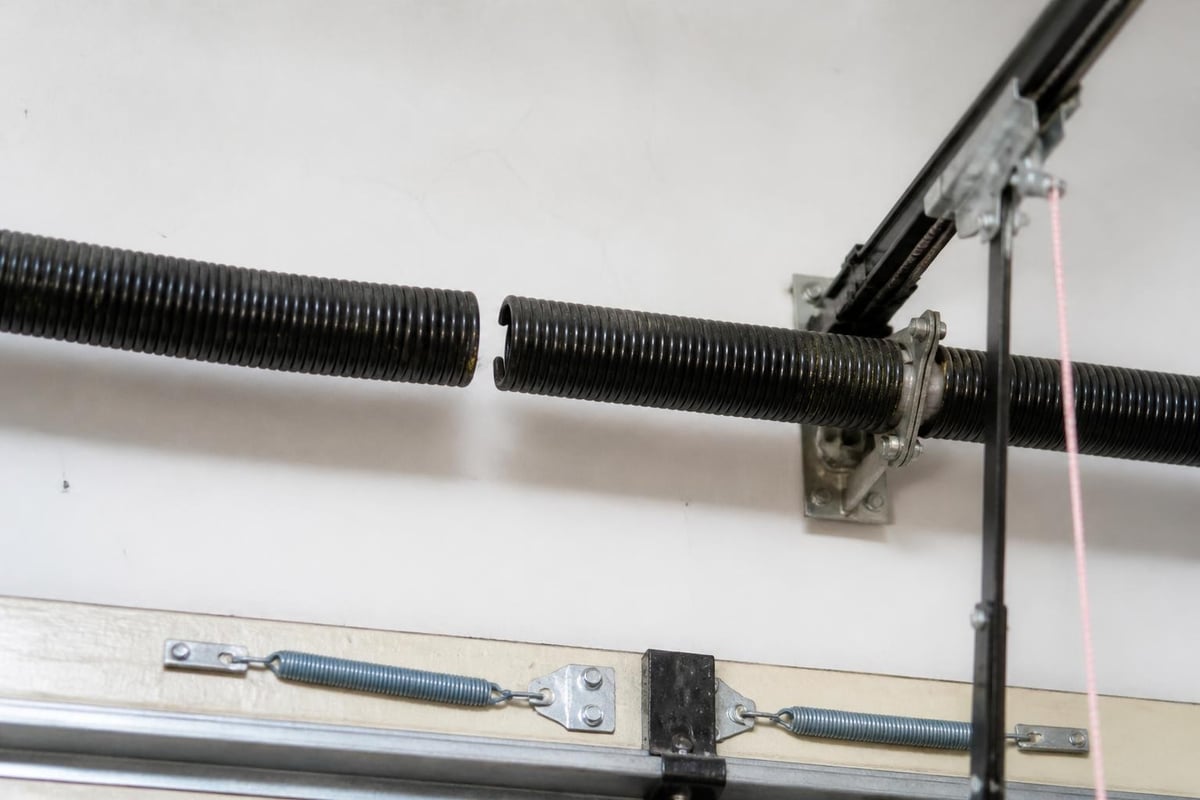
The most frequent problem requiring professional intervention involves torsion or extension springs. Broken springs manifest through several telltale symptoms:
- Door feels extremely heavy when lifted manually
- Opener runs but door barely moves or won't open
- Loud bang or snap sound from the garage
- Visible gap in the torsion spring above the door
- Cables hanging loose on either side
Springs bear the door's entire weight, typically lasting 10,000 to 15,000 cycles before fatigue causes failure. The Door & Access Systems Manufacturers Association provides detailed safety guidance on handling spring-related repairs, emphasizing that these high-tension components require specialized tools and knowledge.
Track and Roller Malfunctions
Misaligned tracks and worn rollers create operational problems ranging from minor annoyances to complete door failure. When you notice jerky movement, loud scraping sounds, or visible gaps between rollers and tracks, your system needs attention.
| Symptom | Likely Cause | Urgency Level |
|---|---|---|
| Door stops partway | Obstruction in track or bent section | Medium |
| Loud grinding noise | Worn rollers or insufficient lubrication | Low to Medium |
| Door crooked when closing | Track misalignment or broken cable | High |
| Visible track separation from wall | Loose mounting brackets | High |
Horizontal tracks should remain parallel to the ceiling, while vertical sections must be precisely plumb. Even a quarter-inch deviation can cause binding and premature wear. For serious track problems where the door has come completely off its path, professional realignment services ensure proper adjustment and prevent recurring issues.
Opener System Failures
Modern garage door openers integrate mechanical, electrical, and electronic components that occasionally malfunction. Understanding these systems helps you fix broken garage door opener problems efficiently.
Motor and Drive Issues
When you press the wall button or remote and hear the motor running without door movement, you're likely experiencing a disconnected drive mechanism or worn drive gear. Chain-drive, belt-drive, and screw-drive systems each have specific failure modes:
- Chain-drive units develop slack that prevents engagement
- Belt-drive systems show wear through slipping or fraying
- Screw-drive openers accumulate debris that impedes the trolley
The emergency release cord allows manual operation during power outages, but if you find yourself using it regularly because the opener fails, the motor assembly or travel limit switches need service.
Safety Sensor Problems
Federal safety regulations require photo-eye sensors since 1993, and these components frequently cause operational failures. When sensors misalign or accumulate dirt, your door refuses to close or immediately reverses. Consumer Product Safety Commission guidelines detail the entrapment protection requirements that make these sensors mandatory on all residential installations.
To test sensor function, wave an object through the beam while closing. The door should reverse immediately. Clean sensor lenses with a soft cloth and verify that indicator lights show solid illumination on both units. Misalignment typically results from a bumped sensor bracket, easily corrected by loosening the wing nut and adjusting the angle until both LEDs glow steadily.
DIY Repairs vs. Professional Service
Deciding whether to fix broken garage door components yourself depends on the specific problem, your mechanical aptitude, and available tools. Some repairs suit confident DIYers, while others demand professional expertise for safety and warranty protection.
Safe DIY Fixes
Homeowners can safely address several common issues without specialized training:
- Lubrication maintenance: Apply silicone-based lubricant to rollers, hinges, and tracks quarterly
- Sensor cleaning and alignment: Wipe lenses and adjust brackets as needed
- Weather seal replacement: Install new bottom seals to prevent drafts
- Remote battery replacement: Swap batteries in keypads and transmitters
- Track cleaning: Remove debris and wipe down surfaces
Popular Mechanics offers practical troubleshooting tips for these routine maintenance tasks that prevent many common failures. Regular upkeep extends component life and helps you catch developing problems early.
When to Call the Professionals
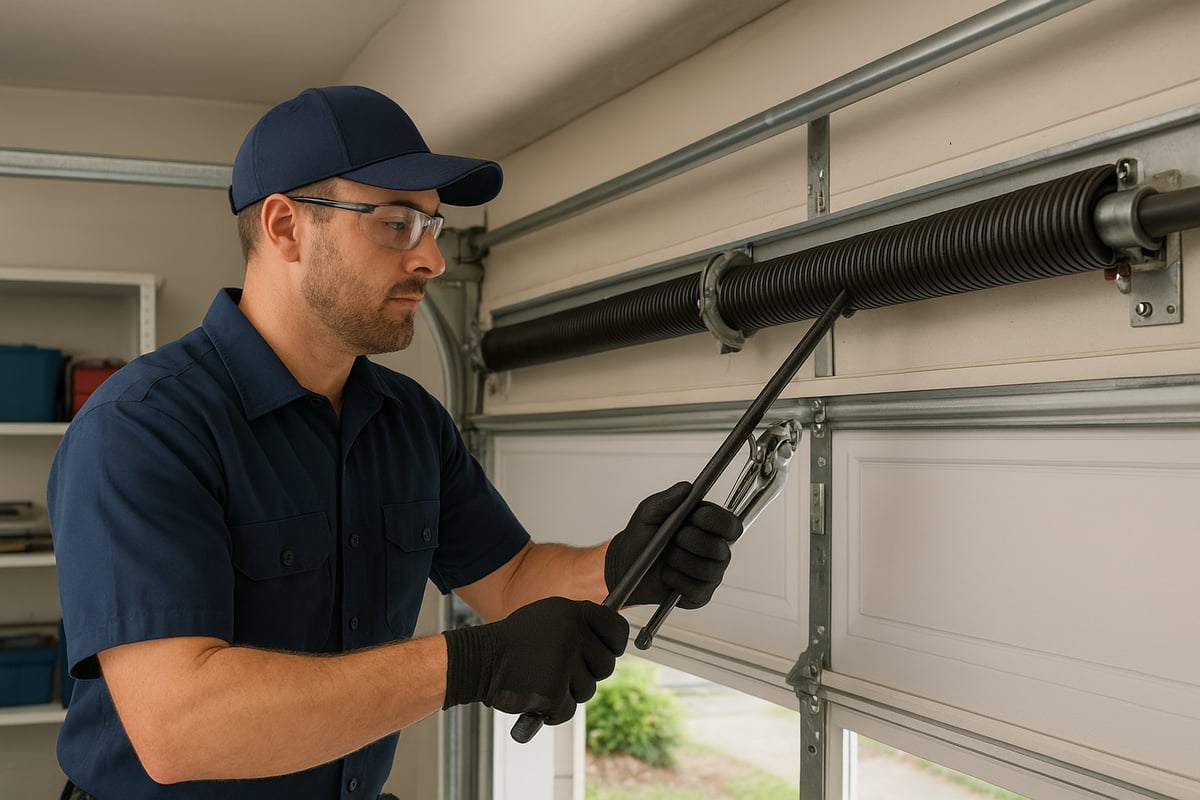
Certain repairs involve significant safety risks or require specialized equipment that makes professional service the smart choice. Spring replacement tops this list, as torsion springs store enormous energy that can cause severe injury if released improperly.
Professional service becomes essential for:
- Any work involving springs or cables
- Opener installation or motor replacement
- Door panel replacement or full door installation
- Track welding or structural repairs
- Problems affecting door balance or weight distribution
This Old House provides detailed guidance on spring replacement procedures, but they emphasize that most homeowners should hire trained technicians for this dangerous work. When you need reliable spring repair performed safely, professional spring replacement services ensure proper tension, balance, and long-term reliability.
Step-by-Step Diagnostic Process
To fix broken garage door issues effectively, follow a systematic diagnostic approach that identifies root causes rather than symptoms. This process helps you communicate clearly with technicians if professional help becomes necessary.
Visual Inspection Protocol
Begin with the door fully closed and examine components methodically from bottom to top:
- Check bottom seal contact with the floor across the entire width
- Inspect panels for dents, cracks, or separation at joints
- Examine hinges between sections for wear or loose fasteners
- Look at rollers for flat spots, cracks, or missing ball bearings
- Verify spring condition noting any gaps, rust, or deformation
- Assess cables for fraying, kinks, or improper winding on drums
Document any abnormalities with photos for reference during repairs or professional consultations. This systematic approach often reveals multiple issues requiring attention.
Functional Testing
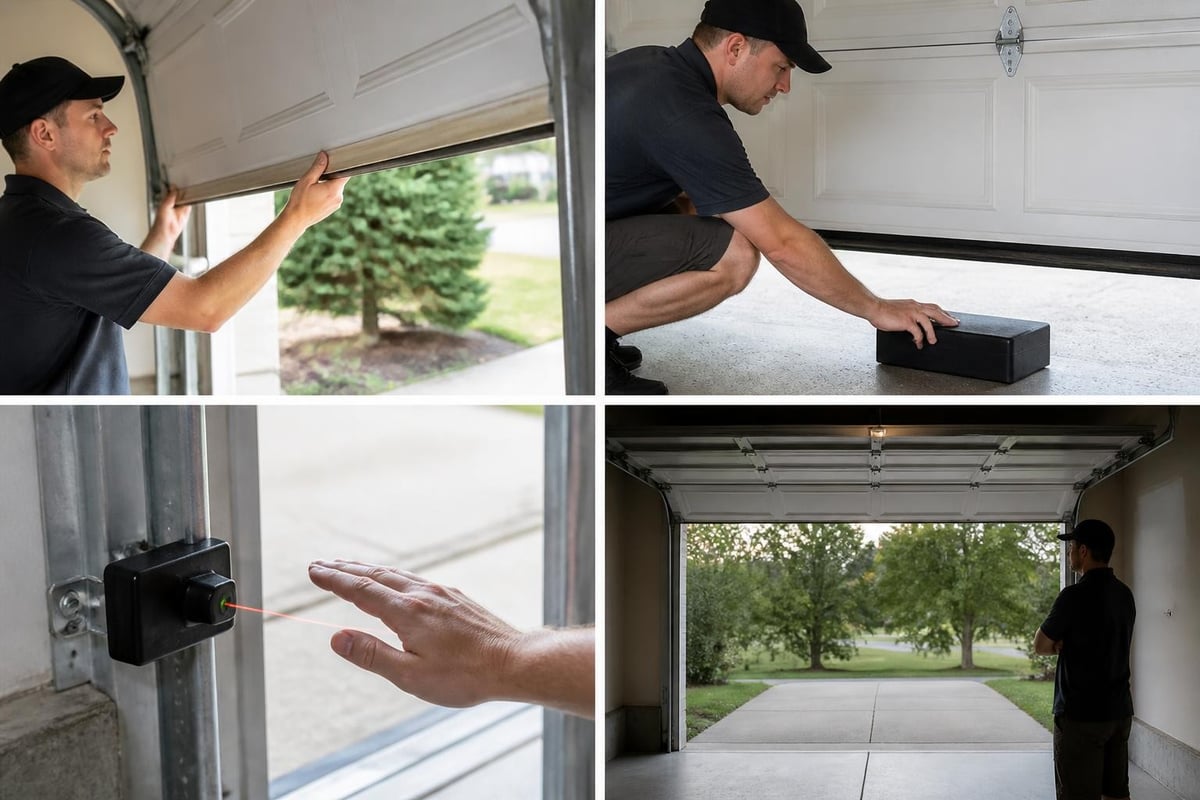
With someone assisting for safety, perform operational tests that reveal performance issues:
| Test | Procedure | Pass Criteria |
|---|---|---|
| Balance test | Disconnect opener and lift door halfway | Door stays in place when released |
| Smooth operation | Manually open and close door completely | Movement is effortless and quiet |
| Auto-reverse test | Place 2×4 on floor in door path | Door reverses within 2 seconds of contact |
| Photo-eye test | Break beam while closing | Immediate reversal occurs |
Failed tests indicate specific problems requiring correction before normal use resumes. The balance test particularly reveals spring or cable problems that endanger safe operation.
Spring Replacement Considerations
Spring failure accounts for approximately 30% of all garage door service calls, making it the most common major repair. Understanding spring types and replacement requirements helps you make informed decisions when facing this inevitable maintenance task.
Torsion vs. Extension Springs
Torsion springs mount on a shaft above the door opening and twist to provide lifting force. These springs offer superior balance, longer lifespan, and safer operation compared to extension systems. Standard residential doors use one or two torsion springs rated for the door's weight and height.
Extension springs stretch along horizontal tracks on either side of the door, using pulley systems to multiply lifting force. While less expensive initially, they require safety cables to prevent spring fragments from becoming projectiles if breakage occurs. UL 325 safety standards mandate containment systems on all extension spring installations manufactured after 1993.
Spring Life and Replacement Timing
Spring lifespan depends on cycle rating and usage frequency. A typical family opening their door four times daily exhausts a 10,000-cycle spring in approximately seven years. Commercial applications or high-traffic homes see faster wear.
- Standard springs: 10,000 cycles (7-9 years residential)
- High-cycle springs: 25,000-50,000 cycles (15-20+ years)
- Commercial-grade: 100,000+ cycles (varies with use)
Replace both springs simultaneously when one fails, as the second spring has endured identical stress and will likely break soon. Mismatched spring tension creates operational imbalance and accelerates wear on remaining components.
Troubleshooting Opener Remote and Wall Controls
Electronic control failures often seem like major problems but frequently involve simple solutions. Before assuming your opener motor has failed, systematically test control components to fix broken garage door operation.
Remote Control Diagnostics
When remotes stop working, check these potential causes in order:
- Replace batteries in all remotes and keypads
- Verify antenna wire on opener unit is hanging down fully
- Re-program remotes following manufacturer procedures
- Check for interference from LED bulbs or wireless routers
- Test wall button to confirm opener motor operates
Remote range typically spans 50-100 feet from the opener depending on model and interference factors. Metal objects, concrete walls, and certain electronics reduce effective range significantly.
Wall Button and Wiring Issues
Wall-mounted control panels connect to opener units via low-voltage wiring that occasionally develops faults. If your wall button stops responding, inspect the wire path for staples piercing insulation, connections loosened by vibration, or corrosion at terminal screws.
Most openers use simple two-wire circuits carrying 12-24 volts DC, making replacement straightforward for homeowners comfortable with basic electrical work. BobVila.com maintenance guidance includes troubleshooting steps for common electrical problems that help isolate component failures.
Weather-Related Damage and Prevention
Extreme weather conditions cause specific types of garage door damage that Kitsap County homeowners should recognize and address promptly. Wind, rain, and temperature fluctuations stress components differently than normal wear.
Storm Damage Assessment
High winds can bow door panels inward, separate tracks from wall mounting, or snap springs under sudden pressure changes. After significant weather events, inspect your system for:
- Panel distortion or separation
- Track mounting bracket damage
- Spring tension changes
- Weather seal displacement
- Opener force adjustment needs
The Federal Alliance for Safe Homes provides guidance on strengthening garage doors against wind damage, particularly valuable for coastal properties facing seasonal storms. Reinforcement struts and upgraded hardware significantly improve wind resistance.
Temperature Impact on Operations
Cold weather causes metal components to contract, increasing friction and changing spring tension characteristics. Lubricants thicken at low temperatures, creating additional resistance that strains opener motors. Conversely, summer heat expands materials and can soften certain lubricants.
Seasonal maintenance addresses these temperature effects through appropriate lubrication, adjustment of travel limits, and verification that auto-force settings accommodate changing conditions. Professional technicians account for temperature variations when setting spring tension and opener parameters.
Panel and Hardware Replacement
Individual door panels often sustain damage from vehicle impacts, hail, or long-term deterioration. Understanding repair versus replacement economics helps you make cost-effective decisions when facing panel damage.
When Panels Need Replacement
Repair makes sense for minor dents that don't compromise structural integrity, but replacement becomes necessary when:
- Structural damage affects panel rigidity
- Multiple sections show deterioration
- Hinges pull through panel material repeatedly
- Insulation values have degraded significantly
- Aesthetic concerns outweigh repair costs
Finding matching panels for discontinued door models proves challenging, often making full door replacement more practical than single-panel repairs on doors over ten years old.
Hardware Upgrade Options
Replacing worn hinges, rollers, and brackets during other repairs improves long-term reliability. Nylon rollers operate more quietly than steel equivalents, while sealed ball-bearing models reduce friction and extend lifespan dramatically.
| Component | Standard Life | Upgraded Life | Noise Reduction |
|---|---|---|---|
| Steel rollers | 5-7 years | N/A | Baseline |
| Nylon rollers | 7-10 years | 12-15 years | 50% quieter |
| Ball bearing rollers | 10-12 years | 15-20 years | 70% quieter |
Investing in quality hardware during repairs prevents premature failures and enhances daily operation. For comprehensive door improvements, many homeowners consider complete garage renovation projects that address multiple systems simultaneously.
Preventive Maintenance to Avoid Failures
Regular maintenance prevents the majority of garage door failures, extending component life and maintaining reliable operation. Establishing a quarterly inspection routine catches developing problems before they cause complete system failures.
Quarterly Maintenance Checklist
Set seasonal reminders to perform these essential tasks:
- Lubricate all moving parts with silicone spray (not WD-40)
- Tighten all bolts and screws on hinges, tracks, and brackets
- Test auto-reverse function using both contact and photo-eye methods
- Clean track surfaces and remove accumulated debris
- Inspect cables for fraying at attachment points
- Listen for unusual sounds during operation cycles
This 15-minute investment quarterly prevents many emergency repair situations and helps you budget for eventual replacements before components fail catastrophically.
Annual Professional Inspection
While DIY maintenance handles routine upkeep, annual professional inspections identify issues requiring specialized knowledge or tools. Trained technicians measure spring tension accurately, assess bearing wear, and verify opener force settings meet current safety standards. Consumer Reports recommends professional evaluation as part of comprehensive home security maintenance, particularly before extended absences.
Professional tune-ups typically include adjustments, minor part replacements, and warranty service on recently installed components. This preventive approach costs less than emergency repairs and identifies problems during convenient scheduling rather than crisis moments.
Understanding Opener Technologies
Modern garage door openers offer significantly improved performance, safety features, and connectivity compared to models from even five years ago. When you need to fix broken garage door opener systems through replacement rather than repair, understanding current technologies guides smart investment decisions.
Drive System Comparison
Three primary drive mechanisms dominate residential applications:
Chain-drive openers use metal chains similar to bicycle components, offering affordable reliability with moderate noise levels. These units suit detached garages where operational sound doesn't penetrate living spaces.
Belt-drive systems substitute reinforced rubber belts for chains, reducing vibration and noise by approximately 70%. Homeowners with bedrooms above or adjacent to garages benefit most from belt-drive quiet operation.
Wall-mount jackshaft openers mount beside the door rather than overhead, preserving ceiling space and offering whisper-quiet operation. These systems work particularly well with high-lift or cathedral ceiling applications. For detailed comparisons of modern systems, explore current garage door opener technologies available in 2026.
Smart Home Integration
Contemporary openers include WiFi connectivity, smartphone apps, and integration with major smart home platforms. These features provide:
- Remote operation and monitoring from anywhere
- Delivery access with temporary codes
- Activity logs showing when door operates
- Battery backup maintaining function during outages
- Automatic closure after preset intervals
Security-conscious homeowners appreciate real-time alerts when doors open unexpectedly and the ability to verify closure remotely. These conveniences add minimal cost to quality opener installations.
Code Compliance and Safety Standards
Building codes and safety regulations govern garage door installations and repairs, protecting homeowners and establishing minimum performance standards. Understanding these requirements helps you fix broken garage door systems properly while maintaining code compliance.
Current Safety Requirements
All residential garage door openers installed since 1993 must include:
- Automatic reversal when meeting resistance
- Photo-eye sensors preventing closure when beam breaks
- Manual release mechanism allowing emergency operation
- Force adjustment limiting closure pressure
Building America Solution Center technical resources explain how pressure ratings and wind-load requirements affect door selection in different climates. Coastal areas face stricter requirements than inland locations due to storm exposure.
Permit Requirements
Most jurisdictions require permits for complete door replacement or opener installation, though minor repairs like spring replacement typically don't trigger permit requirements. Local building departments provide specific guidance based on project scope.
Permitted work ensures inspections verify proper installation, appropriate safety features, and code-compliant wiring. While adding time and cost to projects, permits protect homeowners through documented compliance and often provide leverage if installation defects appear later.
Maintaining a functional garage door requires attention to multiple mechanical systems, regular preventive maintenance, and prompt attention when problems develop. Whether you're addressing minor adjustments or facing major component failures, understanding how to fix broken garage door issues safely protects your investment and prevents costly emergency situations. When repairs exceed your comfort level or involve high-tension springs and complex systems, NextLevel Garage Co. brings professional expertise to homeowners and businesses throughout Kitsap County, delivering reliable repairs, quality installations, and clear communication that keeps your garage operating smoothly year-round.