

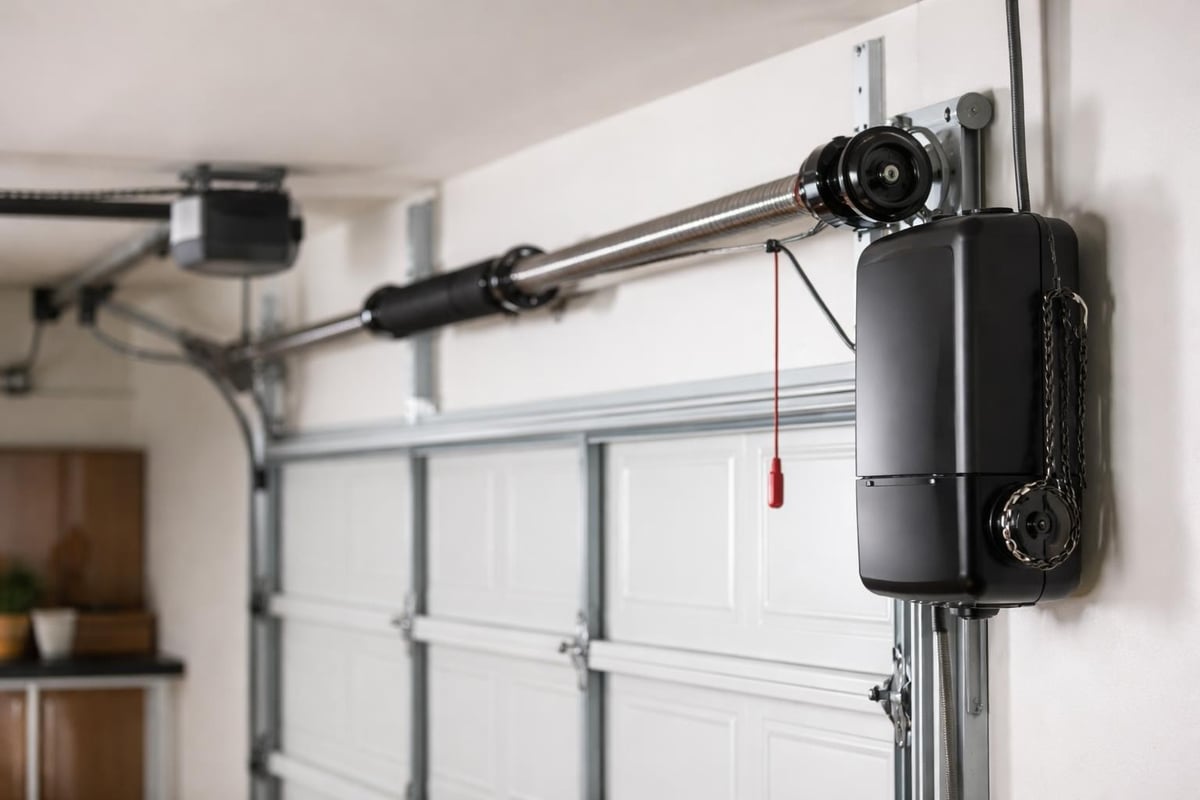
When business owners and property managers evaluate garage door solutions for warehouses, loading docks, or commercial facilities, space optimization and reliability become critical factors. A commercial jackshaft garage door opener offers a distinct advantage by mounting directly to the wall beside the door rather than hanging from the ceiling. This side-mounted configuration frees up valuable overhead clearance for ventilation systems, lighting, storage racks, and sprinkler infrastructure while delivering the powerful performance commercial operations demand.
Understanding Jackshaft Opener Technology
The commercial jackshaft garage door opener operates on a fundamentally different principle than traditional ceiling-mounted trolley operators. Instead of using a chain or belt running along tracks overhead, these systems mount to the wall and connect directly to the door's torsion bar. When activated, the motor drives the torsion bar, which raises and lowers the door through the existing spring assembly.
This direct-drive approach delivers several performance advantages. The elimination of overhead rails reduces mechanical complexity and potential failure points. Since the opener works in conjunction with the torsion spring system rather than fighting against it, the motor experiences less strain during operation. This translates to extended equipment lifespan and reduced maintenance requirements over time.
Key Components and Operation
Every commercial jackshaft system includes several essential components working in harmony:
- Wall-mounted motor unit that houses the primary drive mechanism
- Direct connection bracket linking the motor to the torsion bar
- Electronic control board managing opening cycles and safety features
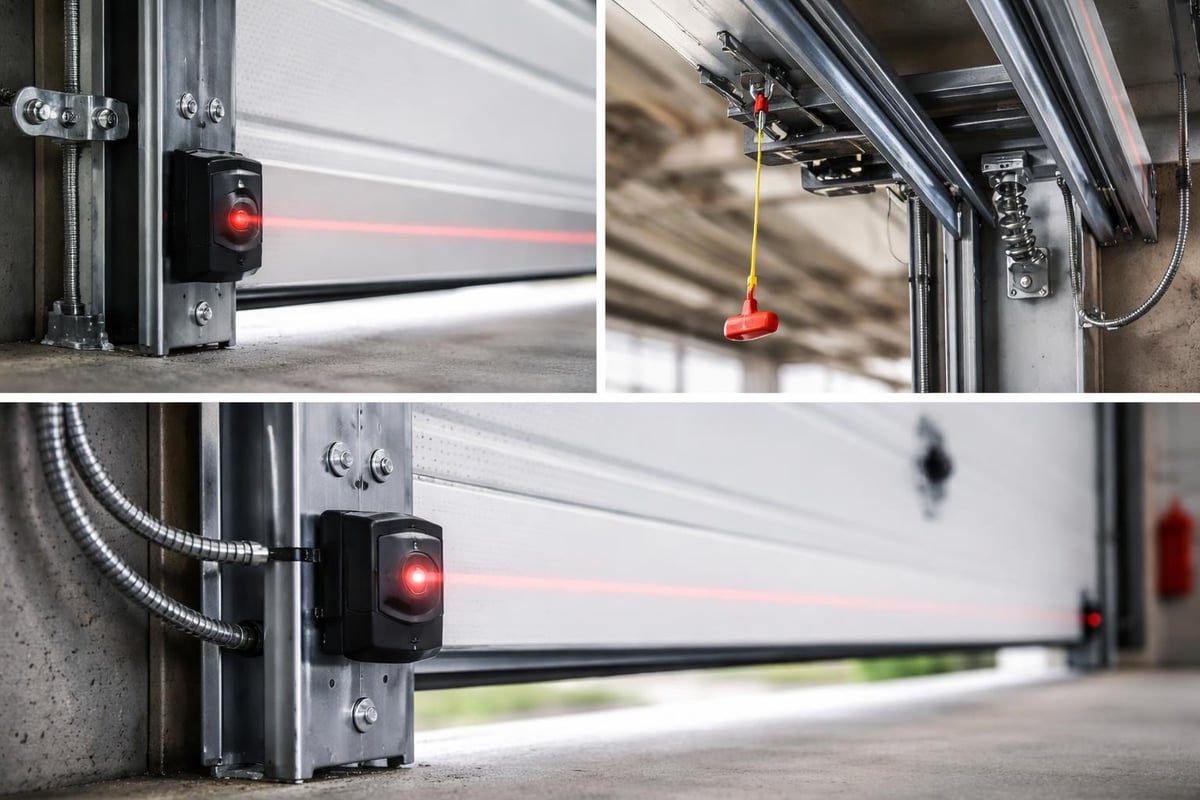
- Safety sensors preventing closure when obstacles are detected
- Manual release mechanism allowing emergency operation during power outages
The installation process requires precise alignment between the motor unit and torsion bar to ensure smooth operation. Professional installation becomes particularly important for commercial applications where door weight often exceeds residential specifications and safety codes demand rigorous compliance standards.
Space Optimization Benefits for Commercial Facilities
Business facilities frequently face spatial constraints that make traditional overhead openers impractical or impossible. Warehouses with high-density storage systems, for example, often utilize every available cubic foot of vertical space. Manufacturing plants may have extensive ductwork, conveyor systems, or crane rails occupying ceiling areas directly above doorways.
A commercial jackshaft garage door opener solves these challenges by requiring minimal overhead clearance. The entire operating mechanism mounts flush against the wall, typically within a footprint of just 12 to 18 inches. This configuration preserves full ceiling height throughout the facility, allowing businesses to maximize storage capacity or install necessary infrastructure without compromise.
Applications Across Different Industries
Different commercial sectors benefit from jackshaft technology in unique ways:
| Industry | Primary Benefit | Typical Use Case |
|---|---|---|
| Warehousing | Maximized vertical storage | High-bay facilities with rack systems |
| Auto Service | Ceiling-mounted equipment | Lifts and exhaust systems overhead |
| Cold Storage | Thermal efficiency | Insulated doors with minimal air gaps |
| Manufacturing | Infrastructure clearance | Conveyor and HVAC systems |
Property managers throughout Kitsap County have discovered these advantages when upgrading commercial facilities to accommodate modern operational demands. The flexibility to reclaim overhead space often justifies the investment in jackshaft technology, even when replacing functioning traditional openers.
Performance Specifications and Duty Ratings
Commercial operations require openers capable of handling frequent daily cycles under demanding conditions. A commercial jackshaft garage door opener typically features duty ratings far exceeding residential equipment, with industrial-grade motors designed for continuous operation. Understanding these specifications helps facility managers select appropriate equipment for their specific requirements.
Duty cycle ratings indicate how many opening and closing operations the unit can perform before requiring a cooling period. Commercial-grade jackshaft openers generally offer:
- Standard commercial duty: 50-75 cycles per day
- Medium-duty commercial: 100-150 cycles per day
- Heavy-duty industrial: 200+ cycles per day with continuous operation capability
Motor horsepower varies based on door size and weight. While residential jackshaft units typically use 1/2 to 3/4 horsepower motors, commercial applications often require 1 to 2 horsepower or greater. Larger doors serving loading docks or aircraft hangars may necessitate even more powerful drive systems with specialized gearing.
When evaluating garage door opener technologies in 2026, energy efficiency has become an increasingly important specification. Modern commercial jackshaft units incorporate variable frequency drives that adjust motor speed based on load requirements, reducing electrical consumption while maintaining performance standards.
Safety and Code Compliance Features
Commercial installations must adhere to strict safety regulations that protect workers and property. Contemporary jackshaft systems include multiple safety mechanisms:
- Photoelectric sensors preventing closure when beams are interrupted
- Force-sensing technology that reverses door movement upon encountering resistance
- Battery backup systems maintaining operation during power failures
- Emergency manual release accessible from inside the facility
- Monitored entrapment protection with automatic reversal
Many municipalities and insurance providers now require UL 325 compliance for all commercial garage door operators. This standard establishes rigorous testing protocols for operational safety, ensuring that equipment meets minimum performance thresholds under various failure scenarios. Clopay commercial door products often integrate seamlessly with jackshaft operators that meet these demanding specifications.
Installation Considerations for Business Facilities
Installing a commercial jackshaft garage door opener requires careful planning and professional expertise. Unlike residential installations that handy property owners might attempt independently, commercial applications involve complex electrical systems, substantial door weights, and critical safety requirements that demand specialized knowledge.
The first consideration involves wall structure and mounting surfaces. Jackshaft operators exert significant lateral forces on their mounting points during operation. Concrete or reinforced masonry walls provide ideal mounting surfaces, while metal building walls may require additional structural reinforcement. Professional installers assess wall composition and implement appropriate mounting strategies to ensure long-term stability.
Electrical requirements for commercial units often exceed standard 120-volt residential circuits. Many heavy-duty jackshaft operators require 208-volt or 240-volt three-phase power to deliver necessary torque. Coordinating with licensed electricians to provide proper power supply becomes an essential installation step, particularly in older facilities where electrical infrastructure may need upgrading.
Compatibility With Existing Door Systems
Not every commercial garage door works optimally with jackshaft technology. Successful retrofits require compatibility between the door's existing torsion spring system and the jackshaft operator's drive mechanism. Sectional doors with standard torsion assemblies generally adapt well to jackshaft conversion, while rolling steel doors or specialty configurations may require custom integration.
Door weight and balance significantly impact jackshaft performance. Before installation, technicians perform comprehensive door balancing to ensure springs properly counterweight the door panels. An improperly balanced door forces the opener motor to work harder, accelerating wear and potentially causing premature failure. This preparatory work represents a critical investment in long-term reliability.
For businesses seeking professional installation services, Garage Door Opener Installation provides comprehensive setup including removal of old units, proper mounting, force adjustments, and complete testing to ensure dependable performance from day one.
Maintenance Requirements and Service Intervals
Commercial jackshaft garage door openers require regular maintenance to sustain optimal performance throughout their service life. Unlike ceiling-mounted trolley systems with chains or belts that need periodic lubrication and tensioning, jackshaft units demand different attention focused on the direct-drive mechanism and electronic components.
Recommended maintenance schedules typically include:
- Monthly visual inspections checking for unusual wear patterns or loose mounting hardware
- Quarterly lubrication of the torsion bar connection and drive gear assembly
- Semi-annual safety testing verifying proper sensor function and force settings
- Annual comprehensive service including motor inspection and electronic diagnostics
Business operators should document all maintenance activities, creating a service history that supports warranty claims and demonstrates due diligence for insurance purposes. Many commercial property insurance policies require proof of regular maintenance to maintain coverage for door-related incidents.
Common Issues and Troubleshooting
While commercial jackshaft systems generally prove reliable, certain issues occasionally arise. Recognizing early warning signs allows facility managers to address problems before they escalate into costly failures:
| Symptom | Likely Cause | Recommended Action |
|---|---|---|
| Unusual grinding noise | Worn drive gear | Schedule immediate inspection |
| Slow or jerky operation | Improper door balance | Professional spring adjustment needed |
| Intermittent stopping | Safety sensor misalignment | Clean and realign sensor eyes |
| Complete failure to operate | Circuit breaker trip or motor failure | Check power supply, call technician |
Facilities throughout Kitsap County have learned that preventive maintenance proves far more cost-effective than emergency garage door repair after equipment failure disrupts operations. Establishing relationships with qualified service providers before problems occur ensures rapid response when issues do arise.
Comparing Manufacturers and Product Lines
The commercial garage door operator market includes several established manufacturers offering jackshaft systems with varying specifications and price points. Micanan commercial door operators have built a reputation for durability in heavy-duty applications, while brands like LiftMaster and Chamberlain offer extensive product lines serving diverse commercial needs.
When evaluating different manufacturers, facility managers should consider several factors beyond initial purchase price. Total cost of ownership includes installation expenses, expected service life, maintenance requirements, parts availability, and warranty coverage. A moderately priced unit requiring frequent service may ultimately cost more than a premium model delivering years of trouble-free operation.
Feature Comparison Across Price Points
Commercial jackshaft openers span a wide price range reflecting their varied capabilities:
Entry-level commercial units ($800-$1,500) typically suit light commercial applications with moderate cycle requirements. These systems often lack advanced features like variable speed control or integrated monitoring but provide reliable basic functionality for businesses with straightforward needs.
Mid-range professional models ($1,500-$3,500) incorporate enhanced safety features, improved duty cycles, and better energy efficiency. Battery backup systems, smartphone connectivity, and remote monitoring capabilities frequently appear at this price tier. Most medium-sized commercial facilities find optimal value in this segment.
Premium industrial-grade systems ($3,500-$8,000+) deliver maximum performance for demanding applications. Heavy-duty motors, continuous operation ratings, advanced diagnostics, and extended warranties justify higher costs for facilities where door operation critically impacts productivity. The ZAP commercial jackshaft garage door openers offered by specialty distributors exemplify this category's robust construction and comprehensive feature sets.
Brand reputation and local service availability should influence purchasing decisions significantly. Even the most reliable equipment eventually requires service, making manufacturer support networks and parts availability critical considerations for long-term satisfaction.
Integration With Building Management Systems
Modern commercial facilities increasingly rely on integrated building management systems that monitor and control multiple operational aspects from centralized platforms. A commercial jackshaft garage door opener with appropriate connectivity features can integrate seamlessly into these networks, providing valuable functionality and data.
Smart commercial openers offer various integration capabilities including:
- Cloud-based monitoring providing real-time status updates from any internet-connected device
- Access control integration linking door operation to employee badge systems or security protocols
- Automated scheduling opening and closing doors based on preset times or operational triggers
- Energy monitoring tracking power consumption for sustainability reporting
- Maintenance alerts notifying facility managers when service intervals approach
These connected features deliver substantial operational benefits beyond basic door control. Facility managers gain visibility into door usage patterns, identifying opportunities to optimize workflows or address security concerns. Automated operation reduces manual intervention requirements, freeing staff for higher-value activities.
For businesses managing multiple locations across Kitsap County, centralized monitoring simplifies oversight. Property managers receive immediate alerts if any facility experiences door malfunctions, enabling rapid response regardless of their physical location. This connectivity proves particularly valuable for cold storage facilities where door malfunctions could compromise temperature-sensitive inventory.
Environmental Factors and Weather Resistance
Commercial facilities in the Pacific Northwest face unique environmental challenges that impact garage door opener performance. Moisture, temperature fluctuations, and salt air exposure in coastal areas like Bainbridge Island require equipment designed to withstand these conditions. A commercial jackshaft garage door opener must maintain reliable operation despite environmental stresses that would quickly degrade residential-grade equipment.
Quality commercial jackshaft units incorporate several weather-resistant features:
- Sealed motor housings protecting internal components from moisture infiltration
- Corrosion-resistant finishes on all exposed metal surfaces
- Temperature-rated components functioning across wide thermal ranges
- Condensation management systems preventing moisture accumulation
- Marine-grade wiring and connectors for coastal installations
Regular inspection of weather seals and protective coatings helps maintain long-term durability. Facilities near marine environments should implement more frequent maintenance intervals to address accelerated corrosion potential from salt exposure.
Understanding how weather impacts your facility's door operation connects with broader considerations about choosing the best garage door for specific environments. Matching opener specifications to environmental conditions ensures reliable performance year-round.
Cost Analysis and Return on Investment
Investing in a commercial jackshaft garage door opener represents a significant capital expenditure that facility managers must justify through tangible operational benefits. While initial costs exceed traditional ceiling-mounted operators, the total value proposition extends beyond purchase price to encompass space utilization, energy efficiency, reliability, and maintenance expenses.
A comprehensive cost analysis should evaluate multiple financial factors:
Direct costs include equipment purchase, professional installation, and any necessary electrical upgrades. For a typical commercial application, total installed costs range from $2,000 to $6,000 depending on door size, power requirements, and feature specifications.
Indirect benefits prove harder to quantify but often deliver substantial value. Reclaimed ceiling space may enable additional storage capacity worth thousands of dollars in operational efficiency. Reduced downtime from more reliable equipment prevents costly production interruptions. Lower maintenance requirements decrease ongoing service expenses compared to chain-drive alternatives.
Energy savings accumulate over the opener's service life. Modern variable-frequency drives reduce electrical consumption by 30-40% compared to older constant-speed motors. For facilities operating doors dozens of times daily, these savings reach hundreds of dollars annually.
Calculating Payback Period
Business decision-makers need clear payback timelines to justify capital investments. A simple payback calculation compares the initial cost premium of jackshaft technology against annual operational savings:
Initial cost difference vs. traditional opener: $1,500
Annual energy savings: $250
Annual maintenance cost reduction: $150
Annual value of reclaimed space: $300
Total annual benefit: $700
Simple payback period: 2.1 years
This conservative analysis excludes difficult-to-quantify benefits like improved reliability and enhanced facility aesthetics. Most commercial installations deliver sufficient operational improvements to justify investment within 2-4 years, after which the benefits represent pure value enhancement.
Professional Installation vs. DIY Considerations
While technically skilled individuals might consider self-installing residential garage door openers, commercial jackshaft systems demand professional expertise. The substantial weights involved, complex electrical requirements, critical safety protocols, and liability implications make professional installation not merely advisable but essential for commercial applications.
Licensed technicians bring specialized knowledge addressing commercial installation challenges. They understand local building codes, proper torque specifications for mounting hardware, electrical safety protocols, and liability documentation requirements. Insurance companies and building inspectors often require licensed contractor documentation before approving commercial installations.
The risks of improper installation extend beyond equipment damage to potential workplace injuries and property damage. An improperly mounted commercial jackshaft garage door opener could detach under load, causing severe injury or damaging vehicles and inventory. Professional installers carry liability coverage protecting property owners from these risks while ensuring installations meet all applicable safety standards.
For property owners throughout Bainbridge Island and Kitsap County, partnering with experienced local professionals ensures installations comply with regional requirements while supporting community businesses invested in long-term customer relationships.
Commercial jackshaft garage door openers deliver space-saving benefits and reliable performance that make them ideal for warehouses, auto shops, and facilities with overhead clearance constraints. Whether upgrading existing equipment or installing new door systems, matching opener specifications to your facility's operational demands ensures years of dependable service. NextLevel Garage Co. brings expert knowledge and quality workmanship to commercial and residential garage door projects throughout Kitsap County, helping businesses optimize their facilities with properly installed, professionally maintained door systems that support operational efficiency.