

Choosing the right garage door opener installation company can make the difference between years of smooth, reliable operation and frustrating breakdowns that compromise your home's security and safety. With garage door systems becoming increasingly sophisticated in 2026, professional installation ensures your opener meets current safety codes, integrates with smart home technology, and operates efficiently from day one. Whether you're replacing an aging unit or installing an opener for a brand-new door, understanding what separates exceptional installation companies from mediocre ones helps you make an informed decision that protects your investment.
What Makes a Professional Garage Door Opener Installation Company Stand Out
Not all installation companies deliver the same level of expertise or service quality. The best garage door opener installation company brings specific qualifications, certifications, and operational standards that ensure safe, compliant installations.
Licensed and Insured Operations
Professional installers carry proper licensing for your state and municipality, along with comprehensive liability insurance and workers' compensation coverage. This protection safeguards homeowners from financial responsibility if accidents occur during installation.
Key credentials to verify:
- Current state contractor's license
- General liability insurance ($1-2 million minimum)
- Workers' compensation coverage
- Bonding for consumer protection
- Manufacturer certifications for specific brands
Companies that invest in these credentials demonstrate their commitment to professionalism and accountability. According to the International Code Council’s garage door provisions, installations must meet specific safety standards outlined in the International Residential Code.
Technical Expertise Across Multiple Drive Systems
Modern garage door openers come in several configurations, each requiring specific installation knowledge. Belt-drive systems demand precise tension adjustments, chain-drive units need proper lubrication protocols, and wall-mounted jackshaft openers require structural mounting expertise.
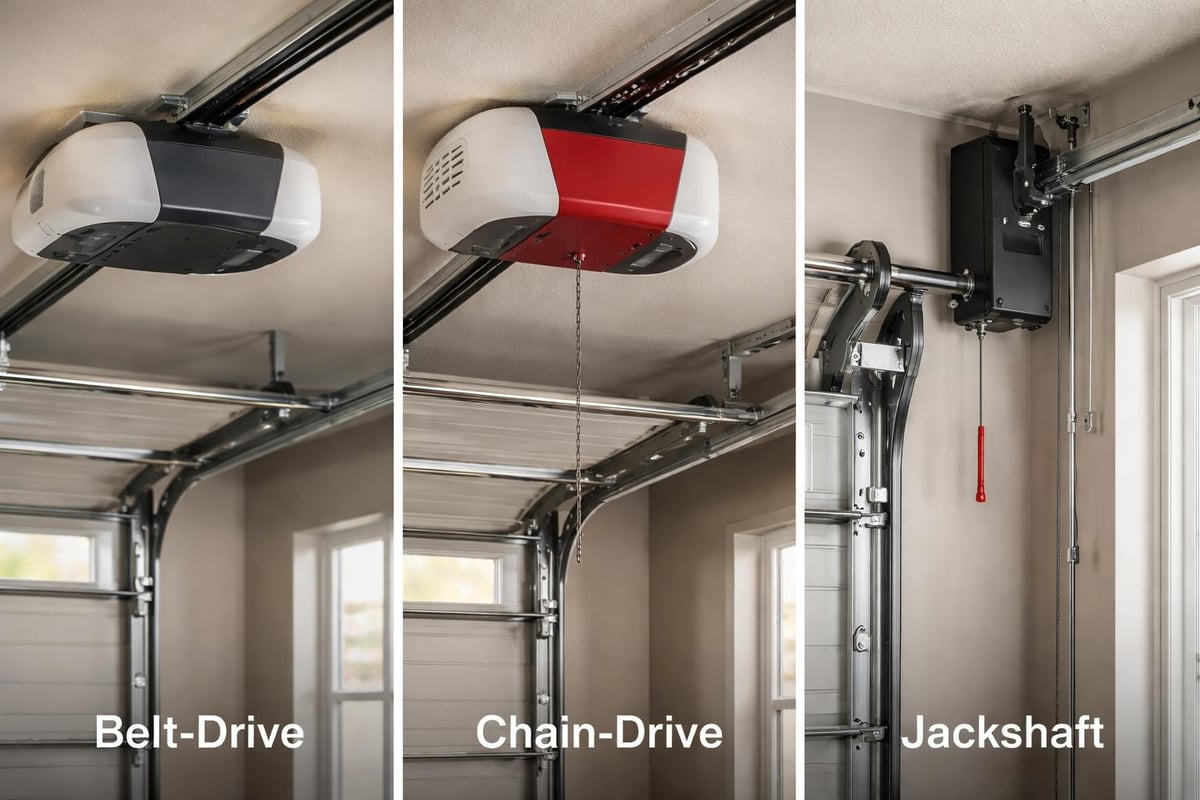
A qualified garage door opener installation company maintains experience across all major drive types and can recommend the best system for your specific door weight, usage frequency, and noise tolerance. For homeowners throughout Kitsap County seeking professional guidance, NextLevel Garage Co. provides comprehensive assessments that match opener specifications to door requirements.
Safety Standards Every Installation Must Meet
The U.S. Consumer Product Safety Commission has established clear guidelines for garage door opener installations, prioritizing features that prevent entrapment injuries and equipment failures. These safety requirements for automatic garage door openers form the foundation of compliant installations.
UL 325 Compliance and Reversal Mechanisms
All residential garage door openers installed in 2026 must comply with UL 325 safety standards, which mandate two independent safety mechanisms. The primary contact reversal system stops and reverses the door when it encounters resistance during closing. Photo-electric sensors create an invisible beam across the door opening, instantly reversing operation if the beam breaks.
| Safety Feature | Purpose | Testing Frequency |
|---|---|---|
| Contact Reversal | Stops door on physical contact | Monthly |
| Photo-Electric Sensors | Detects objects in path | Monthly |
| Manual Release | Emergency disconnect | Quarterly |
| Force Settings | Prevents excessive closing force | After adjustments |
Professional installers calibrate these systems precisely, ensuring the reversal mechanism activates with minimal pressure while maintaining enough force to close the door completely. InterNACHI’s garage safety guidance emphasizes the critical importance of proper photo-eye alignment and testing.
Electrical Safety and Code Compliance
Garage door opener installation involves electrical work that must meet National Electrical Code (NEC) standards. Dedicated 120-volt circuits prevent overloading, while GFCI protection guards against electrical shock in attached garages.
Essential electrical requirements:
- Dedicated 15 or 20-amp circuit
- Properly grounded outlets
- Appropriate wire gauge for circuit length
- Code-compliant junction boxes
- Secure cable routing away from moving parts
A professional garage door opener installation company obtains necessary permits and arranges inspections when required by local jurisdictions, ensuring your installation meets all applicable building codes.
The Complete Installation Process Explained
Understanding what happens during professional installation helps homeowners recognize quality workmanship and identify potential shortcuts that compromise performance.
Pre-Installation Assessment and Planning
Before any installation begins, experienced technicians conduct thorough assessments of your existing garage door system. They measure door dimensions, check track alignment, verify spring balance, and evaluate structural support capacity.
This preparation phase identifies potential issues that could affect opener performance. Doors that bind in their tracks, springs that don't properly counterbalance door weight, or deteriorated mounting surfaces require correction before opener installation proceeds.
For comprehensive garage door services beyond just opener installation, established companies provide integrated solutions that address underlying mechanical issues.
Mounting and Hardware Installation
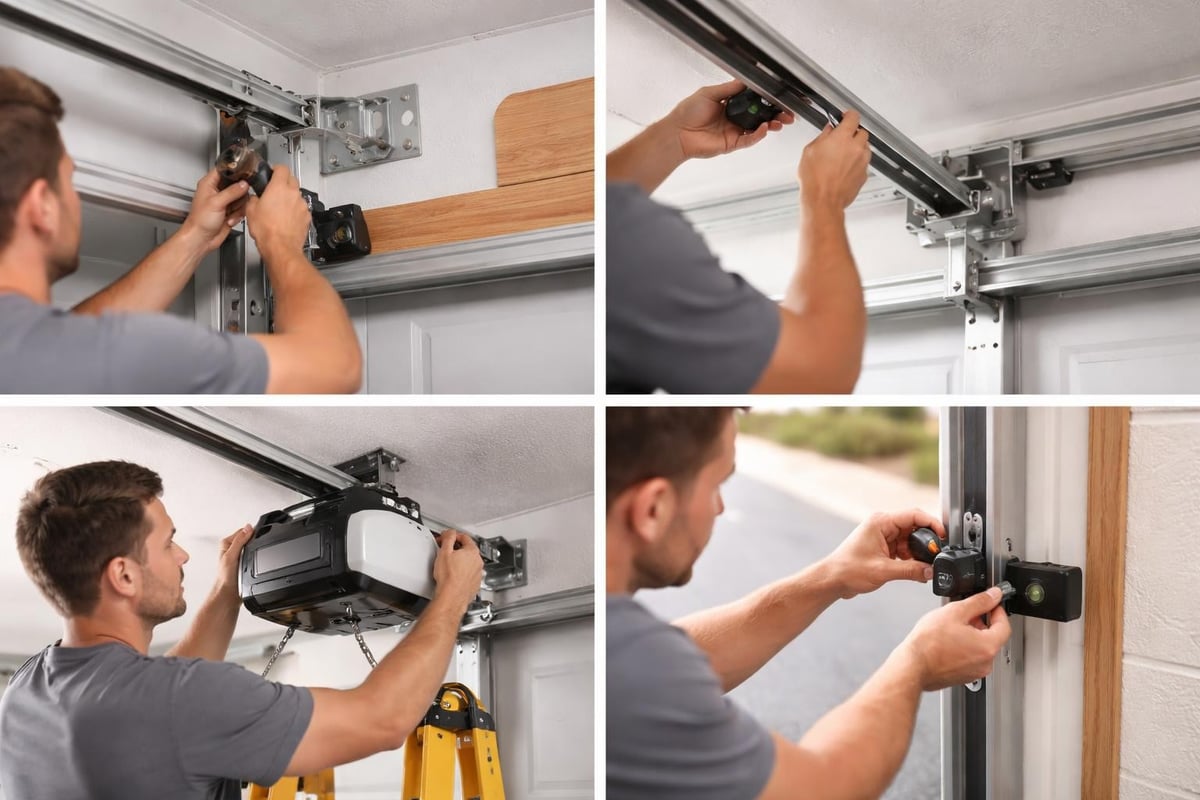
The mounting phase demands precision and attention to structural integrity. Header brackets must attach to solid framing members capable of supporting dynamic loads from door operation. Rail assembly requires perfect alignment with the door's center line to prevent binding and premature wear.
Step-by-step mounting sequence:
- Locate and mark ceiling joists or install blocking
- Assemble and position the rail system
- Attach header bracket to door top section
- Install motor unit and connect to rail
- Mount photo-electric sensors at proper height
- Install wall control panel and wiring
Professional installers use laser levels and precision measuring tools to ensure perfect alignment throughout this process. The detailed installation guide from Millard Lumber illustrates these critical alignment requirements.
Programming and Force Adjustment
Modern garage door openers feature sophisticated programming options that control travel limits, force settings, and smart home integrations. Travel limits determine exactly where the door stops in both open and closed positions. Force adjustments calibrate how much resistance triggers the safety reversal mechanism.
This programming phase separates professional installations from DIY attempts. Installers test door operation through dozens of cycles, making incremental adjustments until performance meets manufacturer specifications. They program remote controls, keypad entries, and smartphone connectivity when applicable.
Cost Factors and Value Considerations
Garage door opener installation costs vary based on multiple factors beyond just the opener unit itself. Understanding these variables helps homeowners budget appropriately and recognize fair pricing.
Equipment Tier and Feature Selection
Basic chain-drive openers with standard safety features represent the most affordable option, typically suitable for detached garages where noise isn't a concern. Belt-drive systems cost more but deliver whisper-quiet operation ideal for attached garages near living spaces. Wall-mounted jackshaft units command premium prices but offer unique advantages for garages with limited ceiling space or cathedral ceilings.
| Opener Type | Price Range | Best Applications |
|---|---|---|
| Chain-Drive | $150-300 | Detached garages, budget-conscious |
| Belt-Drive | $250-500 | Attached garages, noise-sensitive |
| Jackshaft | $400-700 | Limited ceiling space, high ceilings |
| Wi-Fi Enabled | +$50-150 | Smart home integration needed |
Beyond the base unit, battery backup systems add $100-200 but provide crucial functionality during power outages. Smart home integration capabilities range from basic Wi-Fi connectivity to sophisticated systems that integrate with comprehensive home automation platforms.
Labor Complexity and Additional Services
A straightforward replacement where existing wiring, outlets, and structural mounting remain suitable costs less than installations requiring electrical upgrades or structural reinforcement. Companies typically charge $150-350 for basic installation labor, with additional costs for:
- Electrical circuit installation: $200-500
- Structural blocking or reinforcement: $100-300
- Old opener removal and disposal: $50-100
- Smart home system integration: $75-200
When searching for information about garage door opener repair cost, many homeowners discover that replacement often delivers better long-term value than repairing aging units lacking modern safety features.
Choosing Between National Chains and Local Companies
The garage door industry includes both large national franchises and locally owned operations, each offering distinct advantages and potential drawbacks.
Advantages of Local Installation Companies
Local garage door opener installation companies typically provide more personalized service, faster response times, and deeper community accountability. Their technicians live in the areas they serve, developing reputations built on long-term customer relationships rather than transaction volume.
Local company benefits:
- Same-day or next-day service availability
- Direct access to owners for issue resolution
- Knowledge of local building codes and permit requirements
- Investment in community reputation
- Flexible scheduling around customer needs
For Kitsap County residents, working with a Bainbridge Island garage door company means technicians understand regional climate challenges, common garage construction styles, and local code enforcement practices.
National Chain Considerations
National companies offer standardized pricing, extensive advertising reach, and consistent service protocols across locations. However, they often subcontract actual installation work to local technicians while adding corporate overhead to pricing.
Their advantages include:
- Nationwide warranties honored at any location
- Established supply chains for parts availability
- Corporate training programs
- Multi-location service for property managers
The trade-off often involves less flexible scheduling, longer wait times, and higher costs that support corporate infrastructure rather than direct service delivery.
Smart Technology Integration in Modern Installations
Garage door opener technology has evolved dramatically, with 2026 systems offering features that seemed futuristic just a few years ago. A knowledgeable garage door opener installation company stays current with these advancing technologies.
Wi-Fi Connectivity and Smartphone Control
Modern openers with built-in Wi-Fi allow homeowners to monitor and control their garage doors from anywhere using smartphone apps. These systems send notifications when doors open or close, allow remote operation for delivery access, and integrate with virtual assistants for voice control.
Professional installation ensures proper network connectivity, secure password protocols, and integration with existing home automation systems. Technicians verify signal strength, configure router settings if necessary, and walk homeowners through app functionality.

Battery Backup Systems
Power outages no longer mean manual door operation when battery backup systems maintain full functionality during electrical failures. These systems automatically charge during normal operation and provide 24-50 door cycles on battery power alone.
Installation of battery backup requires additional mounting space and proper electrical integration. Professional installers ensure backup systems receive adequate ventilation, secure mounting prevents vibration damage, and charging circuits function correctly.
Learning more about understanding garage door opener technologies in 2026 helps homeowners make informed decisions about which features deliver genuine value versus marketing hype.
Warranty Coverage and Service Agreements
Warranty terms vary significantly between manufacturers and installation companies, creating important considerations when selecting a garage door opener installation company.
Manufacturer Warranties vs. Installation Guarantees
Opener manufacturers typically provide 1-5 year warranties covering defects in materials and workmanship. Premium units may include lifetime warranties on motors and drive systems. However, these manufacturer warranties often require professional installation to remain valid.
Installation companies should provide separate workmanship warranties guaranteeing their installation quality. Standard terms range from 90 days to one year, covering issues like improper mounting, misalignment, or programming errors.
Key warranty questions to ask:
- What specific components does the manufacturer warranty cover?
- How long does your workmanship guarantee last?
- Who handles warranty service calls?
- Are there any actions that void coverage?
- Do you offer extended warranty options?
Maintenance Plans and Long-Term Support
Forward-thinking companies offer annual maintenance plans that preserve warranty coverage while preventing common failure modes. These plans typically include lubrication, adjustment, safety testing, and parts inspection.
Regular maintenance by the original installation company creates continuity of service, with technicians familiar with your specific system's installation details and performance history. For homeowners prioritizing preventative care, exploring garage door repair services that include maintenance planning demonstrates long-term value thinking.
Questions to Ask Before Hiring
Thorough vetting of potential installation companies protects homeowners from substandard work and helps identify truly qualified professionals.
Licensing and Insurance Verification
Don't simply accept verbal assurances about credentials. Request copies of:
- Contractor's license with expiration date
- Certificate of insurance showing current coverage
- Workers' compensation policy details
- Any manufacturer certifications
Verify license status through your state's contractor licensing board website. Check insurance validity by calling the provider directly using phone numbers from their website, not documents the contractor provides.
Experience and Specialization
General handyman services lack the specialized knowledge that dedicated garage door companies develop through focused practice. Ask about:
- Years specifically in garage door installation
- Number of openers installed annually
- Experience with your specific opener brand
- Familiarity with smart home integration
- Training certifications held by technicians
Companies specializing in garage services rather than general home improvement bring deeper expertise to complex installations. According to Safe-Way Door’s safety recommendations, professional installation significantly reduces safety risks compared to DIY attempts.
Reference Checks and Review Research
Online reviews provide valuable insights but require careful interpretation. Look for patterns across multiple platforms rather than individual extreme opinions. Recent reviews carry more weight than those from years ago, as companies evolve over time.
Request references from recent customers with similar installation types. Speaking directly with previous clients reveals details about punctuality, cleanliness, problem-solving, and follow-up service that don't appear in brief online reviews.
Emergency Service Availability
Garage door opener failures rarely happen at convenient times. A broken opener can strand vehicles inside or leave your home vulnerable when doors won't close properly.
Response Time Expectations
Professional garage door opener installation companies offer emergency service options, though availability and pricing vary. Some provide 24/7 emergency response, while others maintain extended business hours with next-day emergency scheduling.
Service availability tiers:
- Standard appointments: Scheduled 3-7 days out
- Priority service: Next-business-day response
- Emergency service: Same-day or 24-hour response
- After-hours emergency: Evening/weekend premium rates
Understanding these options before you need them prevents panic decisions during actual emergencies. Companies offering emergency garage door repair demonstrate commitment to customer support beyond initial installation.
Preventative Emergency Preparedness
The best emergency service is preventing emergencies through quality initial installation and regular maintenance. Professional installers who properly balance doors, calibrate force settings, and secure all mounting hardware dramatically reduce failure likelihood.
They also educate homeowners about manual release operations, ensuring occupants can manually operate doors during power outages or mechanical failures. This training transforms potential emergencies into manageable inconveniences.
Selecting the Right Opener for Your Needs
A knowledgeable garage door opener installation company guides customers through opener selection based on specific usage patterns, door specifications, and feature priorities rather than pushing highest-margin products.
Matching Horsepower to Door Weight
Undersized openers struggle with heavy doors, leading to premature motor failure and safety issues. Oversized units waste money without performance benefits. Standard single doors typically need 1/2 horsepower, while double doors require 3/4 to 1 horsepower depending on construction materials and insulation.
Professional installers calculate door weight and select appropriate motor specifications. They account for factors like:
- Door material (steel, wood, aluminum)
- Insulation thickness and type
- Number of door sections
- Window presence and quantity
- Climate-related weight variations
When homeowners need comprehensive solutions beyond just opener installation, Garage Door Opener Installation services provide professional assessment of door specifications, proper unit selection, expert mounting, and complete safety system configuration that ensures reliable performance and meets all current code requirements.
Drive System Selection Criteria
Drive system choice impacts noise levels, maintenance requirements, and longevity. Chain drives deliver reliable performance at budget-friendly prices but create noticeable operational noise. Belt drives cost more initially but operate nearly silently and require minimal maintenance over their 15-20 year lifespan.
Wall-mounted jackshaft systems eliminate ceiling-mounted equipment entirely, preserving garage ceiling space while delivering exceptional power for heavy doors. Their direct-drive design reduces mechanical complexity and failure points.
| Drive Type | Noise Level | Maintenance | Lifespan | Ideal For |
|---|---|---|---|---|
| Chain | Moderate-High | Annual lubrication | 10-15 years | Detached garages, budget priority |
| Belt | Very Low | Minimal | 15-20 years | Attached garages, living spaces above |
| Jackshaft | Low-Moderate | Minimal | 15-20 years | Space limitations, heavy doors |
Installation Timing and Scheduling
Project timing affects both installation quality and overall cost, making scheduling strategy an important consideration.
Seasonal Considerations
Spring and fall represent peak seasons for garage door services, as homeowners tackle improvement projects during mild weather. Summer heat and winter cold create installation challenges while also driving demand for repairs when extreme temperatures stress aging systems.
Scheduling installations during off-peak winter months (excluding holiday periods) often yields:
- Better availability and faster scheduling
- More negotiating flexibility on pricing
- Unhurried installation without back-to-back appointments
- Easier technician access to supervisory support
However, winter installations in regions with harsh weather require special considerations for adhesive curing, lubricant application, and technician comfort that may extend installation time.
Coordination with Related Projects
When garage door opener installation coincides with door replacement, flooring installation, or garage organization projects, coordinating trades prevents conflicts and redundant work. Professional companies communicate with other contractors to establish logical sequencing that protects completed work and optimizes efficiency.
For homeowners planning comprehensive upgrades, exploring garage organization alongside opener installation creates opportunities for integrated planning that considers ceiling-mounted storage clearances and electrical outlet positioning.
Red Flags That Signal Poor Installation Companies
Certain warning signs indicate companies that cut corners, lack proper qualifications, or operate without adequate consumer protections.
Pricing and Payment Warning Signs
Legitimate garage door opener installation companies provide detailed written estimates specifying equipment, labor, and additional services separately. Red flags include:
- Reluctance to provide written estimates
- Pressure for immediate decisions or deposits
- Cash-only payment requirements
- Estimates significantly below market averages
- Unclear pricing breakdowns
- Unwillingness to honor quoted prices
Companies demanding full payment before completing work lack standard industry practices. Reasonable deposit requirements range from 10-25% for custom orders, with final payment due upon satisfactory completion.
Operational Red Flags
Professional operations maintain proper business infrastructure and transparent practices. Warning signs of questionable operations include:
- No physical business address or showroom
- Generic email addresses rather than company domains
- Unwillingness to provide references
- Inability to produce insurance documentation
- Unlicensed or uninsured subcontractors
- Absence of branded vehicles or uniforms
Companies with substantial community presence invest in reputation protection through quality work. Those operating from unmarked vehicles with minimal business infrastructure often disappear when warranty issues arise. Resources like All-Pro Quality’s safety standards guide emphasize professional installation importance for safety compliance.
Post-Installation Support and Education
Quality installation extends beyond physical work completion to ensuring homeowners understand system operation and maintenance requirements.
Owner Training and Documentation
Professional installers demonstrate all system features, explaining:
- Manual release operation for emergencies
- Remote control programming procedures
- Smartphone app functionality and settings
- Force adjustment locations (for future technician reference)
- Maintenance requirements and schedules
They provide comprehensive documentation including manufacturer manuals, warranty information, service records, and company contact details for future support needs. This documentation proves invaluable for warranty claims or when selling your home.
Follow-Up Service Protocols
Reputable companies contact customers within days of installation to verify satisfaction and address any concerns. They schedule 30-day check-ups to inspect initial break-in performance, make fine adjustments, and answer questions that arise during regular use.
This proactive follow-up demonstrates commitment to customer satisfaction beyond just completing billable work. It also identifies minor issues before they escalate into significant problems or safety hazards.
Environmental and Energy Considerations
Modern garage door opener selection increasingly considers environmental impact and energy efficiency alongside performance specifications.
Standby Power Consumption
Older garage door openers continuously draw 4-8 watts even when not operating, accumulating significant phantom power consumption over time. Modern energy-efficient models reduce standby draw to under 1 watt while maintaining full functionality.
Over a 15-year lifespan, this efficiency difference prevents hundreds of pounds of CO2 emissions while saving $50-100 in electricity costs. Professional installers familiar with energy-efficient models help environmentally conscious homeowners make informed choices.
LED Lighting and Efficiency Features
Contemporary openers incorporate LED lighting that consumes 75% less energy than traditional incandescent bulbs while lasting significantly longer. Some models include motion-sensing lights that illuminate automatically when entering the garage, enhancing safety while minimizing wasted energy.
Battery backup systems, while adding upfront cost, prevent the energy waste and food spoilage that occurs when power outages trap refrigerators and freezers in detached garage spaces.
Selecting the right garage door opener installation company ensures your investment delivers years of safe, reliable performance while meeting all current safety standards and building codes. Professional installation eliminates the safety risks and performance compromises that plague DIY attempts, providing peace of mind along with superior functionality. When you're ready to upgrade your garage door opener with expert installation that prioritizes quality workmanship and customer education, NextLevel Garage Co. serves homeowners throughout Kitsap County with the technical expertise and local commitment that transforms standard installations into long-term solutions.