

Power outages, mechanical failures, and emergency situations can leave you unable to access your garage using the automatic opener. Knowing how to open a garage door manually is an essential skill for every homeowner in Kitsap County and beyond. This comprehensive guide walks you through the complete process of manually operating your garage door safely, whether you're inside or outside your home, and explains the mechanisms that make manual operation possible.
Understanding Your Garage Door's Manual Release System
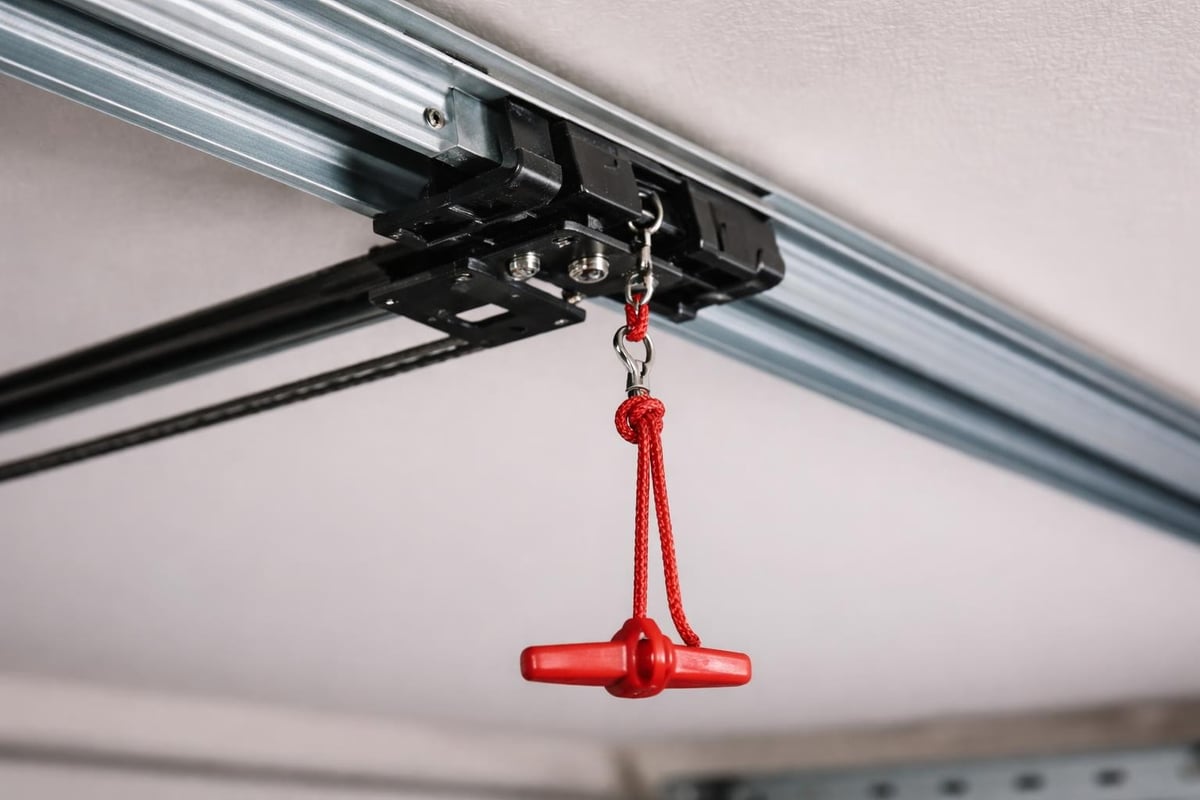
Every automatic garage door opener includes a manual release mechanism designed for emergency situations. This safety feature allows you to disconnect the door from the motorized opener and operate it by hand. The emergency release typically consists of a red cord with a handle hanging from the opener's trolley carriage, positioned along the center rail of your garage door track system.
The manual release serves multiple purposes beyond power outages. It provides critical access during opener malfunctions, allows for safer maintenance procedures, and ensures you can evacuate vehicles during emergencies. Understanding this system before you need it prevents panic and potential injuries during actual emergency situations.
Most modern garage door systems manufactured after 2000 include standardized release mechanisms, though some variations exist based on manufacturer specifications. Commercial operators may feature different release systems, but residential applications throughout Bainbridge Island and surrounding areas typically follow similar designs.
How to Open a Garage Door Manually from Inside
Opening your garage door manually from inside your garage follows a straightforward process when executed properly. Before beginning, ensure the door is in the fully closed position to prevent potential injury from sudden movement.
Locate and Pull the Emergency Release Cord
First, identify the red emergency release handle hanging from the opener trolley. This cord typically hangs approximately six feet from the garage floor. Second, pull the handle straight down and toward the door opening. You should hear or feel a distinct click indicating the trolley has disengaged from the door.
The direction of your pull matters significantly. Pulling toward the garage door opening ensures the trolley moves into the disconnected position, while pulling backward may not fully disengage the mechanism. Quality Overhead Door emphasizes the importance of proper disengagement techniques to prevent complications during manual operation.
Lift the Door Manually
Once disengaged, grasp the door handle or bottom edge with both hands. Lift steadily and evenly, using your legs rather than your back to prevent strain. A properly balanced door should lift smoothly and stay in place when opened halfway.
Key lifting techniques include:
- Use both hands positioned shoulder-width apart
- Bend at your knees, not your waist
- Lift in one smooth, controlled motion
- Stop if you encounter significant resistance
- Never allow children to operate manually
If the door feels extremely heavy or won't stay open when partially raised, this indicates broken or damaged springs requiring professional attention. At NextLevel Garage Co., we regularly service doors throughout Kitsap County where homeowners discover spring issues while attempting manual operation.
Securing the Open Door
After lifting the door completely, it should remain in the open position on its own. If it doesn't, the spring tension requires adjustment. Never prop open a door with makeshift supports, as this creates dangerous situations.
When you need to close the door manually, reverse the process by lowering it slowly and with control. Keep your hands clear of the sections and pinch points between panels.
Opening Your Garage Door Manually from Outside
Situations arise where you need exterior access without internal entry. Learning how to open a garage door manually from outside requires additional considerations and, in some cases, specialized hardware.
External Release Systems
Some garage doors include external emergency release mechanisms, though these are less common due to security concerns. These systems typically feature a keyed lock cylinder mounted near the top center of the garage door. When activated, the key releases an internal cable that disengages the trolley.
External release options:
- Keyed emergency release: Tumbler lock activates internal cable
- Manual disconnect: Requires removing access panel
- Smart opener backup: Battery-powered systems for power failures
If your door lacks an external release, emergency access methods become more limited. Many homeowners throughout Bainbridge Island choose to install these systems for added convenience and emergency preparedness.
Alternative External Access Methods
Without a keyed release, accessing your garage from outside during emergencies becomes challenging. One method involves using a wire hanger or similar tool inserted through the weather stripping gap to hook and pull the emergency release cord, though this technique requires practice and carries security implications.
For safety and security reasons, professional installation of proper external release systems provides the most reliable solution. These systems maintain security while ensuring emergency access when needed.
Common Issues That Prevent Manual Operation
Understanding potential obstacles helps you address problems quickly and safely. Several mechanical issues can complicate or prevent successful manual garage door operation.
| Issue | Cause | Impact on Manual Operation |
|---|---|---|
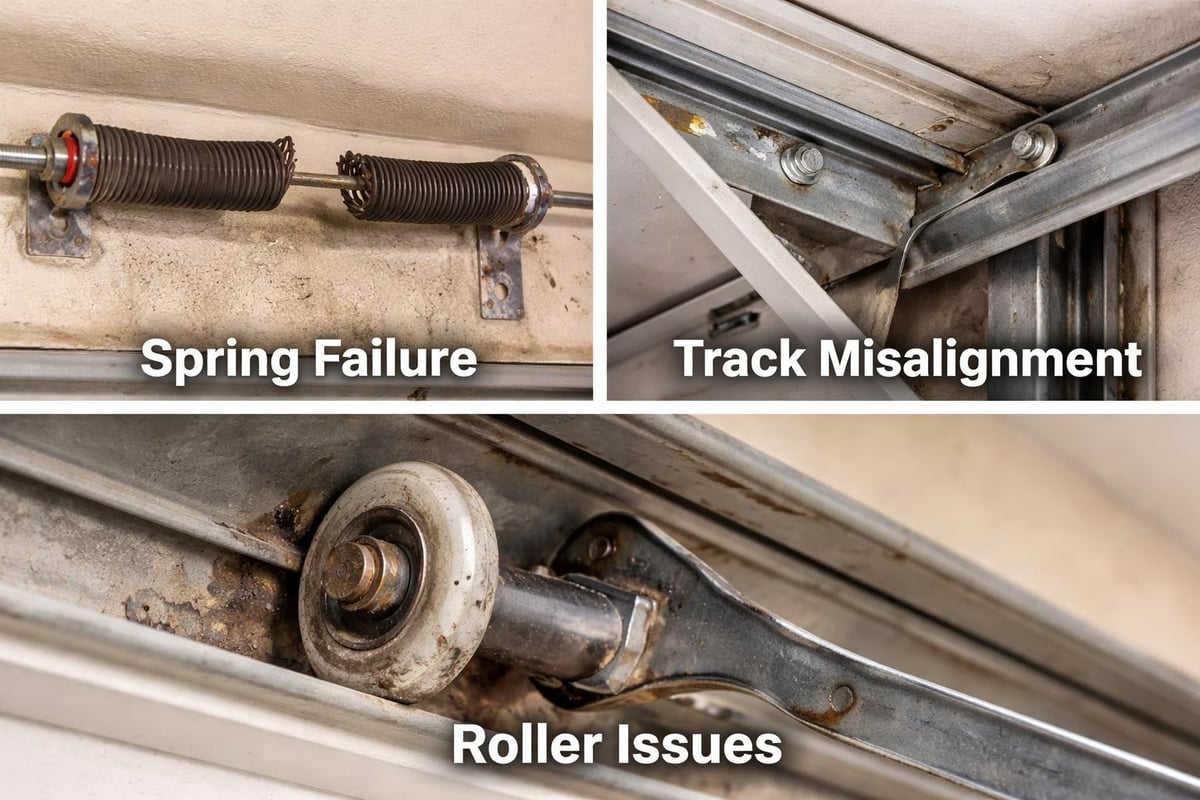
| Broken Springs | Metal fatigue, age | Door extremely heavy, unsafe to lift |
| Frozen Rollers | Cold weather, lack of lubrication | Door sticks, requires excessive force |
| Damaged Tracks | Impact damage, misalignment | Door binds, won't move smoothly |
| Seized Hinges | Rust, debris, lack of maintenance | Restricted movement, noise |
Broken or damaged springs represent the most common and dangerous issue. A garage door spring stores enormous tension and counterbalances the door's weight. When springs fail, the door becomes extremely heavy and potentially dangerous to operate manually. If you suspect spring damage, professional garage door spring repair prevents injuries and ensures proper operation.
Weather-Related Challenges
Kitsap County's climate presents specific challenges for garage door operation. Freezing temperatures can cause ice buildup along the bottom seal, effectively bonding the door to the garage floor. High humidity promotes rust on metal components, leading to increased friction and difficulty during manual operation.
Weather solutions include:
- Regular lubrication of moving parts with silicone-based products
- Weatherstripping replacement every 3-5 years
- Proper insulation to prevent condensation
- De-icing the bottom seal during freezing conditions
The eLocal guide provides helpful context on managing garage doors during power outages, which often coincide with severe weather events in the Pacific Northwest.
Safety Precautions for Manual Garage Door Operation
Safety must remain your top priority when operating any garage door manually. These heavy systems involve powerful springs, moving parts, and significant weight that can cause serious injuries when mishandled.
Pre-Operation Safety Checks
Before attempting manual operation, conduct a visual inspection of the door's condition. Look for obvious damage to panels, bent tracks, frayed cables, or broken springs. Any visible damage warrants professional evaluation before proceeding.
Clear the door's path of vehicles, tools, and stored items. Ensure adequate lighting illuminates the work area, and inform other household members that you're operating the door manually to prevent accidental attempts to use the automatic opener.
During Operation Safety Rules
- Never stand or walk under a partially open door during manual operation
- Keep fingers away from panel sections and joints
- Use proper lifting technique to prevent back injuries
- Stop immediately if you hear unusual sounds or feel resistance
- Never allow children to operate the door manually
If the door begins falling or moving unexpectedly, step away immediately rather than attempting to catch or control it. Material damage is preferable to personal injury in every scenario.
Re-Engaging the Automatic Opener
Once power returns or repairs are complete, you must re-engage the door with the automatic opener. Pull the emergency release cord toward the motor until you feel the trolley reconnect with the carriage. Run the automatic opener to verify proper engagement before leaving the door unattended.
Some systems require you to activate the opener button to complete reconnection. Balanced Garage Doors offers detailed guidance on re-engaging your opener system after manual operation.
When Manual Operation Requires Professional Help
Certain situations demand professional expertise rather than DIY intervention. Recognizing these scenarios prevents injuries, additional damage, and costly mistakes.
If your door won't move despite proper disengagement, if you hear grinding or scringing sounds during attempted operation, or if the door falls rapidly when released, stop immediately and contact professionals. These symptoms indicate serious mechanical failures requiring specialized tools and training.
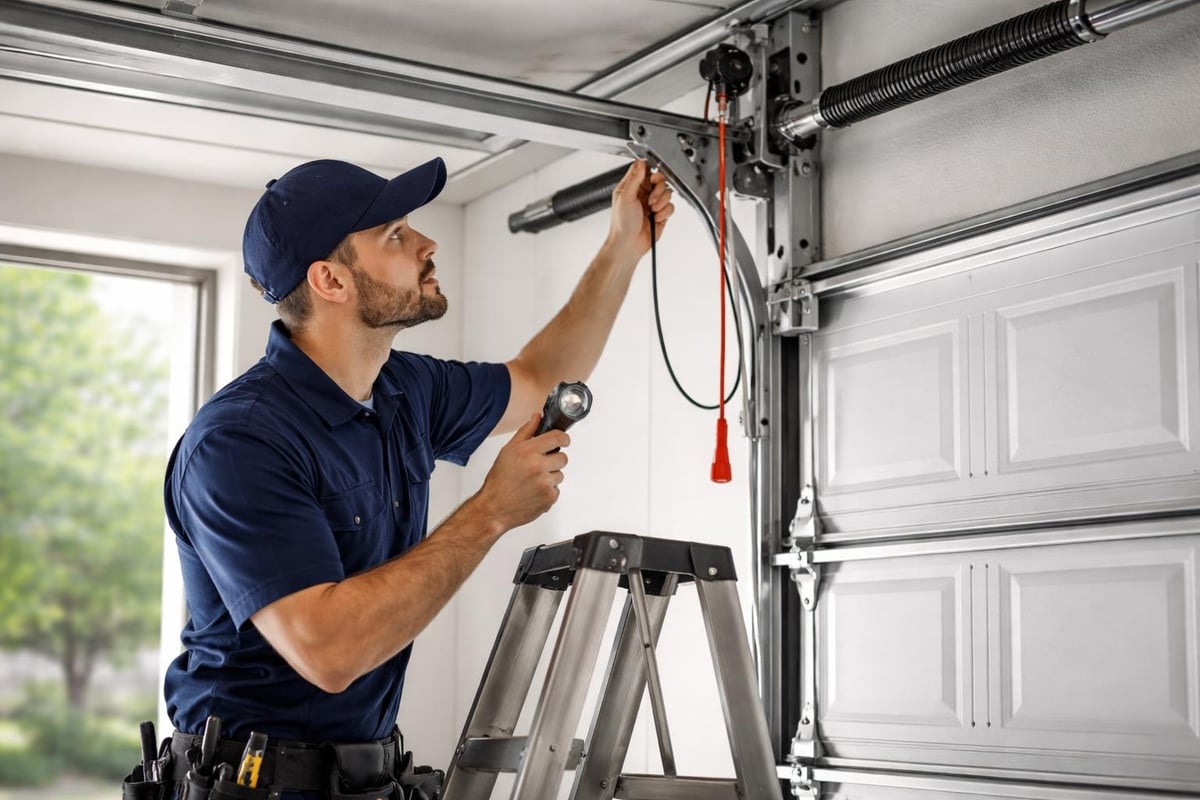
Professional garage door technicians possess the equipment and expertise to safely diagnose and repair complex issues. They can identify problems like broken drums, frayed cables, or severely out-of-balance doors that create hazardous conditions during manual operation. For homeowners experiencing ongoing difficulties with their garage doors, professional garage door repair services restore safe, reliable operation.
Maintaining Your Garage Door for Reliable Manual Operation
Regular maintenance ensures your garage door operates smoothly whether using automatic or manual control. A well-maintained system provides reliable emergency access and reduces the likelihood of failures during critical moments.
Monthly Maintenance Tasks
Visual inspection forms the foundation of garage door maintenance. Examine springs for signs of wear or separation, check cables for fraying, and verify that rollers move freely without excessive noise. Test the manual release mechanism monthly to ensure it disengages properly and re-engages securely.
Lubrication prevents friction-related problems that complicate manual operation. Apply silicone-based lubricant to rollers, hinges, and springs every 30 days. Avoid petroleum-based products that attract dust and debris, creating buildup that impedes smooth operation.
Seasonal Maintenance Requirements
| Season | Maintenance Focus | Specific Tasks |
|---|---|---|
| Spring | Post-winter inspection | Check for rust, test balance, lubricate all moving parts |
| Summer | Heat impact assessment | Verify weatherstripping, check for warping |
| Fall | Pre-winter preparation | Deep clean tracks, replace worn components |
| Winter | Cold weather monitoring | De-ice bottom seal, verify insulation, increase lubrication frequency |
Balance testing represents a critical maintenance procedure. Disconnect the opener and manually raise the door halfway. It should remain in position without assistance. If it falls or rises, the spring tension requires professional adjustment.
Professional Inspection Schedule
Annual professional inspections identify developing problems before they create emergencies. Experienced technicians detect subtle wear patterns, measure spring life expectancy, and verify safety feature functionality that homeowners might overlook.
For residents throughout Kitsap County, scheduling preventive maintenance before the winter storm season ensures reliable operation when power outages are most likely. Martin Garage Door provides comprehensive information on maintaining manual operation capability through proper system care.
Upgrading Your Garage Door Opener for Better Emergency Access
Modern garage door opener technology offers enhanced features that improve emergency access and manual operation reliability. If your opener predates 2010, upgrading provides significant safety and convenience benefits.
Battery backup systems keep your opener operational during power failures, eliminating the need for manual operation in many situations. These systems automatically activate when they detect power loss, allowing normal opener function for hours or even days depending on battery capacity.
Smart opener systems with smartphone connectivity allow remote operation and monitoring from anywhere. You can grant temporary access to family members or service providers without sharing physical keys or garage codes. When combined with battery backup, these systems virtually eliminate scenarios requiring true manual operation.
For homeowners investing in opener upgrades, professional garage door opener installation ensures proper configuration of all safety features including manual release mechanisms. NextLevel Garage Co. installs systems throughout Bainbridge Island and Kitsap County, incorporating the latest safety and convenience technologies.
Selecting the Right Opener System
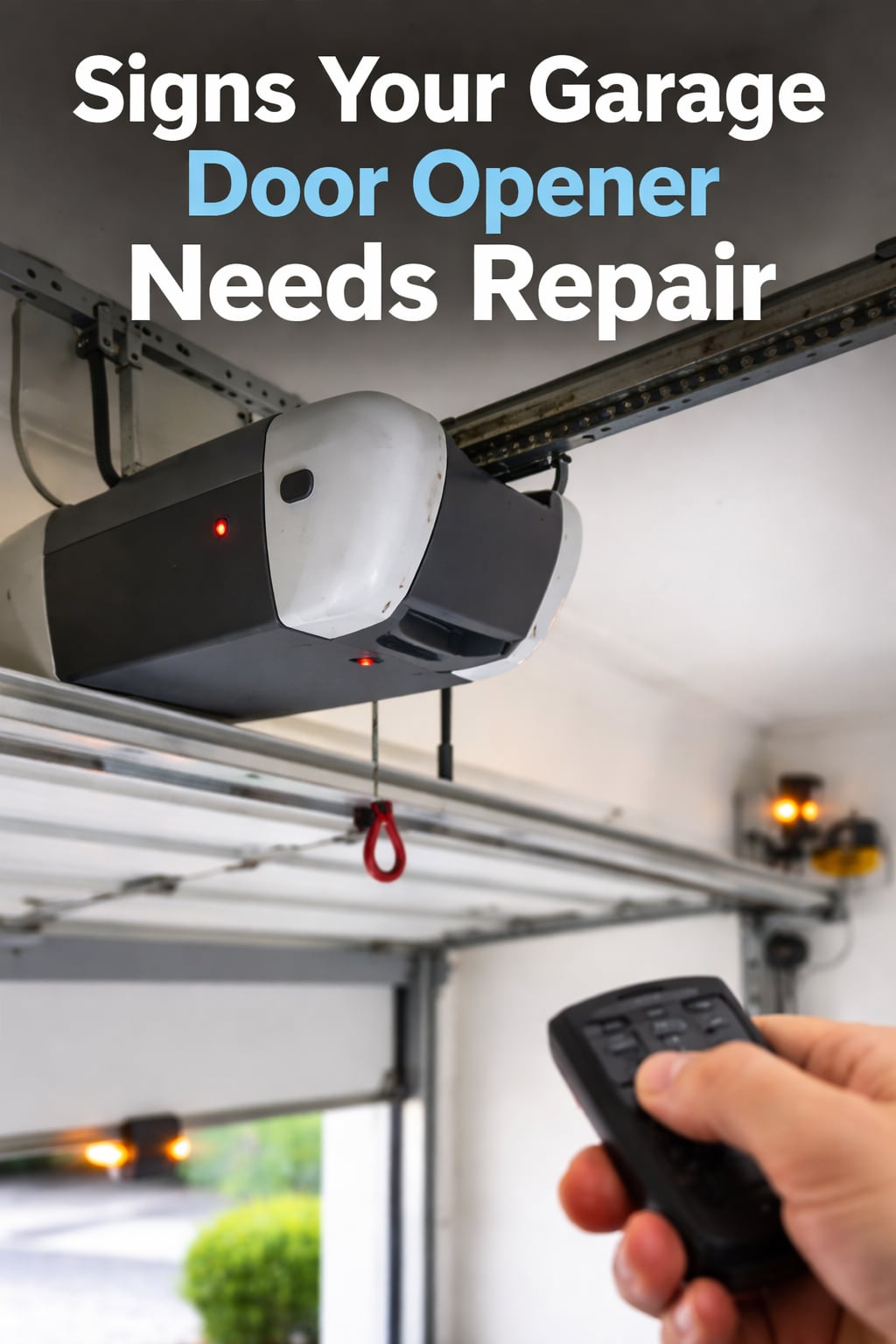
Belt-drive systems operate quietly, making them ideal for homes with living spaces above or adjacent to the garage. Chain-drive models provide durability and value for detached garages or workshops. Wall-mounted jackshaft openers free ceiling space while offering powerful operation for heavy doors.
Each system type includes standard manual release mechanisms, but installation quality affects accessibility and reliability during emergencies. Professional installation ensures the emergency cord hangs at the proper height and location for easy access.
Emergency Preparedness Beyond Manual Operation
Knowing how to open a garage door manually represents just one component of comprehensive emergency preparedness. Developing a complete plan ensures access to your home and vehicles regardless of circumstances.
Keep emergency supplies in an accessible location outside your garage. Include a flashlight, work gloves, and basic tools needed for manual operation. Store house keys in a secure exterior location that allows entry if the garage provides your primary access point.
Document your specific garage door model and manual release procedure. Photograph the emergency release mechanism and create written instructions for household members unfamiliar with the process. Update this information whenever you replace or upgrade your opener system.
Consider alternative access routes to your home that don't depend on garage entry. Ensure exterior doors remain accessible and that all household members possess keys or access codes for these entry points.
Training Household Members on Manual Operation
Every adult household member should understand how to open a garage door manually. Conducting practical demonstrations prevents confusion during actual emergencies when stress levels run high and clear thinking becomes difficult.
Training steps include:
- Showing the location and function of the emergency release cord
- Demonstrating proper disengagement technique
- Practicing manual lifting with supervision
- Explaining re-engagement procedures
- Discussing safety considerations and warning signs
Schedule annual refresher training, particularly after opener replacements or system modifications. Muscle memory developed through practice proves invaluable during high-stress emergency situations.
For households with teenagers learning to drive, manual operation training becomes especially important. Young drivers should understand how to access the garage during emergencies without depending on automatic systems.
Understanding how to open a garage door manually empowers you to handle emergencies, power outages, and mechanical failures with confidence and safety. Regular maintenance, proper technique, and household training ensure reliable access to your home and vehicles regardless of circumstances. When you encounter complex issues or need professional guidance, NextLevel Garage Co. serves homeowners and businesses throughout Bainbridge Island and Kitsap County with expert garage door services, from emergency repairs to complete system installations, ensuring your garage operates safely and reliably year-round.
One Response