

Power outages happen unexpectedly, and when they do, your automatic garage door can quickly become an obstacle rather than a convenience. Whether you're dealing with a winter storm on Bainbridge Island or a scheduled power interruption in Kitsap County, knowing how to open garage door without power is an essential skill for every homeowner. This comprehensive guide walks you through the manual operation process, safety considerations, and professional tips to help you maintain access to your garage when the electricity fails.
Understanding Your Garage Door Emergency Release System
Every modern automatic garage door opener includes a manual release mechanism designed specifically for power outages. This safety feature allows you to disconnect the door from the motorized opener and operate it manually.
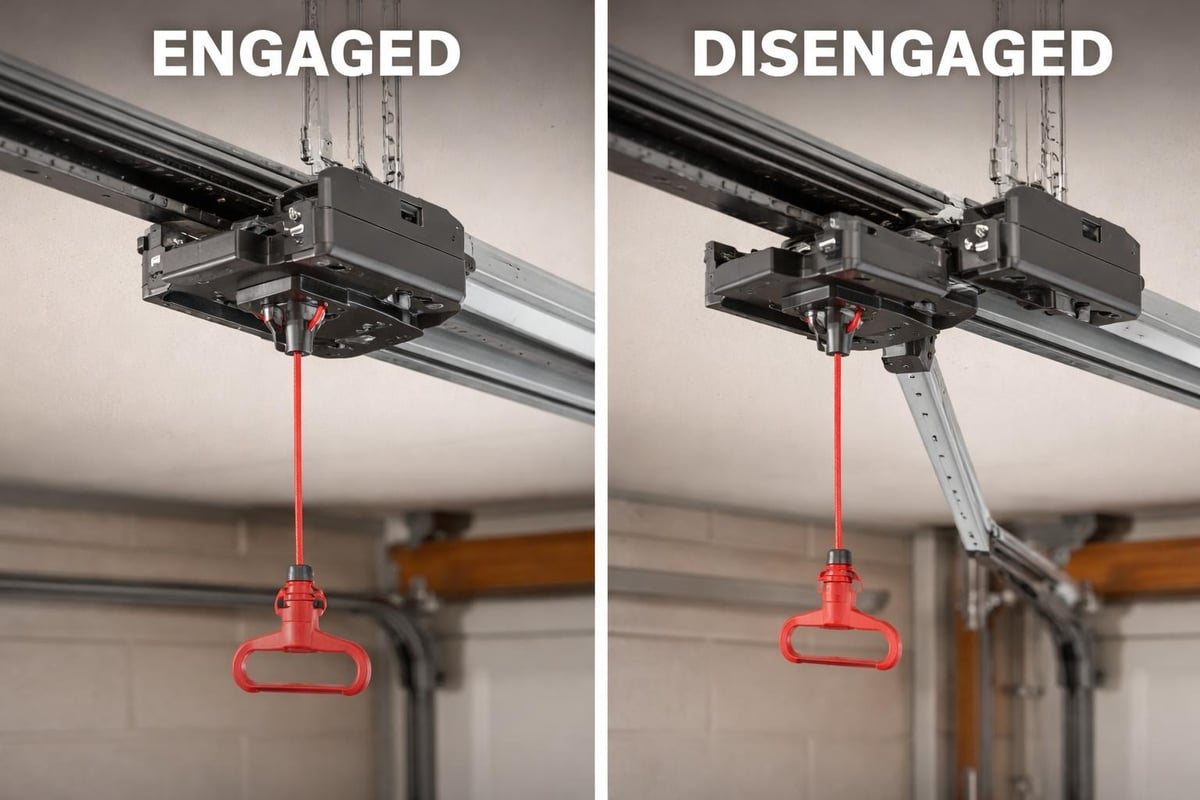
The emergency release cord typically hangs from the opener trolley and features a red handle, though some manufacturers use different colors. This cord is your primary tool for disengaging the automatic system and regaining manual control of your door.
Components of the Manual Release System
Understanding the parts involved helps you operate the system confidently:
- Emergency release cord: Usually red, attached to the trolley carriage
- Trolley carriage: The component that moves along the rail and connects to the door
- Release lever: Engages or disengages the trolley from the opener chain or belt
- Manual locks: Optional mechanisms on some doors for additional security
When you pull the emergency release cord, you're essentially disconnecting the trolley from the drive system, which allows the door to move freely on its track.
Step-by-Step Process for Manual Operation
Learning how to open garage door without power requires following a specific sequence to ensure safety and prevent damage to your door system.
Initial Safety Checks
Before attempting manual operation, verify these critical safety conditions:
- Ensure the door is fully closed if possible (opening a partially open door manually can be dangerous)
- Clear the area beneath and around the door
- Check for visible damage to tracks, cables, or springs
- Alert household members that you'll be operating the door manually
Bob Vila’s comprehensive guide emphasizes the importance of these preliminary checks before proceeding with manual operation.
Disengaging the Opener
Once you've completed safety checks, follow these steps to disengage your garage door opener:
Pull the emergency release cord straight down with firm, steady pressure. You should hear a click or snap as the trolley releases from the drive mechanism. The cord typically remains in the pulled position until you re-engage it later.
Important consideration: Never pull the emergency release cord while the door is moving or in motion, as this can cause sudden drops or unpredictable movement.
Lifting the Door Manually
With the opener disengaged, you can now operate the door manually:
- Grip the door handle or bottom panel firmly with both hands
- Lift steadily and smoothly, allowing the springs to assist with the weight
- Raise the door completely to the open position
- The door should stay open on its own if properly balanced
If the door feels exceptionally heavy or doesn't stay open, this indicates a spring balance issue that requires professional attention. According to TrustDALE’s manual operation guide, a properly balanced door should lift with minimal effort.
| Door Weight | Expected Lift Effort | Spring Condition |
|---|---|---|
| Standard (150-200 lbs) | Light to moderate | Properly balanced |
| Very heavy (200+ lbs) | Excessive strain | Potential spring failure |
| Stays partially open | Moderate | Needs adjustment |
| Falls when released | Very heavy | Springs broken or disconnected |
Opening From the Outside During Power Outages
Accessing your garage from outside when the power is out presents additional challenges, especially if you don't have an alternative entry point.
External Emergency Release Options
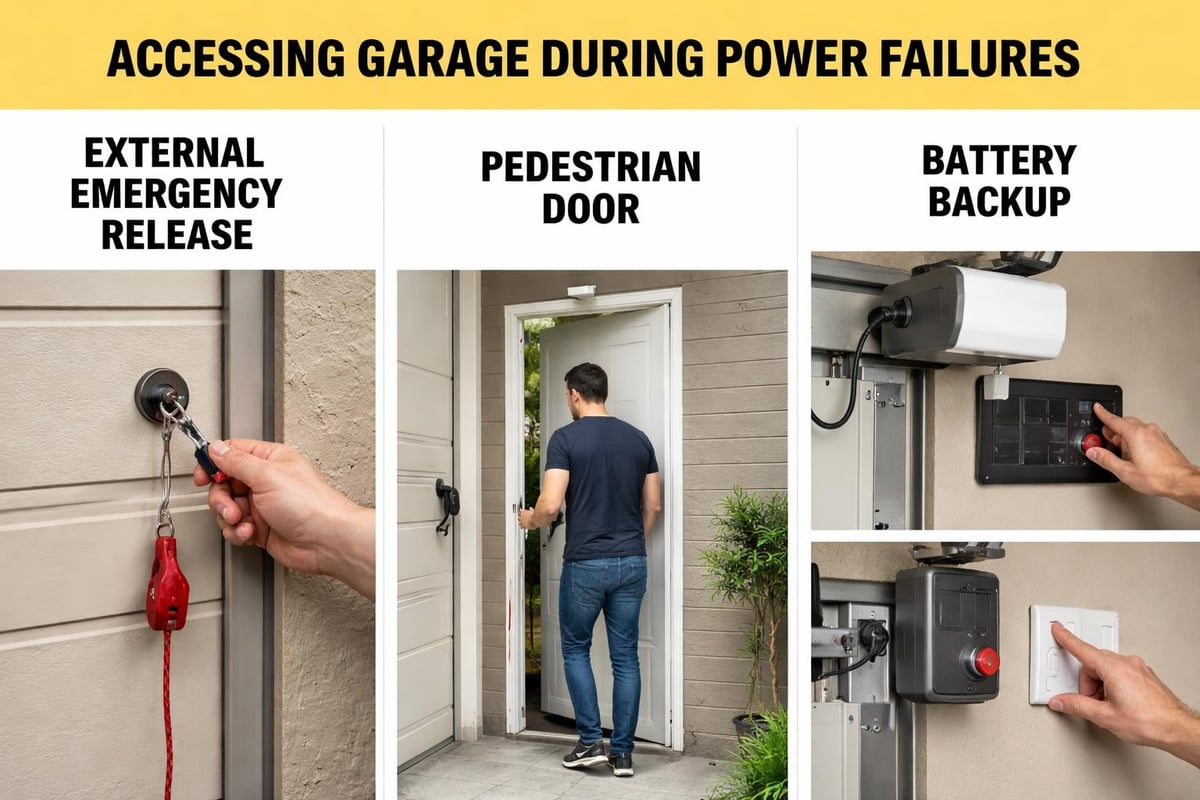
Many newer garage door systems include external access to the emergency release mechanism. This typically involves a small lock cylinder near the top center of the door that connects to the release mechanism via a cable.
To use this system:
- Insert the emergency release key into the exterior lock
- Turn the key and pull the attached cable
- This action disengages the trolley from outside
- Manually lift the door from the bottom
Not all doors have this feature, so verify whether your system includes external emergency access. Mesa Garage Doors’ tutorial provides detailed information about both internal and external manual operation methods.
Alternative Access Methods
If your door lacks external emergency release access, consider these alternatives:
- Enter through a side door if your garage has one
- Use a pedestrian door to access the interior release cord
- Install an external battery backup system for future outages
- Keep a spare key for any alternative garage entry points
For homes without alternative access, professional installation of an external emergency release or battery backup system is highly recommended.
Re-Engaging Your Automatic Opener After Power Returns
Once electricity is restored, you'll need to reconnect your door to the automatic opener system. This process is straightforward but requires attention to detail.
Proper Re-Engagement Procedure
Follow these steps to safely restore automatic operation:
- Position the door fully closed for easiest re-engagement
- Pull the emergency release cord toward the door (away from the motor)
- Press your wall button or remote to activate the opener
- The trolley should reconnect automatically as it moves along the rail
- Test the connection by operating the door through a complete cycle
Some opener models require manual re-engagement by pushing the trolley back into the engaged position. Consult your owner's manual for model-specific instructions, as detailed in A Better Garage Door’s resource guide.
Verifying Proper Operation
After re-engagement, perform these verification tests:
- Door opens and closes smoothly with the remote
- Safety sensors function correctly (test by breaking the beam during closing)
- Auto-reverse feature activates when encountering resistance
- Door stops at proper fully-open and fully-closed positions
If you notice unusual noises, jerky movement, or improper stopping positions, professional garage door repair may be necessary to address alignment or adjustment issues.
Common Challenges and Troubleshooting
Even with proper technique, you may encounter difficulties when learning how to open garage door without power. Understanding common problems helps you respond appropriately.
Door Won't Lift or Feels Extremely Heavy
Primary cause: Broken or disconnected springs
Garage door springs counterbalance the door's weight, making it easy to lift manually. When springs fail, the door becomes dangerously heavy. Never attempt to operate a door with broken springs as this poses serious injury risk.
Warning signs of spring failure include:
- Loud bang or snap before the door became heavy
- Visible gap in the torsion spring above the door
- Door drops quickly when released
- Cables hanging loose from drums
If you suspect spring damage, contact professional spring repair services before attempting further operation.
Door Stuck or Won't Move Along Track
Check for these common obstructions:
- Debris in the track channels
- Bent or damaged track sections
- Frozen rollers during winter weather
- Locked manual deadbolts (if equipped)
HomeGambit’s troubleshooting guide suggests inspecting the entire track system for visible damage before applying force to a stuck door.
Emergency Release Cord Doesn't Disengage
If pulling the cord doesn't release the trolley:
- Try pulling at different angles while applying steady pressure
- Check whether the cord has become disconnected from the release lever
- Verify you're pulling the correct cord (some openers have multiple cords)
- Inspect for mechanical damage to the release mechanism
Persistent release problems may indicate worn or damaged components requiring professional attention.
Battery Backup Systems and Alternative Solutions
Modern technology offers several solutions to minimize disruption during power outages, making it less critical to know how to open garage door without power manually.
Garage Door Opener Battery Backup
Many contemporary opener models include integrated battery backup systems that maintain automatic operation during outages. When considering upgrades or new installations, battery backup should be a priority feature.
Benefits of battery backup systems include:
- Continued automatic operation during power loss
- No need for manual disengagement
- Maintained security and convenience
- Typically provides 24-50 door cycles per charge
Professional installation ensures proper battery integration and optimal performance. When you're ready to upgrade to a more reliable system, Garage Door Opener Installation provides expert setup of battery-equipped units, ensuring your garage remains accessible regardless of power conditions.
Portable Generator Connections
For areas experiencing frequent outages, connecting your garage door opener to a portable generator provides another solution. However, this approach requires:
- Proper electrical connections through a transfer switch
- Generator capacity sufficient for the opener motor
- Safe generator placement with adequate ventilation
- Understanding of electrical safety protocols
According to Republic Garage Doors’ creative solutions guide, generator backup works best when professionally installed with appropriate safety measures.
Safety Considerations and Best Practices
Understanding how to open garage door without power includes recognizing when professional help is necessary and maintaining safe practices throughout the process.
When to Call Professionals
Seek professional assistance in these situations:
| Situation | Risk Level | Professional Action Needed |
|---|---|---|
| Broken springs visible | High | Immediate spring replacement |
| Door off track | Moderate | Track realignment and inspection |
| Cables frayed or loose | High | Cable replacement and tensioning |
| Excessive door weight | Moderate | Balance adjustment or spring repair |
| Bent panels or tracks | Moderate | Panel or track replacement |
Easy Garage Door Repair’s safety guide emphasizes that attempting repairs beyond basic manual operation can lead to serious injury or property damage.
Preventive Maintenance for Emergency Readiness
Regular maintenance ensures your door operates smoothly both automatically and manually:
- Test the emergency release monthly to verify proper function
- Lubricate moving parts every six months
- Inspect springs and cables for wear or damage
- Check door balance by lifting halfway and releasing (should stay in place)
- Clean and align tracks to prevent binding
Homeowners throughout Kitsap County can benefit from reviewing year-round maintenance tips to keep their systems in optimal condition.
Teaching Family Members
Everyone in your household should understand basic manual operation procedures. Take time to:
- Show all adults and older children where the emergency release cord is located
- Demonstrate proper pulling technique and door lifting
- Explain safety precautions and when not to operate manually
- Practice the procedure together during a non-emergency situation
- Post written instructions near the interior garage door entrance
This preparation ensures anyone can safely access the garage during emergencies, as recommended by AODCT’s operational guide.
Special Considerations for Commercial Applications
Business owners face unique challenges when power outages affect commercial garage doors. Understanding how to open garage door without power is especially critical for operations that depend on continuous access.
Commercial Door Manual Operation
Commercial garage doors are significantly heavier than residential models and often feature different spring systems. Manual operation requires:
- Multiple people to safely lift larger commercial doors
- Understanding of industrial spring systems (often high-cycle torsion springs)
- Awareness of enhanced safety risks due to increased weight and size
- Established protocols for employee safety during manual operation
Commercial property managers should schedule regular training sessions to ensure staff can safely operate doors during emergencies.
Emergency Access Planning
Businesses should develop comprehensive emergency access plans that include:
- Designated personnel responsible for manual operation
- Alternative access routes for critical operations
- Backup power systems for essential facilities
- Regular testing schedules for emergency procedures
- Professional maintenance contracts for commercial systems
For commercial garage door needs throughout Bainbridge Island and Kitsap County, establishing relationships with experienced garage service providers ensures rapid response when issues arise.
Weather-Related Power Outage Considerations
Pacific Northwest weather patterns create specific challenges for garage door operation during power failures, particularly during winter storms and high winds.
Winter Storm Preparations
Cold weather and snow accumulation compound power outage challenges:
- Ice formation can freeze doors to the ground or bind rollers in tracks
- Cold temperatures make manual lifting more difficult due to stiffened lubricants
- Snow accumulation adds weight and resistance to door operation
- Extended outages may require multiple access cycles
Before winter weather arrives, apply cold-weather lubricants to moving parts and ensure weather sealing is intact. Understanding modern opener technologies can help you select systems better suited to challenging weather conditions.
Wind and Storm Damage Assessment
After severe weather events, inspect your garage door carefully before attempting manual operation:
- Check for panel damage or warping
- Verify tracks remain properly aligned and mounted
- Inspect springs and cables for stress damage
- Look for debris in tracks or around rollers
- Assess whether the door hangs level
Any visible damage warrants professional inspection before continuing use, whether manual or automatic.
Long-Term Solutions and System Upgrades
While knowing how to open garage door without power provides short-term solutions, investing in system upgrades offers permanent improvements to accessibility and reliability.
Modern Opener Features
Contemporary garage door openers offer advanced features that minimize power outage impact:
- Integrated battery backup maintaining 1-2 days of normal operation
- Smart connectivity sending alerts about power status and battery levels
- Enhanced security preventing forced entry during outages
- Quieter operation using belt drives and DC motors
When selecting new systems, prioritize models with comprehensive backup capabilities and proven reliability records, as discussed in brand comparison guides.
Whole-Home Backup Power Integration
For comprehensive protection against power interruptions, consider whole-home backup solutions:
Standby generators automatically activate during outages, providing:
- Seamless transition from grid to generator power
- Continuous operation of all electrical systems including garage doors
- No manual intervention required
- Extended runtime for multi-day outages
Transfer switches enable safe connection of portable generators to home circuits, including:
- Professional installation ensuring electrical code compliance
- Safe isolation from utility power
- Dedicated circuits for critical systems
- Manual activation when needed
These solutions represent significant investments but provide peace of mind and convenience for homes experiencing frequent or extended outages.
Mastering how to open garage door without power ensures you maintain access to your home and vehicles during unexpected electrical failures. Whether you're dealing with routine outages or emergency situations, following proper safety procedures and understanding your system's manual operation protects both you and your equipment. If you're experiencing persistent issues with manual operation, notice signs of spring or component failure, or want to upgrade to more reliable systems with battery backup, NextLevel Garage Co. serves homeowners and businesses throughout Bainbridge Island and Kitsap County with expert repair, installation, and maintenance services that keep your garage door operating smoothly in any situation.