

Your garage door opener operates hundreds of times each year, quietly working in the background until something goes wrong. Regular garage opener maintenance prevents unexpected breakdowns, extends equipment lifespan, and keeps your family safe. For homeowners and businesses throughout Kitsap County, understanding proper maintenance procedures can save thousands of dollars in emergency repairs while ensuring reliable daily operation. This comprehensive guide covers everything you need to know about maintaining your garage door opener system in 2026.
Understanding Your Garage Door Opener System
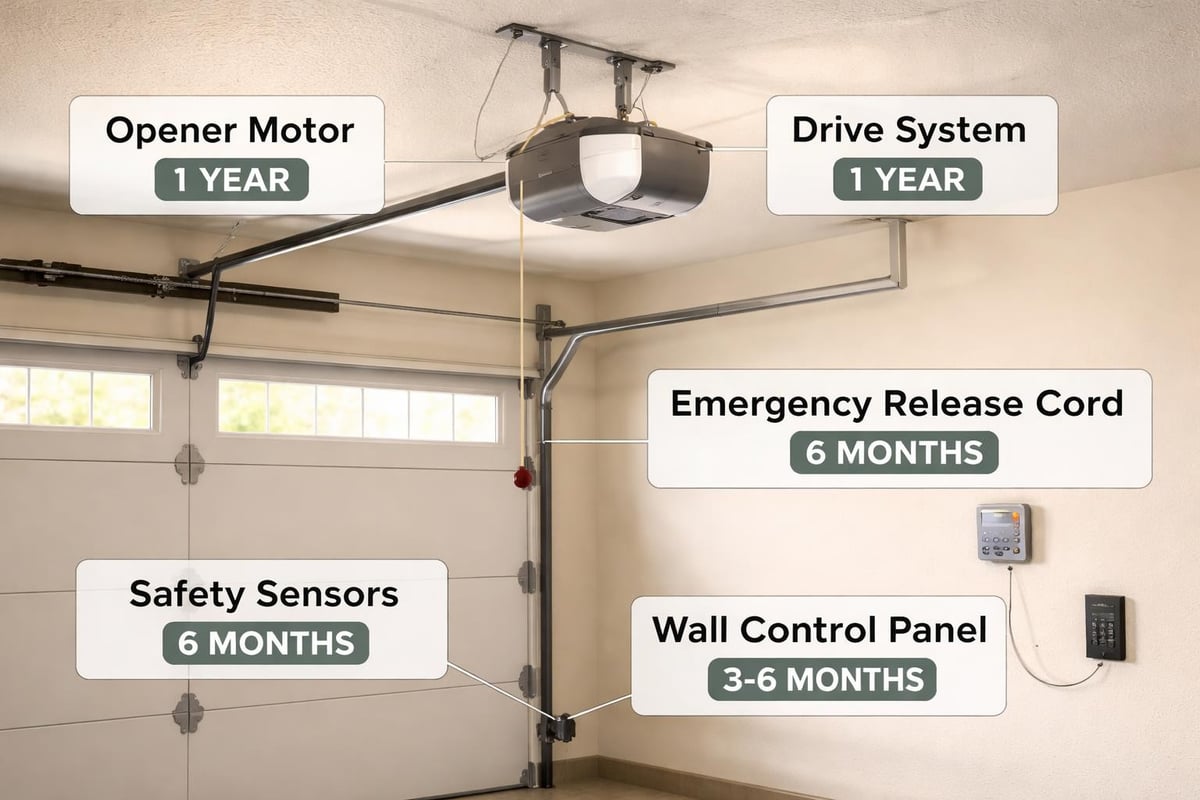
Modern garage door openers consist of multiple components working together to lift and lower heavy doors safely. The motor unit mounts to the ceiling and connects to the door through a drive system-either chain, belt, or screw drive. Safety sensors positioned at ground level prevent the door from closing when objects or people are in the path.
Key Components Requiring Regular Attention
Each component in your opener system needs specific maintenance at different intervals. The drive mechanism requires lubrication every six months, while safety sensors need monthly testing. Photo eyes must stay clean and properly aligned to function correctly.
Critical maintenance points include:
- Motor housing and fan vents
- Drive chain, belt, or screw mechanism
- Wall-mounted control panel
- Safety reversal sensors
- Emergency release mechanism
- Remote control batteries
Hardware components wear at different rates depending on usage patterns and environmental conditions. Homes in coastal areas like Bainbridge Island face additional challenges from salt air and humidity, which accelerate corrosion and require more frequent inspections.
Monthly Garage Opener Maintenance Tasks
Setting aside 15 minutes each month for basic checks prevents most common failures. Start by observing the door's operation from inside your garage with good lighting. Listen for unusual sounds like grinding, scraping, or excessive chain noise that indicate developing problems.
Visual Inspection Checklist
Walk through a systematic visual inspection before touching any components. Look for loose hardware, frayed cables, worn rollers, and misaligned tracks. These issues often appear gradually and worsen over time without intervention.
Check the following areas monthly:
- Motor unit mounting – Ensure bolts remain tight and the unit doesn't vibrate excessively
- Drive system alignment – Verify the chain or belt runs centered without rubbing
- Safety sensor position – Confirm sensors face each other with indicator lights on
- Door balance – Disconnect the opener and manually lift the door halfway to test spring tension
- Weather stripping – Inspect bottom seal for cracks and proper contact with the floor
The safety sensor test takes only seconds but prevents serious injuries. Place a cardboard box in the door's path and press the close button-the door should reverse immediately upon contact with the obstruction.
Testing Safety Reversal Systems
Modern openers include two separate safety systems: photo eye sensors and mechanical force detection. Both systems must work correctly to meet current safety standards. Test the photo eye system by breaking the beam with your hand while the door closes-it should reverse instantly.
For mechanical reversal testing, place a two-by-four flat on the ground where the door would close. When the door contacts the board, it should reverse within two seconds. If reversal takes longer or doesn't occur, professional adjustment is necessary immediately.
Seasonal Garage Opener Maintenance Schedule
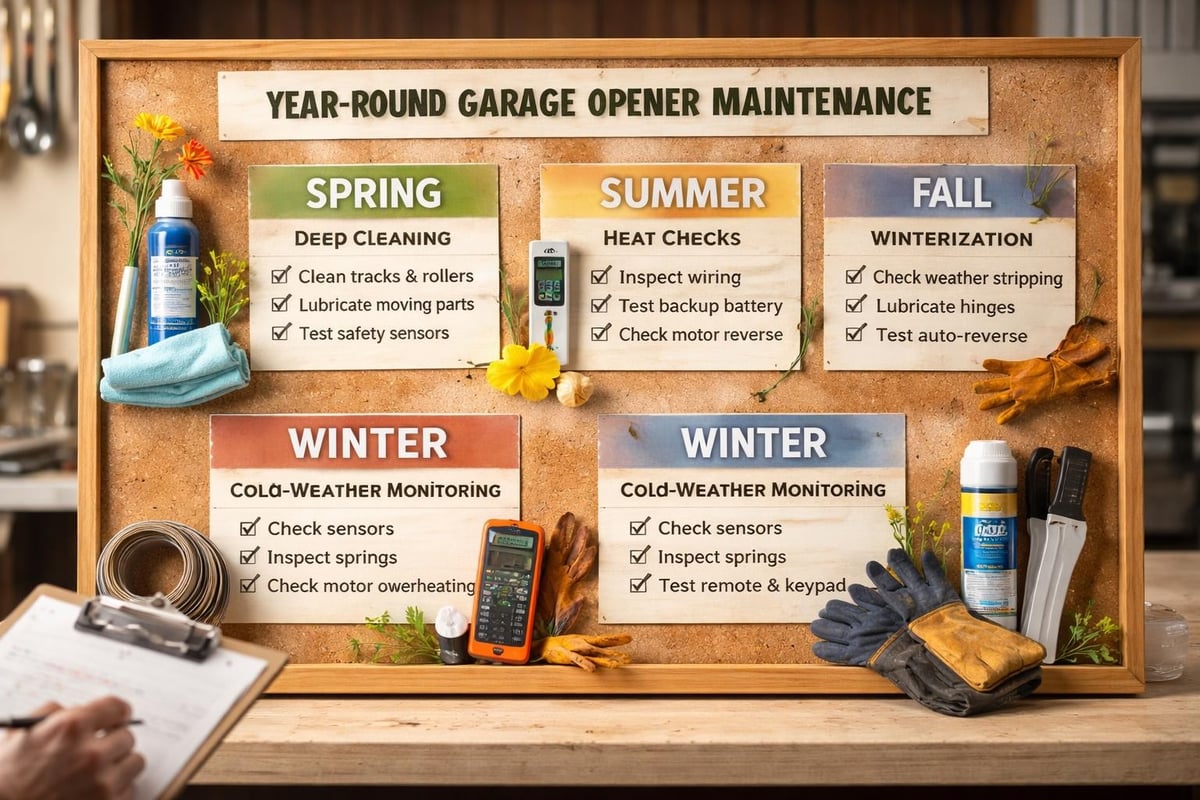
Different seasons bring unique challenges for garage door systems. Spring and fall represent ideal times for comprehensive maintenance, while summer and winter require specific attention to temperature-related issues.
| Season | Primary Tasks | Focus Areas | Estimated Time |
|---|---|---|---|
| Spring | Deep cleaning, full lubrication | Remove winter debris, test all systems | 45-60 minutes |
| Summer | Heat-related checks, remote battery replacement | Inspect motor ventilation, check sensor alignment | 20-30 minutes |
| Fall | Pre-winter preparation, seal inspection | Weatherstripping replacement, hardware tightening | 45-60 minutes |
| Winter | Cold weather monitoring, ice prevention | Check for moisture, ensure smooth operation | 15-20 minutes |
Spring Maintenance Deep Dive
Spring represents the perfect time for thorough garage opener maintenance after winter's harsh conditions. Begin by cleaning all components with a damp cloth to remove accumulated dust, cobwebs, and debris that interfere with proper operation.
Apply fresh lubricant to all moving parts using garage door-specific products. According to The Home Depot’s maintenance guide, proper lubrication reduces friction and extends component life significantly. Focus on roller bearings, hinges, springs, and the drive mechanism.
Inspect the entire track system for dents, bends, or misalignment. Even small track irregularities cause the door to bind and place excessive strain on the opener motor. Remove any debris from tracks using a vacuum and wipe clean with a cloth.
Lubrication Best Practices
Proper lubrication represents the single most important aspect of garage opener maintenance. Using correct products and techniques prevents premature wear while reducing operational noise significantly. Never use WD-40 or similar penetrating oils, which attract dust and provide inadequate long-term protection.
Choosing the Right Lubricants
Professional-grade garage door lubricants contain special additives that withstand temperature extremes and resist moisture. Lithium-based spray lubricants work well for most applications, while white lithium grease suits heavier components like trolley gears.
Recommended lubrication products include:
- Silicone-based spray for plastic rollers and weather seals
- Lithium grease for metal gears and screw drives
- White lithium spray for chains and springs
- Penetrating oil only for loosening frozen bolts (followed by proper lubricant)
Apply lubricant sparingly-excess product attracts dirt and creates messy buildup. A light coating on each component provides adequate protection without waste. Amarr’s maintenance guidelines recommend wiping away any excess lubricant after application.
Step-by-Step Lubrication Process
Begin lubrication with the door in the closed position and the opener disconnected from power. This prevents accidental activation during maintenance and provides safe access to all components.
Follow this systematic approach:
- Clean all parts with a dry cloth to remove old lubricant and debris
- Apply lubricant to roller bearings at the wheel shaft
- Spray hinges at pivot points where metal contacts metal
- Lubricate both torsion springs along their entire length
- Apply product to the top of the chain or along the screw drive
- Wipe away excess to prevent dripping and dirt accumulation
Reconnect power and run several complete door cycles to distribute lubricant evenly. Listen for quieter operation and smoother movement as the lubricant works into bearings and contact points.
Drive System Specific Maintenance
Chain drive, belt drive, and screw drive openers each require different maintenance approaches. Understanding your specific system's needs ensures proper care and prevents damage from incorrect procedures.
Chain Drive Systems
Chain drive openers represent the most common residential type and require regular tension adjustment. A properly tensioned chain hangs approximately one-half inch below the rail when measured at the midpoint. Excessive sagging creates noise and accelerates wear, while over-tightening strains the motor.
Clean the chain every six months using a soft brush and degreaser, then apply fresh lubricant along the entire length. According to America’s Preferred Home Warranty, this simple task reduces noise by up to 50% and extends chain life significantly.
Belt Drive Maintenance
Belt drive systems operate more quietly than chains but still need regular attention. Inspect the belt for fraying, cracking, or glazing every three months. Unlike chains, belts should never be lubricated-doing so causes slipping and reduces grip.
Check belt tension by pressing the center point with moderate finger pressure. The belt should deflect about one-quarter inch. Adjustment procedures vary by manufacturer, so consult your owner's manual for specific instructions.
Screw Drive Care
Screw drive openers feature a threaded steel rod that rotates to move the trolley. These systems require lubrication along the entire rod length every six months. Use white lithium grease specifically designed for screw drives to prevent binding and ensure smooth operation.
Safety Sensor Maintenance and Troubleshooting
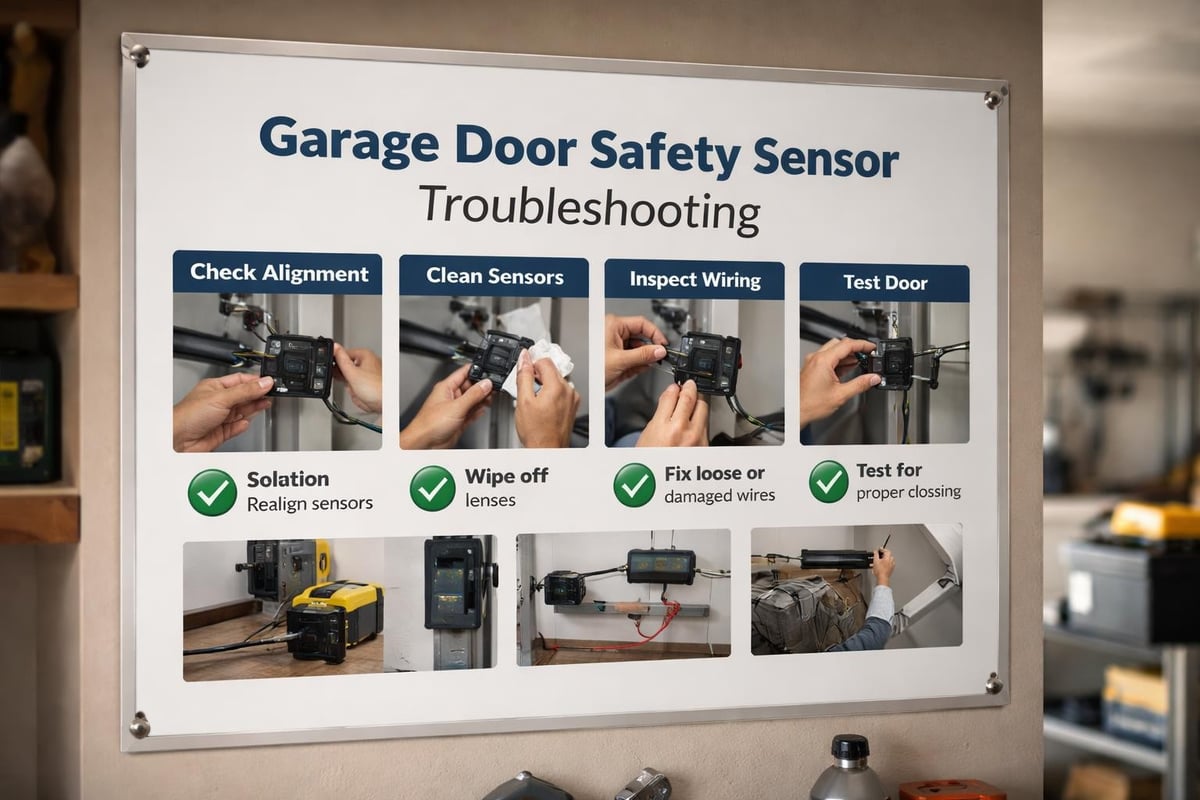
Photo eye sensors prevent injuries and property damage by stopping the door when objects block its path. These sensors require careful alignment and regular cleaning to function reliably. Misaligned or dirty sensors cause the door to reverse unexpectedly or refuse to close completely.
Proper Sensor Alignment
Each sensor must point directly at its partner across the door opening. Most sensors include LED indicators showing proper alignment and connection status. A solid green light typically indicates good alignment, while flashing or red lights signal problems.
If your opener won't close and the wall button light flashes, check sensor alignment first. Gently adjust the sensor brackets until both indicators show solid lights. Mesa Garage Doors recommends using a laser level for precise alignment when troubleshooting persistent issues.
| Issue | Likely Cause | Quick Fix |
|---|---|---|
| Door reverses immediately | Sensor misalignment | Adjust brackets until lights are solid |
| Flashing wall button | Blocked sensor beam | Remove obstructions, clean lenses |
| No sensor lights | Wiring problem | Check connections at sensor and motor |
| Intermittent operation | Loose mounting | Tighten sensor brackets securely |
Cleaning and Testing Procedures
Sensors collect dust, cobwebs, and water spots that interfere with the infrared beam. Clean lenses monthly using a soft cloth slightly dampened with glass cleaner. Avoid abrasive materials that scratch the lens surface and reduce sensitivity permanently.
After cleaning, perform the reversal test by placing an object in the door's path. The door should reverse within one second of the beam breaking. If response seems slow or inconsistent, professional inspection may reveal wiring issues or sensor degradation requiring replacement.
Professional vs. DIY Garage Opener Maintenance
Knowing which tasks you can safely handle yourself and which require professional expertise protects both your investment and your safety. Simple maintenance like lubrication and visual inspections suit DIY approaches, while spring adjustments and electrical work demand professional skills.
Tasks Suitable for Homeowners
Most routine garage opener maintenance falls within typical homeowner capabilities. These tasks require basic tools and minimal technical knowledge while providing significant benefits for your system's longevity.
Safe DIY maintenance includes:
- Monthly visual inspections of all components
- Cleaning tracks, sensors, and housing
- Lubricating moving parts every six months
- Testing safety reversal systems
- Replacing remote control batteries
- Tightening loose hardware with appropriate tools
For comprehensive year-round maintenance tips, homeowners can reference detailed guides that break down each task into manageable steps. Following manufacturer recommendations prevents warranty violations while ensuring proper care.
When to Call Professionals
Certain garage opener maintenance tasks involve high-tension components, electrical systems, or precise adjustments that risk injury or property damage when performed incorrectly. Professional technicians have specialized tools, training, and insurance coverage for these complex procedures.
Contact qualified technicians for these services:
- Spring replacement or adjustment – Torsion springs store enormous energy and can cause severe injury
- Cable repairs – Frayed or broken cables indicate spring problems requiring expert diagnosis
- Motor replacement – Electrical work demands proper licensing and code compliance
- Track realignment – Severely bent or misaligned tracks need specialized equipment for correction
- Opener programming – Modern smart openers require proper configuration for security features
Professional garage opener maintenance typically costs between $100 and $200 annually but prevents expensive emergency repairs. State Line Door & Lift emphasizes that professional tune-ups identify developing problems before they cause complete system failure.
For homeowners seeking reliable opener performance with minimal hassle, Garage Door Opener Installation provides professional installation that includes comprehensive maintenance training. Technicians explain proper care procedures specific to your model and answer questions about optimal maintenance schedules.
Common Problems and Preventive Solutions
Understanding frequent garage opener maintenance issues helps you recognize warning signs early. Most problems develop gradually through normal wear or neglect rather than sudden catastrophic failure.
Addressing Noise Issues
Excessive operational noise usually indicates insufficient lubrication or loose hardware. A properly maintained opener operates quietly enough for normal conversation in the garage during movement. Grinding, scraping, or rattling sounds require immediate attention to prevent component damage.
The Tri-Lakes comprehensive maintenance guide identifies specific sounds and their likely causes, helping homeowners diagnose problems accurately. Chain slap against the rail indicates loose tension, while squeaking rollers need bearing lubrication.
Resolving Intermittent Operation
Doors that work inconsistently often suffer from dirty sensors, loose wiring connections, or failing remote batteries. Check the simplest causes first before assuming major component failure requires replacement.
Temperature extremes affect opener performance significantly. Cold weather thickens lubricants and contracts metal components, while heat can trigger thermal overload protection in motors. Adjusting force settings seasonally compensates for these environmental factors and maintains reliable operation year-round.
Remote Control and Smart Technology Maintenance
Modern garage door openers integrate with home automation systems and offer smartphone control features. These advanced capabilities require additional maintenance considerations beyond traditional mechanical systems.
Battery and Signal Management
Remote controls and wireless keypads need fresh batteries annually for reliable performance. Weak batteries cause intermittent operation and reduced range, frustrating users with unpredictable behavior.
Smart openers connecting to Wi-Fi networks require periodic router reboots and app updates. According to understanding garage door opener technologies, keeping firmware current ensures compatibility with home automation platforms and provides access to the latest security features.
Security Feature Testing
Rolling code technology and vacation lock modes protect against unauthorized entry. Test these features quarterly by attempting to open the door with an old remote after reprogramming the receiver. The door should remain closed, confirming proper security function.
Monitor activity logs in smart opener apps to verify that all recorded openings correspond to actual usage. Unexpected activity may indicate technical glitches requiring attention or, rarely, security compromises needing immediate professional evaluation.
Emergency Preparedness and Manual Operation
Power outages and mechanical failures occasionally require manual door operation. Understanding emergency procedures prevents panic situations and potential injuries during urgent circumstances.
Using the Emergency Release
The red emergency release cord disconnects the trolley from the door, allowing manual operation during power failures. Pull the cord downward while the door sits fully closed-never activate the release with the door open, as it may slam down unexpectedly.
After restoring power, reconnect the trolley by pulling the release cord toward the door and running a complete open cycle. The trolley should automatically re-engage with the carriage. For detailed instructions, opening garage doors without power provides step-by-step guidance for various opener models.
Backup Power Systems
Battery backup units maintain opener functionality during outages, providing peace of mind for households with limited alternative entry points. These systems require annual testing and battery replacement every three to five years depending on usage.
Test backup power by unplugging the opener and attempting normal operation. The system should activate automatically and operate the door several complete cycles before battery depletion. Garage Living’s preventive maintenance tips recommend documenting test dates to ensure regular verification of emergency systems.
Record Keeping and Maintenance Logs
Documenting garage opener maintenance activities creates valuable records for warranty claims, troubleshooting, and home sale disclosures. Simple logs tracking inspection dates, repairs performed, and parts replaced help identify patterns and plan future service needs.
Creating Effective Maintenance Records
A basic maintenance log should include the date, tasks completed, products used, and any observations about system performance. Note unusual sounds, response delays, or component wear for reference during future inspections.
Digital photos documenting component conditions over time provide visual proof of proper care and highlight gradual deterioration requiring professional attention. Store records with your home maintenance files or in cloud storage for easy access during emergency situations requiring contractor communication.
Warranty Documentation
Manufacturer warranties often require proof of regular maintenance for coverage validation. Keep receipts for professional service calls, lubricants purchased, and replacement parts installed. These documents demonstrate reasonable care and may qualify you for warranty repairs otherwise denied for alleged neglect.
Professional garage opener maintenance creates automatic documentation when technicians provide service reports. These detailed records satisfy warranty requirements while offering expert assessments of system condition and remaining component life expectancy.
Regular garage opener maintenance protects your investment, ensures family safety, and prevents costly emergency repairs throughout the system's lifespan. By implementing monthly inspections, seasonal deep maintenance, and prompt professional service when needed, homeowners throughout Kitsap County can enjoy years of reliable, quiet garage door operation. Whether you need expert guidance on proper maintenance techniques, professional tune-up services, or complete system upgrades, NextLevel Garage Co. provides the expertise and quality workmanship to keep your garage door system operating at peak performance for years to come.