

Industrial facilities demand equipment that performs reliably under continuous use, and few components prove as critical as the garage door opener. Unlike residential models designed for occasional home use, industrial garage door openers must handle hundreds of daily cycles while supporting doors weighing thousands of pounds. Across warehouses, manufacturing plants, and commercial facilities in regions like Kitsap County, Washington, these robust systems ensure seamless operations while maintaining strict safety standards. Understanding what sets these heavy-duty openers apart helps facility managers make informed decisions that protect both investments and personnel.
What Defines Industrial Garage Door Openers
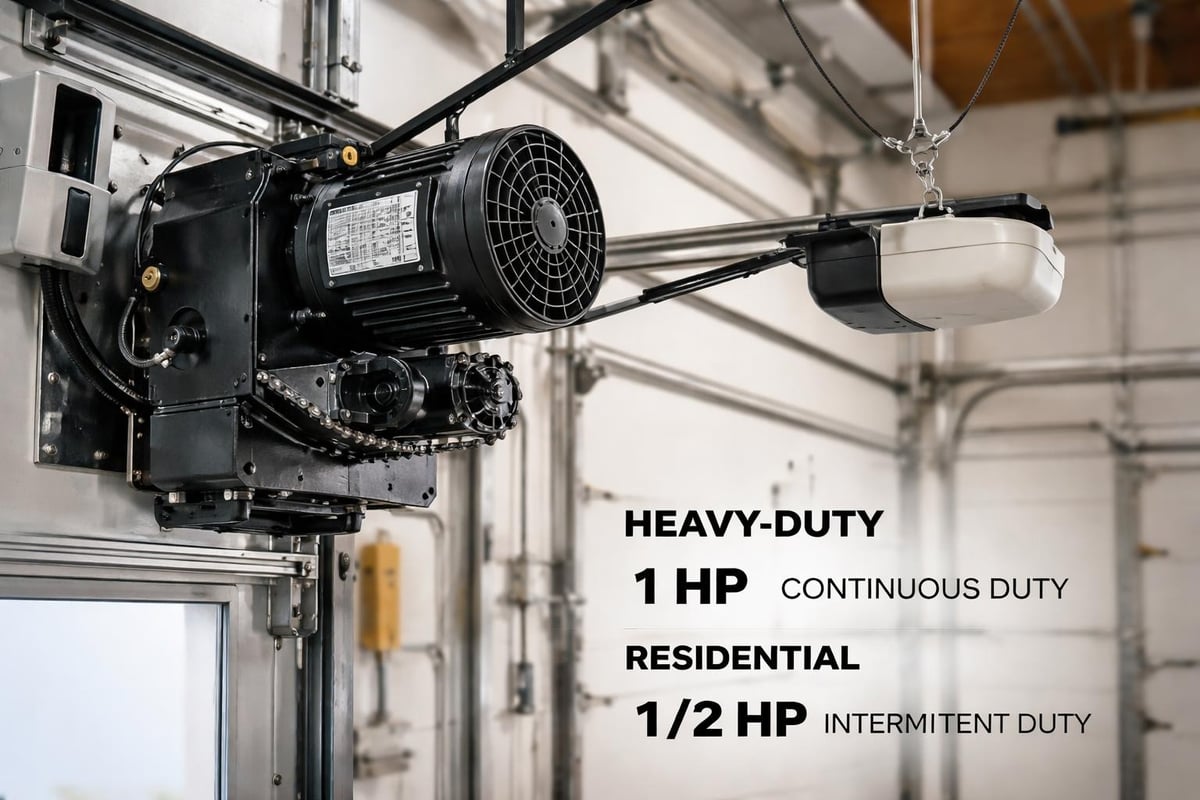
Industrial garage door openers differ fundamentally from their residential counterparts in construction, power delivery, and operational capacity. These commercial-grade systems feature heavy-duty motors typically ranging from one to three horsepower, compared to residential models that rarely exceed one horsepower. The enhanced power enables these units to lift sectional doors weighing between 400 and 2,000 pounds, depending on door size and insulation requirements.
Power and Duty Cycle Requirements
The duty cycle represents one of the most critical specifications when evaluating industrial garage door openers. Commercial-rated operators must sustain 30 to 100 cycles per hour without overheating or experiencing performance degradation. This capability proves essential for facilities with frequent loading dock activity or multiple shift operations.
Motor types directly impact longevity and performance:
- Three-phase motors deliver consistent power with minimal electrical noise
- Single-phase motors offer versatility for facilities without three-phase power
- Variable frequency drives (VFDs) enable soft starts and customizable speed control
- Brake systems ensure controlled door descent and emergency stopping
The International Association of Certified Home Inspectors provides detailed specifications on operator classifications and performance standards that apply across residential and commercial applications.
Key Safety Features in Commercial Applications
Safety mechanisms separate professional-grade industrial garage door openers from basic models. The U.S. Consumer Product Safety Commission has established rigorous standards following incidents with non-reversing automatic systems. Modern industrial operators incorporate multiple redundant safety systems to protect personnel and property.
Mandatory Safety Components
Every compliant industrial installation must include specific safety features:
- Photo-eye sensors positioned six inches above floor level to detect obstructions
- Force-limiting controls that reverse door travel when encountering resistance
- Emergency disconnect mechanisms allowing manual operation during power failures
- Audible warning systems alerting personnel before door movement
- Edge sensors mounted on door bottoms for additional obstruction detection
| Safety Feature | Function | Compliance Standard |
|---|---|---|
| Photo-eye Sensors | Obstruction detection | UL 325 Type B |
| Force Limiting | Automatic reversal | UL 325 entrapment protection |
| Emergency Stop | Immediate halt capability | OSHA 1910.212 |
| Manual Release | Power-loss operation | ANSI/DASMA 108 |
Many facilities serving areas like Bainbridge Island and surrounding communities integrate these safety systems with building management platforms for centralized monitoring. Regular testing ensures these critical systems function properly when needed most.
The American Society of Home Inspectors outlines best practices for testing automatic garage door opener safety features, principles that apply equally to industrial installations.
Drive System Options for Heavy-Duty Applications
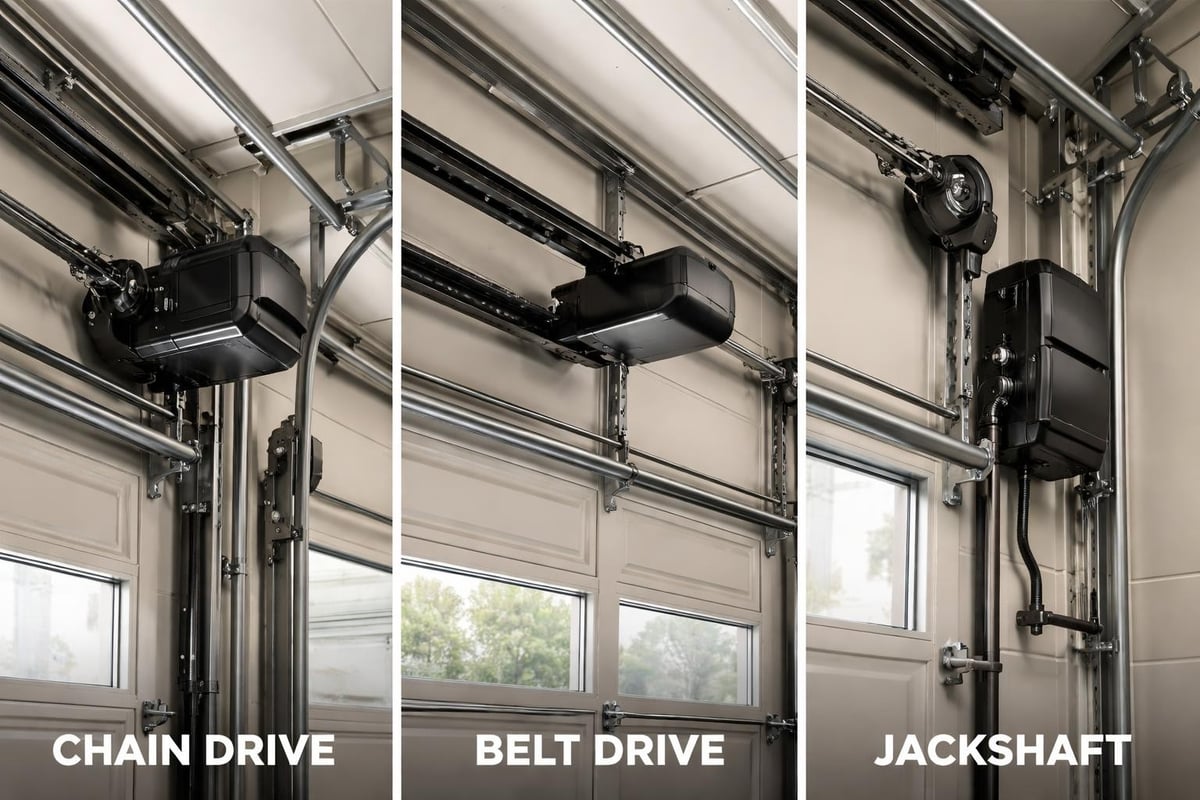
Industrial garage door openers utilize three primary drive mechanisms, each offering distinct advantages for specific applications. Selecting the appropriate drive system depends on door weight, cycle frequency, and environmental conditions.
Chain Drive Systems
Chain drive operators remain the most common choice for industrial applications due to their proven reliability and cost-effectiveness. These systems employ heavy-duty roller chains similar to those found in industrial equipment, capable of lifting doors up to 2,000 pounds.
Benefits include:
- Exceptional durability under continuous use
- Lower initial investment compared to alternatives
- Easy maintenance and component replacement
- Proven performance in harsh environments
Limitations to consider:
- Higher noise levels during operation
- Regular lubrication requirements
- Potential chain stretch over time requiring adjustment
Belt Drive Technology
Belt-driven industrial garage door openers use reinforced steel or polyurethane belts that deliver quieter operation than chain systems. These units suit facilities where noise reduction matters, such as manufacturing plants with strict sound regulations or loading docks adjacent to office spaces.
Modern belt materials have evolved significantly, with manufacturers like the Chamberlain Group pioneering innovations in belt durability and longevity. Contemporary belts withstand industrial duty cycles while maintaining dimensional stability across temperature extremes.
Jackshaft and Direct Drive Systems
Jackshaft operators mount directly to the torsion bar shaft, eliminating overhead components entirely. This configuration proves ideal for facilities with limited headroom or those requiring maximum ceiling space for storage systems or material handling equipment.
Direct drive systems feature the motor traveling along a stationary rail, resulting in the quietest operation available. While typically more expensive, these systems deliver exceptional longevity with minimal maintenance requirements.
Horsepower Requirements and Motor Selection
Determining appropriate horsepower for industrial garage door openers requires careful analysis of door specifications and operational demands. Undersized motors struggle under load, leading to premature failure, while oversized units waste energy and increase initial costs unnecessarily.
Calculating Power Needs
Professional installation services assess multiple factors when specifying motor size:
- Total door weight including panels, insulation, and hardware
- Door height and width creating leverage demands
- Spring system condition and balance quality
- Anticipated duty cycle and usage patterns
- Environmental factors affecting friction and resistance
General horsepower guidelines:
| Door Weight | Recommended HP | Typical Application |
|---|---|---|
| Up to 650 lbs | 1/2 to 3/4 HP | Light commercial, smaller doors |
| 650-1,000 lbs | 1 HP | Standard commercial sectional doors |
| 1,000-1,500 lbs | 1-1/2 HP | Heavy-duty commercial applications |
| Over 1,500 lbs | 2-3 HP | Industrial rolling steel, insulated doors |
Three-phase motors deliver superior efficiency and smoother operation compared to single-phase alternatives. Facilities with existing three-phase electrical service should prioritize these motors for their industrial garage door openers. Those limited to single-phase power can achieve reliable performance with properly sized units featuring thermal overload protection.
Understanding garage door opener technologies available in 2026 helps facility managers evaluate options aligned with current operational needs and future expansion plans.
Control Systems and Integration Capabilities
Modern industrial garage door openers function as integrated components within broader building automation ecosystems. Advanced control systems enable remote monitoring, scheduled operations, and seamless integration with security and environmental management platforms.
Wired and Wireless Control Options
Contemporary installations offer multiple control interfaces:
- Hardwired wall stations providing basic open/close/stop functions
- Key switches securing operator access to authorized personnel
- Radio frequency (RF) transmitters enabling wireless operation
- Smartphone applications offering remote monitoring and control
- Building management system (BMS) integration for centralized facility control
Wireless technologies have transformed industrial operations by enabling operators to manage door systems from mobile devices. Facilities can monitor door status, receive maintenance alerts, and control access remotely, enhancing both security and operational efficiency.
Smart Technology Integration
Industrial garage door openers increasingly incorporate Internet of Things (IoT) capabilities that deliver actionable insights. These smart systems track:
- Cycle counting for predictive maintenance scheduling
- Performance metrics identifying gradual degradation
- Energy consumption supporting sustainability initiatives
- Access logs documenting usage patterns and security events
The market analysis for garage door opener technology projects continued growth in smart commercial applications, driven by demand for operational visibility and preventive maintenance capabilities.
Installation Considerations for Commercial Facilities
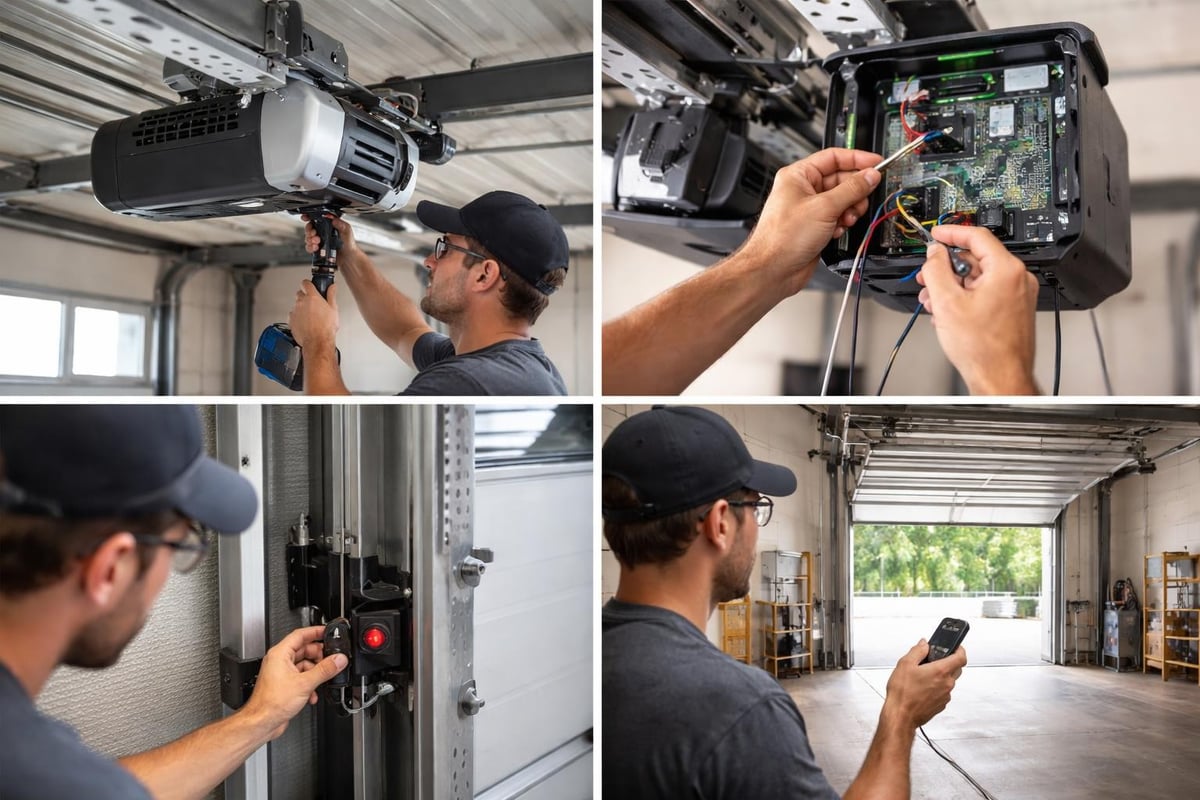
Professional installation of industrial garage door openers requires expertise beyond basic residential service capabilities. These complex systems demand precise configuration, proper electrical integration, and thorough safety system verification.
Pre-Installation Assessment
Qualified technicians evaluate several critical factors before installation begins:
- Structural adequacy of mounting surfaces and header supports
- Electrical capacity ensuring adequate power delivery and circuit protection
- Door balance confirming proper spring adjustment before operator installation
- Clearance requirements verifying adequate space for operator and track systems
- Environmental conditions addressing temperature, moisture, or corrosive atmospheres
For businesses in the Pacific Northwest, environmental considerations prove particularly important. High humidity, salt air exposure near coastal areas, and temperature fluctuations require industrial garage door openers with appropriate corrosion resistance and environmental ratings.
Professional garage door opener installation ensures systems operate safely and efficiently from day one. Experienced technicians properly configure force settings, test safety reversing systems, and verify all components meet manufacturer specifications and local building codes.
Electrical Requirements and Wiring
Industrial operators demand substantial electrical capacity compared to residential units. Most systems require dedicated 20 or 30-amp circuits with appropriate overcurrent protection. Three-phase motors need proper phase rotation and voltage balance to ensure optimal performance and longevity.
Electrical installations must comply with:
- National Electrical Code (NEC) requirements
- Local building and electrical codes
- Manufacturer specifications for voltage and amperage
- OSHA workplace safety standards for electrical systems
Professional electricians coordinate with door installation teams to ensure proper power delivery, grounding, and emergency disconnect placement. This collaboration prevents operational issues and ensures compliance with all applicable regulations.
Maintenance Programs for Maximum Uptime
Industrial garage door openers require regular maintenance to sustain performance under demanding duty cycles. Preventive maintenance programs significantly reduce unexpected failures that disrupt operations and create safety hazards.
Essential Maintenance Tasks
Comprehensive maintenance schedules include these critical activities:
Monthly inspections:
- Visual examination of drive components for wear
- Photo-eye sensor alignment and cleaning
- Safety reversal system testing
- Audible warning device verification
Quarterly maintenance:
- Drive chain or belt tension adjustment
- Lubrication of moving components
- Force setting verification and adjustment
- Emergency disconnect mechanism testing
Annual service:
- Complete operator inspection by qualified technician
- Motor bearing condition assessment
- Electrical connection tightness verification
- Control system diagnostics and updates
Many facilities maintain regular maintenance schedules that coordinate door systems with other building equipment, ensuring comprehensive facility upkeep while minimizing operational disruptions.
Common Failure Modes and Prevention
Understanding typical failure patterns helps facility managers implement targeted preventive measures:
| Component | Common Failure | Prevention Strategy |
|---|---|---|
| Drive chain/belt | Wear and stretching | Regular inspection, tension adjustment |
| Photo-eye sensors | Misalignment, debris | Monthly cleaning, alignment checks |
| Motor bearings | Lubrication breakdown | Scheduled lubrication, vibration monitoring |
| Control boards | Electronic component failure | Surge protection, temperature control |
| Emergency disconnect | Cable corrosion or binding | Annual testing, lubrication |
Implementing systematic maintenance programs extends equipment life while reducing total cost of ownership. Facilities tracking performance metrics often discover that preventive maintenance costs represent only 15-20% of reactive repair expenses over equipment lifetime.
Energy Efficiency and Operational Costs
Operating costs for industrial garage door openers extend beyond initial purchase price to encompass electricity consumption, maintenance expenses, and productivity impacts from downtime. Energy-efficient models reduce utility costs while supporting corporate sustainability initiatives.
Comparing Energy Consumption
Modern industrial garage door openers vary significantly in energy efficiency based on motor type, control systems, and operational features. Variable frequency drives (VFDs) enable soft starts that reduce peak electrical demand while extending motor life through gentler acceleration and deceleration.
Energy-saving features include:
- Automatic lighting controls that reduce standby power consumption
- Soft-start technology minimizing electrical surge during operation
- Adjustable speed settings matching door requirements to power delivery
- Standby mode activation during periods of inactivity
LED lighting systems integrated with contemporary operators consume 75% less energy than traditional incandescent or fluorescent options. These lighting upgrades deliver immediate operational cost savings while reducing maintenance requirements through extended bulb life.
Calculating Total Cost of Ownership
Evaluating industrial garage door openers requires analysis beyond purchase price. Total cost of ownership encompasses:
- Initial equipment and installation costs
- Energy consumption over expected service life
- Scheduled maintenance and component replacement
- Productivity losses from unplanned downtime
- Safety compliance and liability considerations
Higher-quality industrial garage door openers typically justify premium pricing through reduced maintenance needs, longer service life, and superior reliability. Facilities performing lifecycle cost analysis often discover that mid-tier and premium operators deliver 20-30% lower total ownership costs compared to budget alternatives.
Selecting the Right Industrial Operator
Choosing appropriate industrial garage door openers requires careful consideration of application-specific requirements, operational demands, and long-term facility needs. The buying guide for industrial door openers offers comprehensive selection criteria applicable across various commercial and industrial scenarios.
Application-Specific Requirements
Different facilities prioritize distinct operational characteristics:
Warehouses and distribution centers emphasize:
- High cycle capacity supporting continuous operations
- Rapid door opening speeds minimizing load/unload delays
- Integration with inventory management systems
- Reliability under extended operational hours
Manufacturing facilities require:
- Resistance to dust, debris, and environmental contaminants
- Quiet operation in noise-sensitive production areas
- Emergency operation capabilities during power disruptions
- Compliance with industry-specific safety regulations
Automotive service centers benefit from:
- Moderate duty cycle capabilities
- Integration with vehicle lift systems
- Easy manual operation for power loss scenarios
- Cost-effective solutions for multiple door installations
Understanding these distinct priorities helps facility managers specify industrial garage door openers optimized for their particular operational environment. Resources like commercial garage door opener options showcase the breadth of available solutions tailored to specific industry needs.
Manufacturer Reputation and Support
Selecting established manufacturers ensures access to replacement parts, technical support, and warranty service throughout equipment lifecycle. Leading brands maintain extensive dealer networks providing local installation and service capabilities essential for minimizing downtime.
Evaluation criteria should include:
- Manufacturer track record in commercial/industrial markets
- Local dealer presence and service capability
- Parts availability and lead times
- Warranty coverage and claim processes
- Technical support resources and training programs
Companies like Automatic Technology have built reputations on reliable commercial products backed by comprehensive support networks. Partnering with established manufacturers protects long-term operational continuity while ensuring access to evolving technology upgrades.
Safety Standards and Regulatory Compliance
Industrial garage door openers must comply with multiple safety standards established by regulatory agencies and industry organizations. These requirements protect workers while establishing liability frameworks that affect facility operations and insurance costs.
UL 325 Classification System
Underwriters Laboratories Standard 325 establishes safety requirements for door operators across various applications. The standard defines four operator classes based on installation location and intended use:
Class I: Residential applications with limited public access
Class II: Commercial applications in non-residential locations
Class III: Commercial applications requiring monitored entrapment protection
Class IV: Vehicular gate operators and barrier systems
Most industrial garage door openers fall under Class II or III designations, requiring specific entrapment protection devices appropriate to installation circumstances. Facilities must maintain documentation proving compliance with applicable classifications.
OSHA Requirements for Industrial Doors
Occupational Safety and Health Administration regulations address powered door systems under general machinery guarding standards. Key requirements include:
- Emergency stop devices accessible to operators
- Warning signs indicating automatic door operation
- Clear zones maintained around door travel paths
- Regular inspection and maintenance documentation
- Employee training on safe operation procedures
Facilities should coordinate with professional garage door inspection services to ensure ongoing compliance with OSHA standards. Regular third-party assessments identify potential issues before they create safety hazards or regulatory violations.
Troubleshooting Common Operational Issues
Even properly maintained industrial garage door openers occasionally develop operational problems requiring diagnostic assessment and corrective action. Understanding common issues enables facility personnel to identify simple corrections while recognizing situations requiring professional service.
Intermittent Operation Problems
Doors that operate inconsistently often indicate electrical or control system issues:
- Faulty photo-eye sensors disrupted by debris, misalignment, or electrical interference
- Loose electrical connections causing intermittent power delivery
- Control board failures resulting from voltage spikes or component degradation
- Radio frequency interference disrupting wireless control signals
Systematic troubleshooting begins with safety system verification. Facilities experiencing trouble with garage door openers should first confirm photo-eye sensors maintain proper alignment and cleanliness. Simple cleaning and adjustment often resolves operational inconsistency without requiring component replacement.
Performance Degradation Over Time
Gradual changes in door performance signal wear requiring attention:
- Slower opening/closing speeds indicating motor bearing wear or drive system deterioration
- Increased noise levels suggesting lubrication breakdown or component wear
- Jerky or uneven movement revealing door balance issues or track problems
- Frequent safety reversals pointing to force setting drift or obstruction sensor issues
Documenting performance changes helps maintenance teams identify developing problems before complete failures occur. Many facilities implement cycle counters tracking door operations, enabling predictive maintenance scheduling based on actual usage rather than arbitrary time intervals.
Selecting and maintaining appropriate industrial garage door openers ensures operational efficiency, worker safety, and long-term cost control for commercial facilities. These heavy-duty systems demand careful specification, professional installation, and diligent maintenance to deliver reliable performance under demanding conditions. Whether you're managing a warehouse in Kitsap County, operating a manufacturing facility on Bainbridge Island, or overseeing any commercial property requiring robust door automation, partnering with experienced professionals ensures optimal system performance. NextLevel Garage Co. brings decades of commercial and industrial garage door expertise to businesses throughout the region, delivering quality installations and responsive service that keeps your operations running smoothly.