

Overhead doors represent one of the most frequently used entry points in both residential and commercial properties, yet they often receive minimal attention until a malfunction occurs. Professional overhead door service encompasses far more than emergency repairs, including preventive maintenance, safety inspections, and performance optimization that extends equipment lifespan and protects property investment. For homeowners throughout Kitsap County and business owners managing commercial facilities, understanding the scope and importance of comprehensive overhead door service can prevent costly downtime, enhance security, and ensure occupant safety. This guide examines the critical components of overhead door service, industry best practices, and practical strategies for maintaining optimal performance year-round.
Understanding Overhead Door Service Components
Professional overhead door service addresses multiple interconnected systems that work together to provide reliable operation. Each component requires specific expertise and regular attention to maintain peak performance.
Mechanical Systems and Hardware
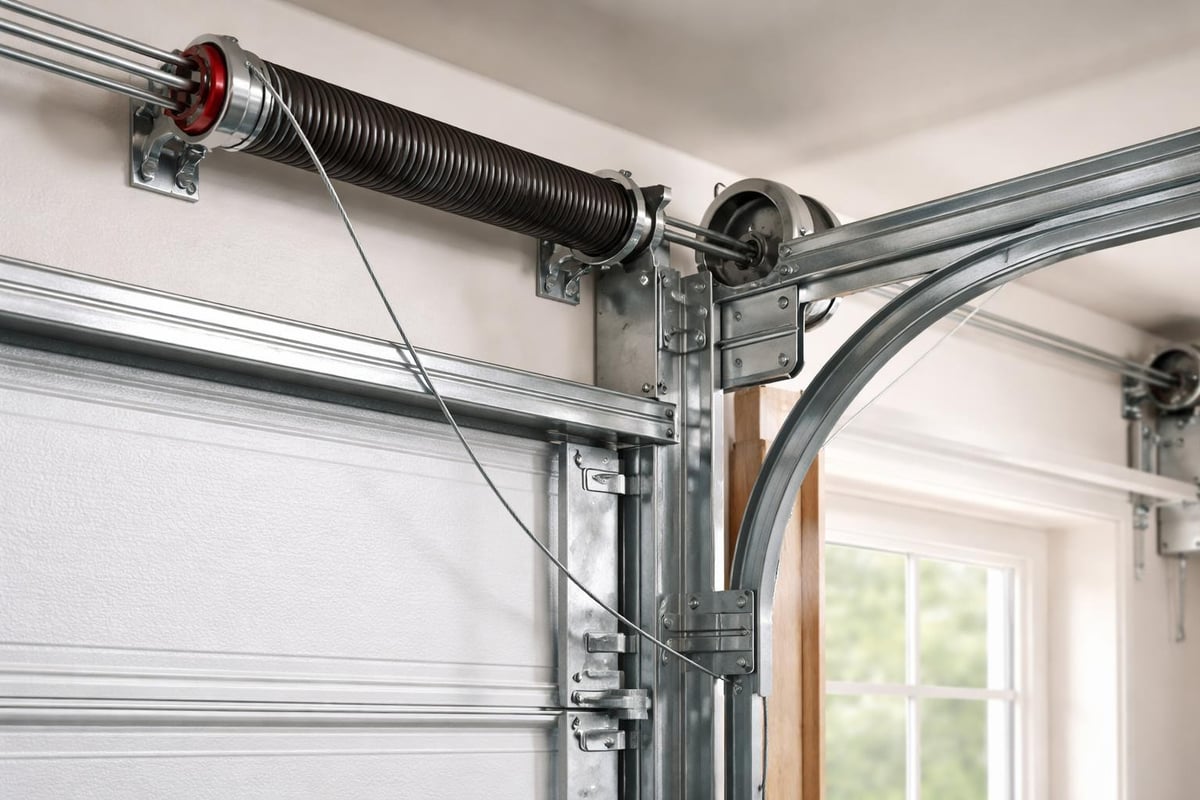
The mechanical foundation of overhead door operation includes springs, cables, drums, rollers, hinges, and tracks. Torsion springs store the energy needed to counterbalance door weight, making manual operation possible and reducing strain on motorized openers. Extension springs perform similar functions using different mechanics, stretching and contracting as the door moves.
Critical mechanical components include:
- Torsion or extension springs calibrated to door weight
- Steel cables that lift and lower door panels
- Roller bearings that guide door movement
- Track systems that maintain alignment
- Hinges connecting individual panel sections
- Drums that wind and unwind lifting cables
Regular inspection of these components during overhead door service appointments helps identify wear patterns before complete failure occurs. Professional repair processes emphasize thorough diagnostic procedures that examine each mechanical element systematically.
| Component | Average Lifespan | Warning Signs |
|---|---|---|
| Torsion Springs | 10,000-20,000 cycles | Gaps, rust, uneven tension |
| Extension Springs | 8,000-15,000 cycles | Stretching, corrosion, unbalanced lift |
| Rollers | 10-15 years | Worn bearings, chipping, noise |
| Cables | 8-12 years | Fraying, rust, strand separation |
Electrical and Safety Systems
Modern overhead doors incorporate sophisticated electrical systems that enhance convenience while meeting stringent safety requirements. Motorized openers provide automated operation, but they must include federally mandated safety features to prevent entrapment injuries.
The safety sensor system uses photoelectric eyes positioned near floor level that detect obstructions in the door's path. When the infrared beam breaks, the opener immediately reverses direction, preventing contact with people, pets, or vehicles. Force sensitivity settings allow the opener to detect resistance and stop or reverse automatically.
Wall-mounted control panels, wireless remotes, and smartphone connectivity add convenience layers to basic operation. Professional overhead door service verifies that all electrical components function correctly and comply with current safety standards. The importance of overhead door safety cannot be overstated, as these systems prevent serious injuries when properly maintained.
Preventive Maintenance Schedules
Establishing a consistent maintenance routine represents the most effective strategy for avoiding unexpected overhead door failures and extending system lifespan. Professional service schedules typically follow quarterly, semi-annual, or annual intervals based on usage frequency and environmental conditions.
Residential Maintenance Protocols
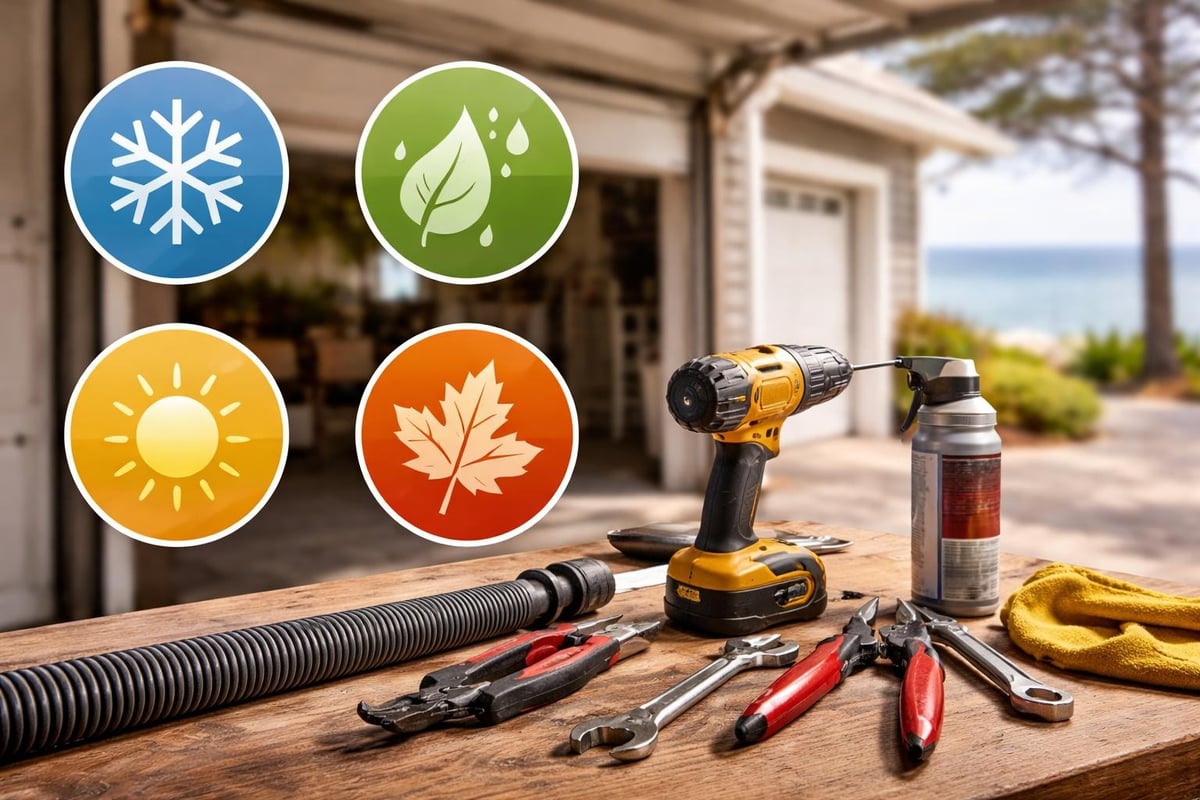
Homeowners benefit from semi-annual overhead door service appointments that coincide with spring and fall seasonal transitions. These inspections address weather-related wear and prepare systems for temperature extremes.
Spring maintenance priorities include:
- Lubricating all moving parts after winter operation
- Testing spring balance and tension
- Inspecting weather seals for winter damage
- Verifying safety sensor alignment
- Cleaning tracks and removing debris accumulation
Fall preparations focus on weatherproofing and ensuring reliable operation during winter months. Technicians verify that weather stripping creates effective seals, insulation remains intact, and mechanical systems operate smoothly in colder temperatures.
For properties near coastal areas like Bainbridge Island, salt air exposure accelerates corrosion on metal components. More frequent lubrication and protective treatments help counteract environmental factors that reduce component lifespan. Homeowners can learn more about year-round maintenance strategies specific to Pacific Northwest conditions.
Commercial Service Requirements
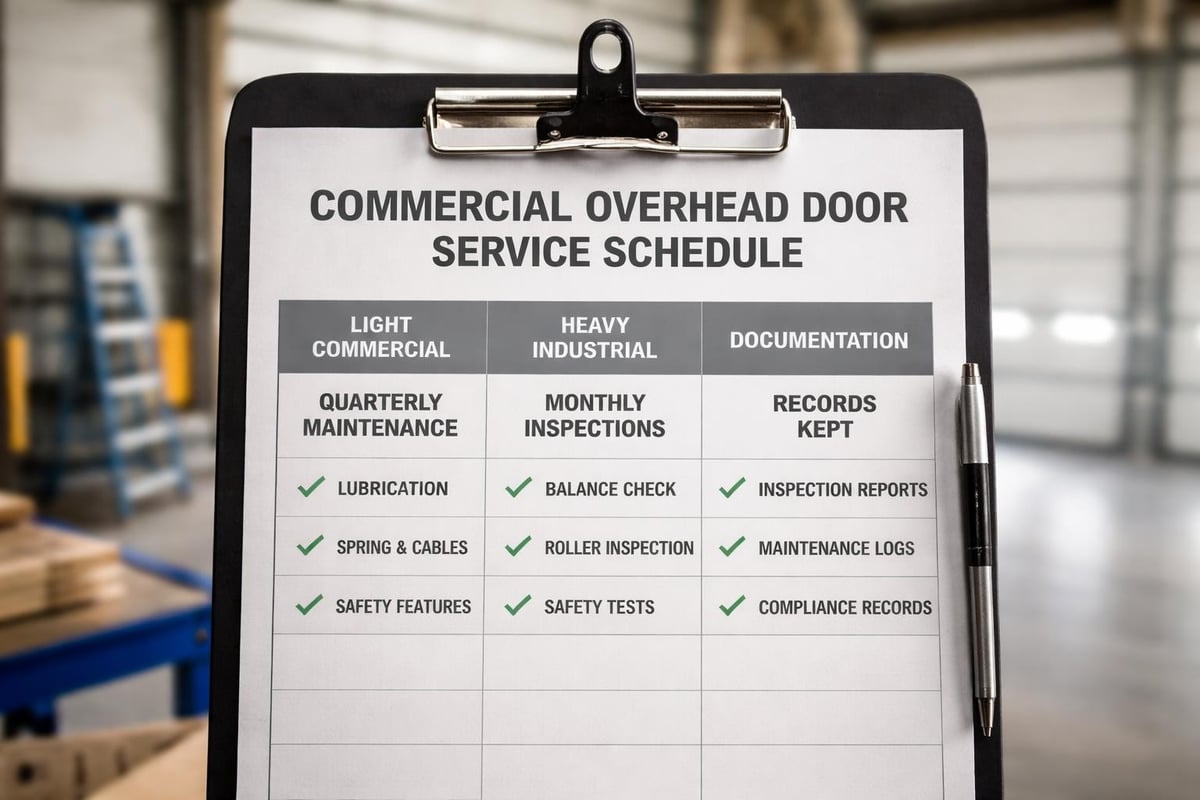
Commercial facilities require more rigorous overhead door service schedules due to higher cycle counts and regulatory compliance obligations. Warehouse loading docks, storage facilities, and retail spaces often operate doors dozens or hundreds of times daily, creating accelerated wear patterns.
Monthly visual inspections allow facility managers to identify obvious issues between professional service appointments. Commercial safety checklists provide structured frameworks for documenting door condition and maintenance activities.
Quarterly professional service typically includes comprehensive mechanical inspections, lubrication, adjustment, and testing. Documentation requirements vary by industry and jurisdiction, but maintaining detailed service records demonstrates due diligence and supports liability protection.
| Facility Type | Recommended Service Frequency | Key Focus Areas |
|---|---|---|
| Residential | Semi-annual | Balance, safety features, weatherproofing |
| Light Commercial | Quarterly | Cycle count tracking, hardware wear, operator function |
| Heavy Industrial | Monthly | Emergency operation, safety compliance, high-cycle components |
| Storage Facilities | Bi-monthly | Security features, multiple door coordination, access controls |
Common Issues Requiring Professional Service
Recognizing early warning signs of overhead door problems allows property owners to schedule service before minor issues escalate into major failures or safety hazards. Understanding these common problems helps set realistic expectations for repair scope and cost.
Spring Failures and Imbalances
Spring-related issues represent the most frequent reason for emergency overhead door service calls. Torsion springs operate under extreme tension, storing enough energy to counterbalance door weight. When springs break, doors become extremely heavy and potentially dangerous to operate manually.
Broken springs typically fail suddenly, often with a loud bang as tension releases. Property owners may notice the door won't open, opens only partway, or feels exceptionally heavy when attempting manual operation. The opener may struggle, produce grinding noises, or fail to lift the door entirely.
Spring imbalances develop gradually as components wear unevenly or lose tension over time. An unbalanced door appears crooked when partially open, favoring one side. This condition places excessive strain on the opener motor and causes premature wear on cables, rollers, and tracks.
Professional overhead door service addresses spring issues through complete replacement rather than repair. Attempting DIY spring replacement poses serious injury risks due to stored tension. For properties throughout Kitsap County, professional spring replacement services ensure safe, proper installation calibrated to specific door weight and dimensions.
Track and Roller Problems
Misaligned tracks create binding points that prevent smooth door operation and place stress on all mechanical components. Tracks can shift due to impact damage, loose mounting hardware, or foundation settling. Even minor misalignment causes increased friction, unusual noises, and uneven wear patterns.
Roller failures manifest as grinding, squeaking, or scraping sounds during operation. Worn roller bearings create resistance that overworks the opener motor. Nylon rollers offer quieter operation but wear faster than steel varieties, particularly in high-cycle commercial applications.
Indicators requiring track or roller service:
- Visible gaps between rollers and track
- Door hesitation or jerky movement
- Scraping sounds during operation
- Uneven spacing between door and frame
- Difficulty closing or opening completely
Reliable overhead door maintenance emphasizes addressing track and roller issues promptly to prevent cascading damage to interconnected systems.
Opener Malfunctions
Motorized opener problems range from simple programming issues to motor failure requiring complete unit replacement. Circuit board failures prevent remote operation, force sensitivity problems create safety concerns, and worn gears produce excessive noise.
Intermittent operation often indicates electrical connection issues, limit switch problems, or remote frequency interference. Professional diagnostics identify the root cause rather than treating symptoms. For comprehensive opener solutions, professional repair and installation services address both mechanical and electrical components.
Safety Standards and Compliance
Overhead door service must address specific safety requirements that protect occupants from entrapment, crushing injuries, and operational hazards. While OSHA standards for overhead doors reference general industry safety principles rather than specific door regulations, comprehensive best practice guidelines establish clear safety benchmarks.
Entrapment Protection Requirements
Federal regulations mandate that residential garage door openers manufactured after 1993 include automatic reversal mechanisms. Contact sensors detect resistance during closing, immediately reversing direction when encountering obstacles. Photoelectric sensors create invisible barriers near floor level, stopping door movement when beams are interrupted.
Professional overhead door service verifies both protection systems function correctly. Testing involves placing a solid object in the door's path and confirming immediate reversal. Manual force testing ensures the opener responds appropriately to resistance without excessive pressure.
Commercial Documentation Standards
Commercial facilities must maintain detailed records of overhead door service activities, including inspection dates, findings, corrective actions, and technician certifications. This documentation demonstrates regulatory compliance and supports insurance claims following accidents or equipment failures.
Service providers should deliver comprehensive reports after each appointment, documenting component conditions, adjustments performed, and recommendations for future attention. Property managers can reference commercial overhead door maintenance guidelines for establishing effective documentation systems.
Seasonal Considerations for Pacific Northwest Properties
Kitsap County's maritime climate presents unique challenges for overhead door systems. High humidity, salt air exposure, temperature fluctuations, and seasonal rainfall patterns all impact component longevity and performance.
Winter Weather Preparation
Cold temperatures affect lubricant viscosity, making doors operate more slowly or stiffly. Ice accumulation on tracks and weather seals can prevent proper closure or create binding points. Frozen condensation may cause sensors to malfunction or cables to stick.
Winter-focused overhead door service includes applying cold-weather lubricants, inspecting and replacing worn weather seals, and verifying proper insulation installation. Heated garage spaces typically experience fewer cold-weather issues, but unheated structures require additional attention.
Corrosion Prevention Strategies
Coastal proximity accelerates oxidation on metal components, particularly springs, cables, hinges, and fasteners. Regular lubrication creates protective barriers against moisture infiltration. Galvanized or stainless steel hardware offers superior corrosion resistance compared to standard steel components.
Professional service appointments should include corrosion inspection and treatment application. Homeowners can perform interim maintenance by applying appropriate lubricants monthly during high-humidity seasons. Properties on Bainbridge Island and throughout coastal Kitsap County benefit from specialized local expertise familiar with regional environmental challenges.
Selecting Professional Service Providers
Choosing qualified overhead door service providers ensures proper repairs, maintains warranty coverage, and protects property investment. Several factors distinguish experienced professionals from less capable operators.
Credentials and Experience Verification
Licensed technicians demonstrate minimum competency standards and carry appropriate insurance coverage protecting property owners from liability. Manufacturer certifications indicate specialized training on specific door and opener brands, ensuring access to technical support and genuine replacement parts.
Years of operational history provide insight into service provider stability and reputation. Established companies typically maintain relationships with parts suppliers, enabling faster repairs and competitive pricing on components.
Questions to ask potential service providers:
- What certifications do your technicians hold?
- Do you carry liability and workers' compensation insurance?
- Can you provide references from similar properties?
- What warranties cover your service work?
- How quickly can you respond to emergency calls?
Service Agreement Benefits
Planned maintenance agreements offer several advantages over reactive service calls. Scheduled appointments prevent equipment failures through proactive component replacement, reduce emergency repair costs, and often include priority scheduling and discounted rates.
Commercial properties particularly benefit from service agreements that provide predictable maintenance budgets and documented compliance with safety standards. Commercial garage door services tailored to business needs address unique operational requirements and minimize disruption to daily operations.
DIY Maintenance Tasks for Property Owners
While professional overhead door service addresses complex repairs and safety-critical components, property owners can perform basic maintenance tasks that extend service intervals and identify developing problems early.
Monthly Visual Inspections
Regular observation helps detect wear patterns, loose hardware, and alignment issues before they cause failures. Monthly inspections should include examining springs for gaps or corrosion, checking cables for fraying, observing roller condition, and verifying track alignment.
Testing door balance involves disconnecting the opener and manually lifting the door halfway. Properly balanced doors remain stationary at any point in their travel path. Doors that fall or rise indicate spring tension issues requiring professional adjustment.
Safety sensor testing confirms photoelectric eye alignment and function. Placing an object in the door's path during closing should trigger immediate reversal. Testing monthly ensures this critical safety feature remains operational.
Cleaning and Lubrication Procedures
Track cleaning removes dirt, debris, and old lubricant buildup that creates friction and accelerates wear. Wiping tracks with clean cloths and mild detergent prepares surfaces for fresh lubrication.
Appropriate lubricants vary by component type. Silicone-based or lithium grease products work well for rollers, hinges, and springs. Avoid using WD-40 or similar penetrating oils as primary lubricants, as they attract dirt and provide minimal long-term protection.
Essential maintenance steps include applying lubricant to all moving parts, wiping excess to prevent dripping, and operating the door through several complete cycles to distribute products evenly.
| Task | Frequency | Required Tools |
|---|---|---|
| Visual inspection | Monthly | Flashlight, notepad |
| Balance testing | Monthly | None (disconnect opener) |
| Track cleaning | Quarterly | Cloth, mild detergent |
| Lubrication | Quarterly | Silicone spray, lithium grease |
| Weather seal check | Semi-annually | Visual inspection |
Emergency Service Situations
Certain overhead door failures require immediate professional attention to prevent property damage, security vulnerabilities, or safety hazards. Understanding when to seek emergency service versus scheduling routine appointments helps property owners make appropriate decisions.
Security Concerns
Doors that won't close completely create immediate security risks, leaving property contents exposed to theft or weather damage. Broken springs, damaged tracks, or opener failures may prevent proper closure. Emergency overhead door service restores security and protects valuable property.
Forced entry attempts that damage doors, tracks, or locking mechanisms also warrant urgent professional attention. Technicians can assess structural integrity, replace damaged components, and restore secure operation. For immediate assistance, emergency repair services provide rapid response throughout Kitsap County.
Safety Hazards
Doors hanging partially open from broken cables or springs pose crushing hazards to people, vehicles, and stored items. These situations require professional intervention to safely secure the door and prevent further damage or injury.
Exposed broken springs under tension, frayed cables near failure points, or severely misaligned tracks all represent dangerous conditions requiring expert handling. Attempting DIY repairs in these circumstances risks serious injury from spring tension release or door collapse.
Long-Term Value of Preventive Service
Investing in regular overhead door service delivers measurable returns through extended equipment lifespan, reduced emergency repair costs, and maintained property value. Understanding these benefits helps property owners justify service expenditures and prioritize maintenance budgets.
Cost Comparison Analysis
Emergency repairs typically cost two to three times more than preventive maintenance addressing the same components. After-hours service premiums, rush parts procurement, and collateral damage from failures all increase total repair costs. Regular service identifies worn components before complete failure, allowing scheduled replacement at standard rates.
Component replacement during planned service appointments also provides opportunities to upgrade to higher-quality parts, modern safety features, or improved performance specifications. Understanding different door options helps property owners make informed upgrade decisions during routine service visits.
Property Value Protection
Well-maintained overhead doors enhance curb appeal, demonstrate property care, and function reliably during buyer inspections. Neglected doors with visible wear, operational issues, or safety concerns raise questions about overall property maintenance and may reduce sale prices or complicate transactions.
Documentation of regular professional overhead door service provides valuable records demonstrating responsible ownership. Service histories reassure potential buyers and support warranty transfers when selling properties.
Regular overhead door service protects your property investment while ensuring safe, reliable operation for years to come. From preventive maintenance that extends component lifespan to emergency repairs that restore security, professional service delivers measurable value for both residential and commercial properties. When you're ready to schedule comprehensive overhead door service or need expert guidance on repair versus replacement decisions, NextLevel Garage Co. brings local expertise and quality workmanship to every project throughout Kitsap County. Our team understands the unique challenges facing Pacific Northwest properties and delivers solutions tailored to your specific needs.