

When it comes to protecting your home and ensuring smooth daily operations, few things matter more than dependable door services. Whether you're dealing with a garage door that won't open, a worn spring system, or planning a complete replacement, the quality of service you receive directly impacts your safety, security, and long-term costs. Reliable door services go far beyond quick fixes-they encompass professional installation, preventive maintenance, emergency response, and a commitment to industry standards that keep your family safe and your property secure.
Understanding What Makes Door Services Reliable
Reliability in door services means consistent performance, transparent communication, and adherence to safety standards. A truly reliable provider demonstrates expertise across multiple service categories while maintaining accountability for every job.
Core Components of Service Reliability
Professional door service providers focus on several critical areas that distinguish quality work from substandard repairs. Proper licensing and insurance protect homeowners from liability while ensuring technicians meet local regulatory requirements. Factory-trained technicians understand manufacturer specifications, warranty requirements, and the nuances of different door systems.
- Prompt response times for emergency calls
- Transparent pricing with written estimates
- Use of OEM or equivalent-quality replacement parts
- Comprehensive safety inspections with every service call
- Clear warranties on labor and materials
The difference between reliable and unreliable service often becomes apparent during the first interaction. Professional providers ask detailed questions about door symptoms, schedule appointments within reasonable timeframes, and arrive prepared with common parts and specialized tools.
Safety Standards and Compliance
Safety represents the foundation of reliable door services. Garage doors, in particular, rank among the heaviest moving objects in residential properties, with standard double doors weighing 300-400 pounds. Improper installation or repair creates serious injury risks.
Regulatory Framework for Door Services
Industry standards exist to protect both service providers and property owners. The NFPA 80 standard for fire doors establishes critical requirements for commercial and multi-family residential properties, outlining installation, inspection, and maintenance protocols that prevent fire spread.
For accessibility compliance, the ADA Standards for Accessible Design mandate specific door clearances, hardware operation forces, and threshold heights. Reliable commercial door services must incorporate these requirements, particularly for businesses serving the public.
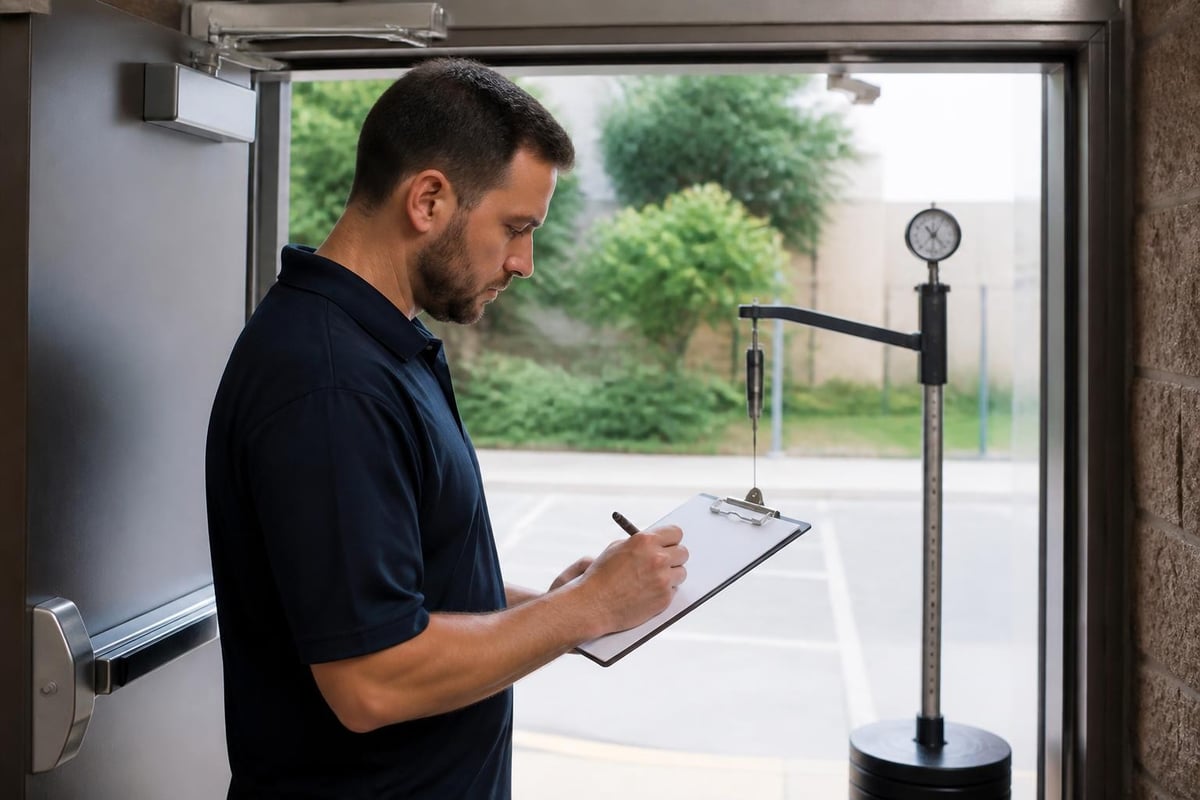
| Safety Element | Standard Requirement | Why It Matters |
|---|---|---|
| Spring tension | Balanced within 5 lbs | Prevents opener strain, ensures safe manual operation |
| Photo-eye sensors | Aligned within 6" of floor | Stops door if obstruction detected |
| Auto-reverse | Reverses with 20 lbs force | Prevents crushing injuries |
| Emergency release | Red handle, clearly marked | Allows manual operation during power outages |
Hardware Performance Standards
The ANSI/BHMA A156 standards provide grading systems for locks, closers, and exit devices. Reliable door services specify hardware based on these grades, matching performance requirements to actual usage patterns. A residential garage door receives different hardware than a high-traffic commercial facility, and professionals understand these distinctions.
Emergency Response and Availability
Doors fail at inconvenient times. A garage door stuck open at night creates security vulnerabilities. A broken spring on Monday morning can disrupt your entire schedule. Reliable door services recognize these urgencies and structure their operations accordingly.
What Defines Emergency Service
True emergency service means more than listing a phone number. It requires:
Dedicated emergency dispatch that routes calls to on-duty technicians rather than voicemail. Stocked service vehicles carrying common springs, cables, rollers, and hardware for immediate repairs. Flexible scheduling that accommodates urgent situations without excessive surcharges.
Many homeowners in Kitsap County appreciate local providers who understand regional weather patterns and their impact on door systems. Winter moisture can rust springs prematurely, while summer heat affects opener sensors. Commercial garage door services often include preventive maintenance contracts that reduce emergency call frequency.
Preventive Maintenance Programs
The most reliable door services emphasize prevention over repair. Regular maintenance extends system life, improves safety, and reduces total ownership costs.
Components of Professional Maintenance
A comprehensive maintenance visit includes far more than lubricating hinges. Professional technicians perform systematic inspections covering every component:
- Visual inspection of panels, tracks, and hardware for wear, rust, or damage
- Spring tension testing to verify balanced operation
- Roller and hinge examination for wear patterns indicating misalignment
- Cable condition assessment checking for fraying or corrosion
- Opener force adjustment ensuring proper auto-reverse function
- Weather seal inspection to maintain energy efficiency
- Hardware tightening addressing vibration-loosened fasteners
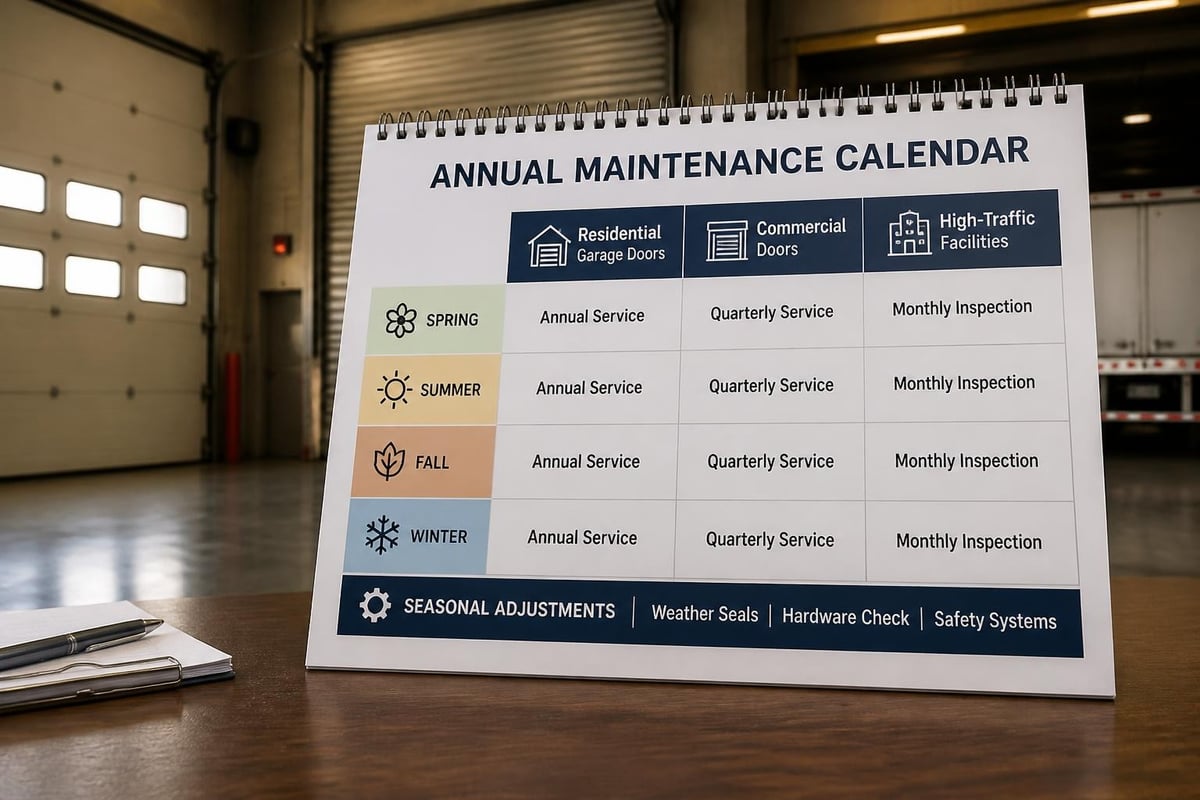
Residential doors typically need annual maintenance, while commercial installations benefit from quarterly service. High-cycle commercial doors in storage facilities or fire stations may require monthly attention.
Installation Excellence
New door installation represents a significant investment, and the quality of installation work determines long-term satisfaction. Reliable installation services follow manufacturer specifications precisely while adapting to site-specific conditions.
Critical Installation Steps
Professional installers recognize that shortcuts during installation create ongoing problems. Proper header clearance ensures adequate space for track mounting and spring assemblies. Level track installation prevents binding and uneven wear. Correct spring selection matches door weight and usage patterns.
When considering garage door installation, homeowners should expect installers to measure existing openings carefully, discuss upgrade options like insulation or window configurations, and explain maintenance requirements for the new system. Quality installations include thorough testing, adjustment, and customer education about safe operation.
The Door and Hardware Institute offers extensive technical resources and certification programs that reliable service providers use to maintain expertise. Certified technicians bring verified knowledge to every installation project.
Energy Efficiency and Door Selection
Modern door services extend beyond mechanical reliability to include energy performance. Exterior doors significantly impact heating and cooling costs, making efficiency a key consideration.
Energy Performance Factors
The ENERGY STAR program establishes performance criteria for doors in different climate zones. For the Pacific Northwest climate, insulated garage doors reduce heat loss while managing moisture infiltration.
| Insulation Type | R-Value | Best Application | Energy Savings |
|---|---|---|---|
| Non-insulated steel | 0 | Detached garages | Minimal |
| Polystyrene insulation | 6-9 | Attached garages | Moderate |
| Polyurethane foam | 12-18 | Conditioned spaces | Maximum |
Reliable door services help homeowners balance upfront costs against long-term energy savings. An insulated door costs more initially but reduces HVAC loads for homes with attached garages or bonus rooms above garage spaces.
Security Hardware and Smart Integration
Modern reliable door services incorporate advanced security features and smart home integration. Security represents a primary concern for homeowners, and door hardware plays a central role in home protection.
Contemporary Security Options
Traditional deadbolts remain effective, but newer technologies offer enhanced convenience and monitoring. Smart garage door openers provide remote monitoring, activity alerts, and temporary access codes for delivery personnel or service providers.
Consumer Reports’ door lock buying guide evaluates lock grades, installation requirements, and security ratings. Grade 1 locks offer commercial-grade security suitable for residential applications where maximum protection is desired.
Smart integration benefits include:
- Real-time alerts when doors open or close
- Remote operation from smartphones
- Temporary access codes for guests or contractors
- Integration with home security systems
- Activity logs tracking door usage
Reliable service providers stay current with smart technology while maintaining expertise with traditional systems. They understand compatibility requirements between different manufacturers and can recommend solutions matching customer needs and budgets.
Choosing a Reliable Service Provider
Selecting the right door service company requires evaluating multiple factors beyond price. The cheapest option often leads to callbacks, warranty disputes, and safety concerns.
Key Selection Criteria
Local reputation matters significantly. Established companies serving Kitsap County understand regional building codes, typical door configurations, and weather-related challenges. They maintain relationships with local building inspectors and understand permitting requirements.
Transparent communication distinguishes professional providers. Reliable companies explain problems clearly, present options with honest pros and cons, and provide detailed written estimates before starting work. They don't pressure customers into unnecessary upgrades or create artificial urgency.
- Verify current licensing and insurance coverage
- Check online reviews across multiple platforms
- Request and contact recent customer references
- Confirm warranty terms for parts and labor
- Ask about technician training and certifications
- Inquire about parts sourcing and quality standards
Red Flags to Avoid
Certain warning signs indicate unreliable providers. Unusually low bids often signal inferior parts, untrained labor, or hidden fees. Pressure tactics suggesting immediate replacement for minor issues demonstrate poor ethics. Cash-only policies limit accountability and warranty enforcement.
Reliable door services provide clear documentation, accept multiple payment methods, and stand behind their work with substantive warranties. They encourage questions and provide educational information rather than sales pressure.

Commercial vs. Residential Service Requirements
Commercial and residential door services involve different expertise, equipment, and response expectations. Understanding these distinctions helps property owners select appropriately qualified providers.
Commercial Service Specialization
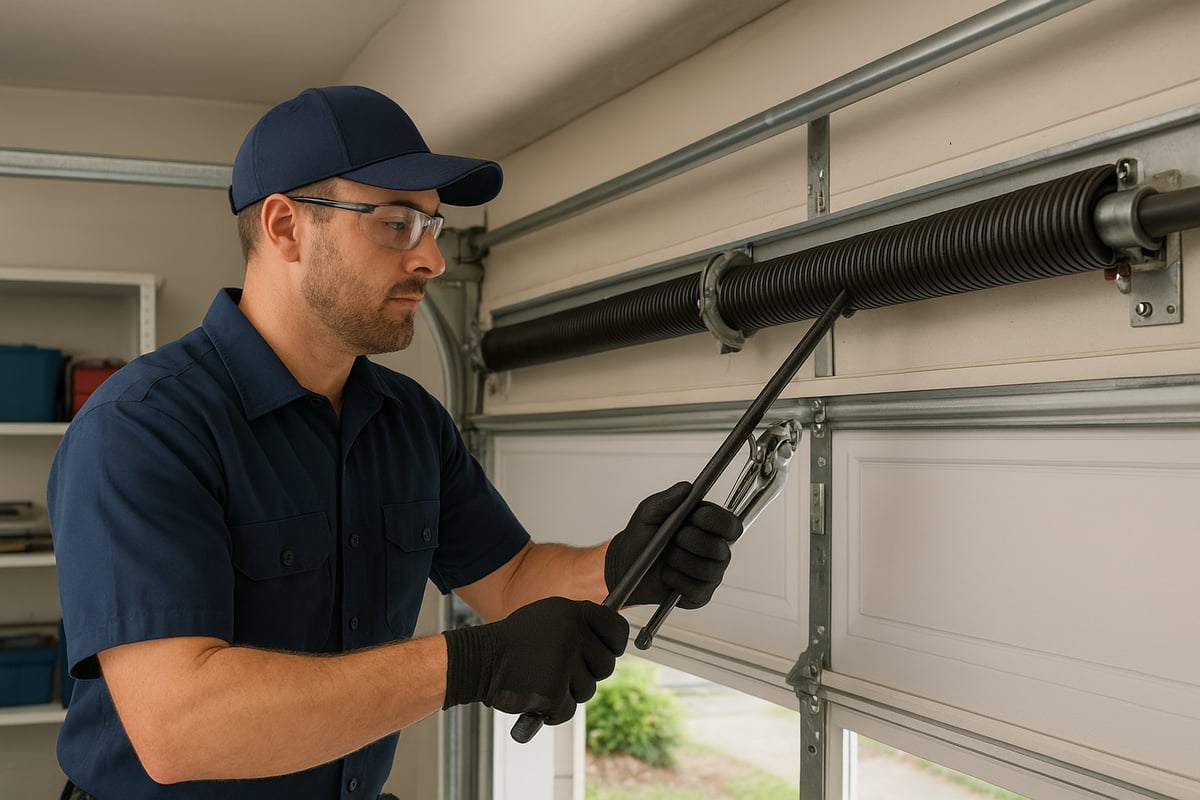
Commercial doors face higher usage cycles, stricter code requirements, and greater operational consequences when failures occur. Commercial storage facility door services require expertise with high-cycle hardware, advanced operator systems, and business-hour coordination.
Commercial providers must understand:
- Fire code compliance for rated assemblies and annual inspections
- ADA requirements for accessible entrances and hardware
- High-cycle springs and operators designed for 10,000+ annual cycles
- Loading dock door systems with specialized seals and security
- Preventive maintenance scheduling that minimizes business disruption
| Feature | Residential | Commercial |
|---|---|---|
| Typical cycle life | 10,000-15,000 | 25,000-100,000+ |
| Service response | Same/next day | 2-4 hour emergency |
| Maintenance frequency | Annual | Quarterly-Monthly |
| Regulatory inspections | None required | Annual fire door testing |
Residential Service Focus
Residential reliable door services prioritize customer education, aesthetic options, and budget flexibility. Homeowners value clear explanations, flexible scheduling, and respect for their properties during service calls.
Long-Term Cost Considerations
Evaluating door service costs requires looking beyond immediate repair bills to total ownership expenses. Reliable services reduce long-term costs through quality work, proper parts selection, and preventive maintenance.
True Cost of Unreliable Service
Choosing low-cost providers often leads to:
Premature component failure when inferior parts are installed. Generic springs may cost half the price of name-brand products but fail in 18 months instead of 7-10 years. Repeated service calls addressing symptoms rather than root causes. A door that binds might receive track lubrication when the real issue involves settling foundation or bent tracks. Safety incidents resulting from improper installation or adjustment.
Hidden costs of poor service:
- Additional repairs correcting previous work
- Higher energy bills from poor sealing or insulation
- Property damage from door failures
- Warranty voidance from improper repairs
- Reduced property value from poor curb appeal
Investment in Quality
Premium service costs more initially but delivers measurable returns. Professional garage door opener installation includes proper force adjustment, safety sensor alignment, and customer training that prevents future problems.
Quality providers use manufacturer-specified parts, follow installation protocols precisely, and document their work thoroughly. These practices extend system life, maintain warranty coverage, and reduce emergency repair frequency.
Warranty and Guarantee Structures
Reliable door services back their work with substantive warranties covering both parts and labor. Understanding warranty terms helps homeowners evaluate service proposals and protect their investments.
Components of Comprehensive Warranties
Professional warranties typically include:
Parts coverage matching or exceeding manufacturer terms. Premium springs often carry 7-10 year warranties, while basic models may offer only 1-2 years. Labor warranties covering installation and adjustment work for 1-2 years minimum. Satisfaction guarantees allowing customers to request adjustments if systems don't perform as expected.
Reliable providers explain warranty limitations clearly. Normal wear items like rollers or weather seals may carry shorter coverage periods. Warranties typically exclude damage from accidents, improper use, or third-party modifications.
Regional Considerations for Pacific Northwest
Local climate and building practices influence door service requirements. The Pacific Northwest's wet winters and moderate summers create specific challenges that experienced regional providers understand.
Climate-Specific Service Needs
Moisture management becomes critical in Western Washington. Garage doors require proper weather sealing to prevent water intrusion while maintaining ventilation that prevents condensation buildup. Rust prevention through appropriate lubrication and protective coatings extends spring and hardware life in humid environments.
Wind exposure varies significantly across Kitsap County. Waterfront properties face stronger wind loads requiring reinforced doors and upgraded hardware. Reliable services assess site conditions and recommend appropriate wind-rated products.
Winter freeze-thaw cycles can damage concrete foundation pads, affecting door track alignment. Local providers recognize settlement patterns and adjust installation techniques accordingly, using shims and flexible mounting systems that accommodate minor movement.
Reliable door services combine technical expertise, quality materials, transparent communication, and a commitment to safety standards that protect homeowners and businesses. From emergency repairs to planned installations, the provider you choose directly impacts system performance, longevity, and your family's safety. Whether you need spring replacement, a complete door upgrade, or preventive maintenance, NextLevel Garage Co. brings locally-focused expertise to every project across Kitsap County. Our team prioritizes quality workmanship and clear communication, ensuring your garage door systems operate safely and reliably for years to come.