

A smashed garage door is more than an eyesore. It's a security vulnerability, a safety hazard, and often a sign of deeper structural issues that need immediate attention. Whether caused by a vehicle collision, severe weather, or accidental impact, a damaged garage door exposes your home to the elements, compromises your property's security, and can pose serious safety risks to your family. Understanding how to assess the damage, decide between repair and replacement, and navigate the insurance process will help you restore your garage quickly and safely.
Understanding the Causes and Types of Garage Door Damage
A smashed garage door rarely happens without warning. Most damage falls into one of several common categories, each with distinct repair implications.
Vehicle Impact Damage
Vehicle collisions account for a significant portion of smashed garage doors. A car backing out too quickly, a visitor misjudging the opening, or a teenager learning to drive can all result in substantial panel damage. The impact typically affects:
- Lower panels that bow inward or crack completely
- Horizontal track misalignment from direct force
- Roller damage when panels shift suddenly
- Spring imbalance from uneven weight distribution after impact
Even minor vehicle contact can compromise the door's structural integrity. What appears as a small dent may indicate bent tracks, damaged rollers, or springs that have lost proper tension.
Storm and Weather-Related Damage
High winds, hail, and falling debris create different damage patterns than vehicle impacts. Wind pressure can push panels inward or pull them outward if the door isn't properly secured. Hail leaves characteristic dimpling across metal surfaces, while falling branches or wind-borne objects create puncture wounds and cracks.
According to guidance from Ready.gov’s preparedness resources, homeowners should take immediate steps to secure damaged property after severe weather to prevent additional damage and maintain insurance coverage.
| Damage Type | Common Causes | Typical Repair Scope |
|---|---|---|
| Panel Dents | Hail, minor impacts | Individual panel replacement |
| Complete Panel Failure | Vehicle collision, severe impact | Multiple panel replacement or full door |
| Track Damage | Lateral force, panel shift | Track realignment or replacement |
| Spring Breakage | Sudden impact, age-related failure | Professional spring replacement |
| Opener Damage | Forced operation, electrical surge | Opener repair or replacement |
Forced Entry and Vandalism
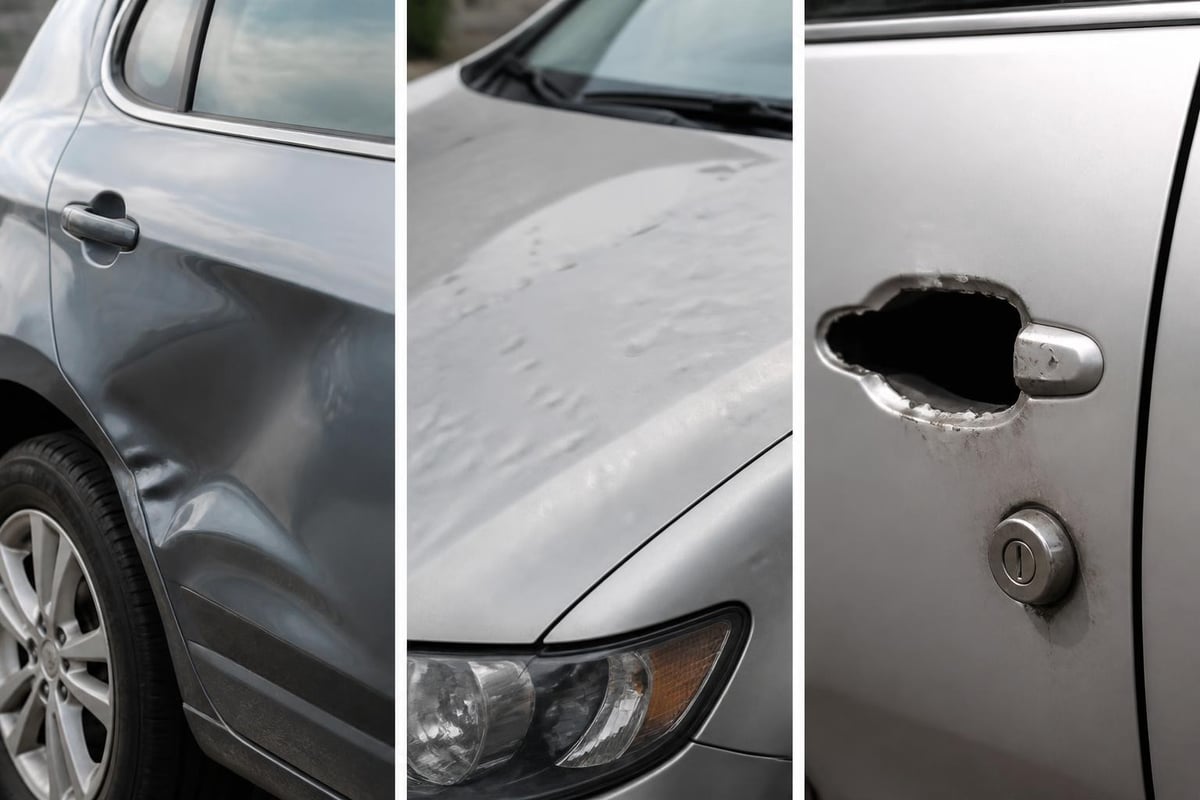
Intentional damage from break-in attempts creates unique challenges. Crowbar marks, kicked-in panels, and damaged locks not only require physical repair but also raise security concerns that may necessitate upgrades beyond simple restoration.
Immediate Safety Assessment and Temporary Measures
The moment you discover a smashed garage door, safety becomes the priority. A damaged door can fail unexpectedly, creating crushing hazards and security vulnerabilities.
Critical Safety Checks
Before approaching a damaged door, assess these immediate risks:
- Spring tension status – Broken springs can release suddenly and cause severe injury
- Panel stability – Loose panels may fall without warning
- Track integrity – Bent tracks can cause the door to bind or derail completely
- Opener safety sensors – Misaligned or damaged sensors may not prevent entrapment
- Electrical hazards – Damaged wiring or opener components pose shock risks
Never attempt to operate a severely damaged garage door. The UL 325 safety standard establishes entrapment protection requirements that may be compromised when a door is smashed.
Securing the Opening
If your garage door is non-functional, temporary security becomes essential:
Immediate steps:
- Disconnect the automatic opener to prevent accidental activation
- Clear the area of vehicles, tools, and stored items
- Block vehicle access if the door cannot be secured
- Document all damage with photographs from multiple angles
Temporary closure options:
- Heavy-duty tarps secured to the frame for weather protection
- Plywood panels cut to size and mounted temporarily
- Portable barriers to prevent unauthorized access
- Motion-sensor lighting to deter intruders
Contact a professional garage door service immediately. A smashed garage door rarely improves on its own, and delay can lead to additional damage from weather exposure or security breaches.
Damage Assessment: Repair vs. Replacement Decision
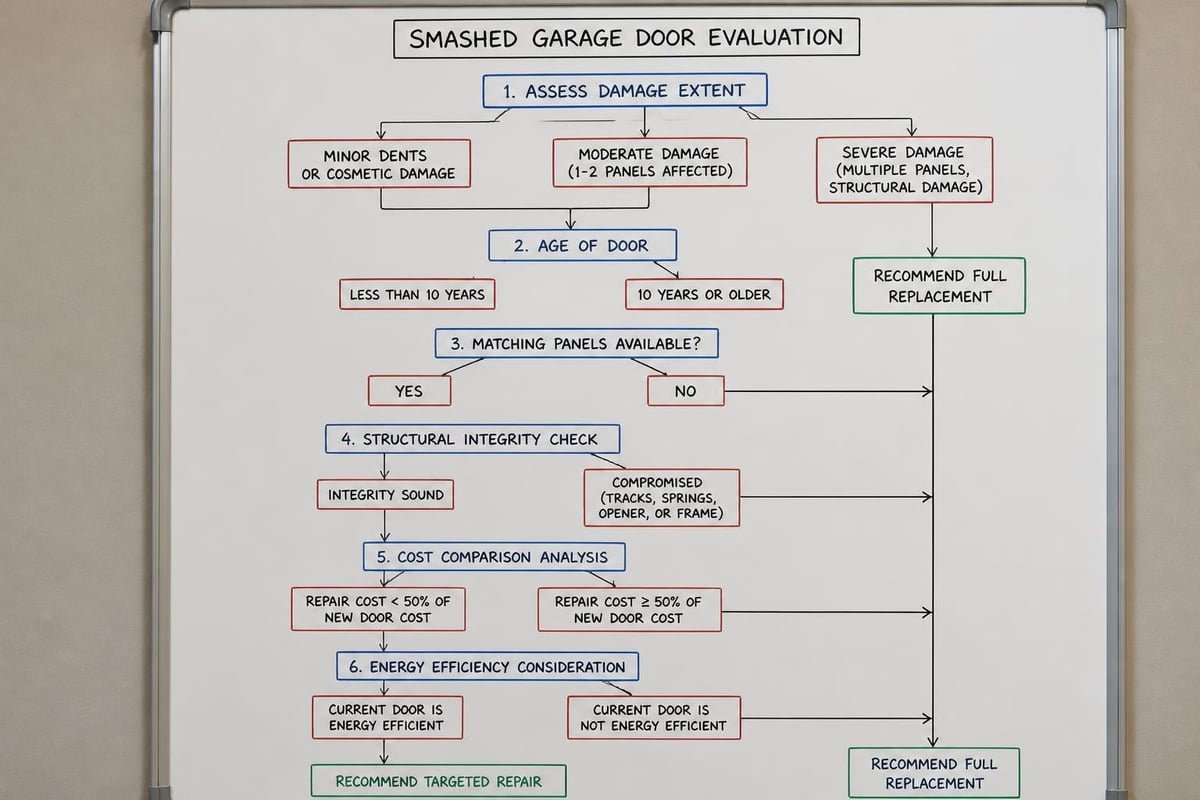
Not every smashed garage door requires complete replacement. Understanding the extent of damage helps you make an informed decision about the most cost-effective solution.
When Repair Makes Sense
Minor to moderate damage often responds well to targeted repairs. Consider repair if:
- Damage is limited to one or two panels
- Tracks are intact or require only minor adjustment
- The door frame and header remain structurally sound
- Springs, cables, and rollers are in good condition
- The door is less than 10 years old
- Matching replacement panels are available
Individual panel replacement offers significant cost savings compared to full door replacement. Modern sectional doors allow technicians to remove damaged panels and install new sections without disturbing the entire assembly.
When Replacement is the Better Choice
Extensive damage often makes replacement more economical and safer than attempting multiple repairs:
Replacement indicators:
- Three or more panels are damaged or compromised
- The door frame or header shows structural damage
- Tracks are severely bent or pulled from mounting points
- The door is more than 15 years old
- Matching panels are no longer manufactured
- Energy efficiency would improve significantly with a new door
A severely damaged door often signals an opportunity to upgrade. Modern garage door installation services provide insulated, energy-efficient options that improve your home's thermal performance while enhancing curb appeal and security.
Professional Inspection Requirements
Even seemingly minor damage warrants professional assessment. Trained technicians identify hidden issues that homeowners typically miss:
- Spring tension imbalance that will cause premature wear
- Track misalignment measured in fractions of an inch
- Cable fraying that indicates impending failure
- Roller bearing damage that creates operational strain
- Structural compromises in the door frame or header
The Door & Access Systems Manufacturers Association maintains technical standards that guide proper assessment and repair procedures, ensuring work meets industry safety benchmarks.
Navigating Insurance Claims for Garage Door Damage
A smashed garage door often falls under your homeowners insurance coverage, but successful claims require proper documentation and understanding of your policy.
Understanding Coverage Parameters
Most standard homeowners policies cover garage door damage under dwelling coverage, which protects the structure of your home. According to the Insurance Information Institute, coverage typically applies when damage results from:
- Vehicle impact (subject to comprehensive auto coverage if you hit your own door)
- Severe weather including wind, hail, and falling objects
- Vandalism or attempted break-ins
- Fire or smoke damage
Common exclusions:
- Wear and tear or lack of maintenance
- Damage from pests or insects
- Flooding (requires separate flood insurance)
- Earthquakes (requires separate earthquake coverage)
Documentation Best Practices
Insurance adjusters need clear evidence to process your claim efficiently. Gather this information immediately after discovering damage:
- Photographic evidence from multiple angles showing overall damage and specific details
- Date and time of the incident if known
- Police report number if damage resulted from vandalism or vehicle accident
- Previous maintenance records demonstrating proper upkeep
- Contractor estimates from licensed garage door professionals
Create a written narrative describing how the damage occurred, what you discovered, and any immediate steps you took to prevent additional damage. This documentation strengthens your claim and expedites processing.
Working with Adjusters and Contractors
Insurance adjusters may not specialize in garage door systems. Having your own professional assessment provides valuable leverage during negotiations:
| Claim Stage | Homeowner Action | Professional Support |
|---|---|---|
| Initial reporting | File claim immediately, document damage | Take detailed photos, secure property |
| Adjuster visit | Present documentation, explain incident | Provide technical assessment if requested |
| Estimate review | Compare adjuster estimate to contractor quotes | Submit detailed scope of work |
| Approval | Accept settlement or negotiate based on facts | Provide additional technical justification |
| Repair/replacement | Schedule work, maintain communication | Complete work to code, provide warranty |
Many policies include depreciation calculations that reduce the payout for older doors. Understanding your actual cash value versus replacement cost coverage determines your out-of-pocket expense.
Professional Repair Process and Timeline
Once you've decided to repair or replace your smashed garage door, understanding the professional process helps you set realistic expectations.
Initial Inspection and Assessment
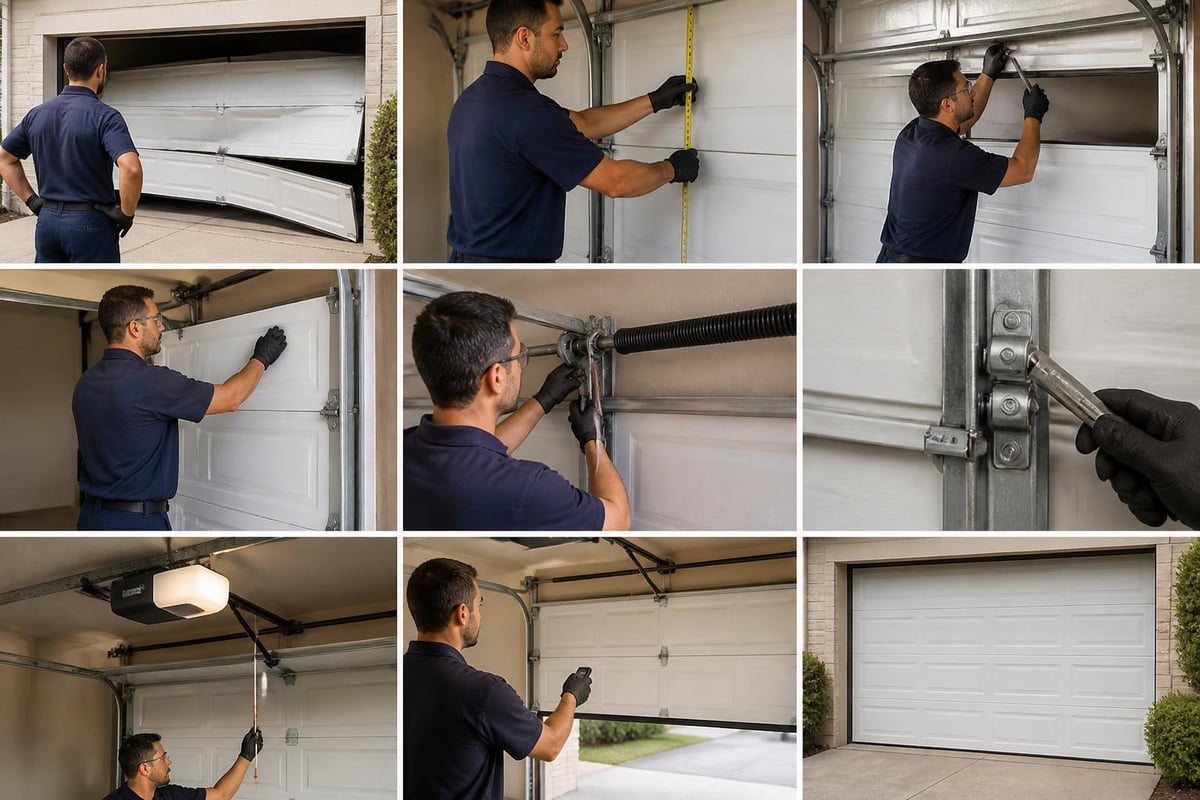
A qualified technician begins with comprehensive evaluation:
- Measuring all damaged components precisely
- Testing spring tension and balance
- Checking track alignment with precision tools
- Assessing opener functionality and safety features
- Evaluating the door frame and header structure
This inspection produces a detailed scope of work with specific recommendations for repairs or replacement components.
Repair Execution for Damaged Doors
Panel replacement and track repair follow established safety protocols:
Step-by-step repair process:
- Safety preparation – Disconnect opener, release spring tension, secure the door
- Component removal – Remove damaged panels, hardware, and affected tracks
- Structural assessment – Verify frame and mounting points can support new components
- Installation – Mount new panels, realign tracks, install fresh hardware
- Spring adjustment – Balance spring tension for smooth, safe operation
- Testing – Verify full travel, safety sensor function, and opener integration
Repair duration varies based on damage extent. Simple panel replacement typically completes in 2-4 hours, while extensive repairs involving tracks, springs, and multiple panels may require a full day.
Full Door Replacement Timeline
Complete door replacement involves more steps but ensures comprehensive solution:
- Day 1: Old door removal, frame inspection, measurements verification
- Day 1-2: New door installation, spring mounting, track installation
- Day 2: Opener installation or reconnection, safety testing, final adjustments
Weather, material availability, and custom options affect timing. Standard doors ship quickly, while custom colors or styles may add 1-2 weeks to the schedule.
The latest DASMA industry updates provide guidance on current manufacturing standards and installation best practices that professionals follow when replacing damaged doors.
Long-Term Prevention and Maintenance Strategies
Preventing future garage door damage requires proactive maintenance and smart usage habits.
Regular Maintenance Schedule
Consistent maintenance extends door life and reduces damage risk:
Monthly tasks:
- Visual inspection of panels, tracks, and hardware
- Listen for unusual sounds during operation
- Test safety sensor alignment and function
- Clear debris from tracks and door bottom seal
Quarterly tasks:
- Lubricate rollers, hinges, and springs with silicone-based lubricant
- Check and tighten all hardware bolts
- Clean tracks and remove accumulated dirt
- Test emergency release function
Annual professional service:
- Complete spring tension adjustment
- Track alignment verification
- Comprehensive safety inspection
- Opener force adjustment and testing
Physical Protection Measures
Strategic barriers prevent many vehicle-related impacts:
- Install parking guides on the garage floor to mark stopping points
- Mount tennis balls hanging from the ceiling at windshield height
- Add convex mirrors to improve visibility of the door position
- Install motion-sensor lights that activate when vehicles approach
- Consider bollards or protective posts if multiple drivers use the garage
Weather Preparation
Storm preparation reduces weather damage risk significantly. Before severe weather arrives:
- Verify door operation – Ensure it closes and seals completely
- Check automatic opener – Test battery backup if equipped
- Inspect seals – Replace worn weatherstripping
- Secure loose items – Remove anything that could blow into the door
- Lock the door – Use manual locks for added wind resistance
The National Fire Protection Association provides code guidance relevant to garage-to-house fire separation, which becomes critical when a smashed garage door compromises the barrier between living spaces and the garage.
Material Selection for Replacement Doors
When replacement becomes necessary, material choice impacts durability, maintenance, and future damage resistance.
Steel Door Benefits
Steel sectional doors dominate the market for good reasons:
- Impact resistance from gauge thickness (24-gauge to 16-gauge)
- Low maintenance with factory-applied finishes
- Insulation options with polyurethane or polystyrene cores
- Cost efficiency compared to wood or composite alternatives
- Wide style selection including traditional and contemporary designs
Thicker gauge steel provides better impact resistance. A 16-gauge steel door withstands minor impacts that would dent 24-gauge alternatives.
Alternative Materials
Different materials suit different needs and budgets:
| Material | Durability | Maintenance | Cost | Best For |
|---|---|---|---|---|
| Steel (insulated) | Excellent | Low | Moderate | Year-round use, energy efficiency |
| Aluminum | Good | Low | Moderate-High | Coastal areas, contemporary designs |
| Wood | Good | High | High | Custom designs, traditional aesthetics |
| Composite | Excellent | Very Low | High | High-end applications, low maintenance |
| Fiberglass | Fair | Moderate | Moderate | Light transmission, budget constraints |
Consumer Reports’ door buying guide offers additional perspective on materials, safety features, and repair considerations that apply when choosing a replacement for a smashed garage door.
Energy Efficiency Considerations
A smashed garage door replacement creates opportunity for energy upgrade. Modern insulated doors dramatically reduce heat loss:
- R-value ratings from R-6 to R-18 for different climates
- Weatherstripping that seals gaps when closed
- Thermal breaks that prevent heat transfer through the door structure
- Polyurethane insulation that expands to fill all voids
Research from Building Science Corporation demonstrates how proper garage door insulation and air sealing impacts overall home energy performance, particularly in attached garages.
Special Considerations for Commercial Properties
Commercial garage doors face different challenges than residential applications, and damage responses differ accordingly.
Higher Traffic Demands
Commercial facilities experience more daily cycles, increasing wear and damage potential. A smashed garage door at a business creates additional concerns:
- Operational downtime that affects business revenue
- Security vulnerabilities for inventory and equipment
- Employee safety during repair periods
- Customer perception of professionalism and reliability
- Liability exposure from unsecured openings
Commercial property managers need 24-hour emergency service commitments and rapid response times that minimize business disruption.
Building Code and Fire Rating Requirements
Commercial garage doors often must meet specific fire ratings when they separate different occupancy types or provide egress routes. A smashed garage door that serves a fire-rated opening requires replacement with equivalent-rated assemblies to maintain code compliance.
Local building departments may require permits and inspections for commercial garage door replacement, adding steps to the repair process that don't apply to residential projects.
Insurance and Liability Issues
Commercial general liability policies treat property damage differently than homeowners insurance. Document everything meticulously:
- Incident reports with witness statements if applicable
- Security camera footage showing the damage event
- Immediate notification to your insurance carrier
- Temporary security measures to prevent additional loss
- Professional assessments from licensed contractors
Business interruption coverage may apply if the smashed garage door prevents normal operations, providing compensation for lost revenue during repair periods.
A smashed garage door demands immediate attention to protect your property, maintain security, and prevent additional damage. Whether you choose targeted repairs or complete replacement, professional assessment ensures the work meets safety standards and restores full functionality. NextLevel Garage Co. serves homeowners and businesses throughout Kitsap County with expert garage door repair and installation, combining quality workmanship with transparent communication to get your garage back to secure, reliable operation quickly. Contact our team for fast assessment and solutions tailored to your specific damage and needs.