

A garage door spring failure can transform your morning routine from routine to chaotic in seconds. That loud bang echoing through your home, followed by a door that refuses to budge, signals one of the most common yet critical garage door malfunctions. Understanding how to identify, address, and prevent spring failures protects your property, preserves your safety, and saves you from costly secondary damage to your garage door system.
Understanding Garage Door Spring Systems
Garage door springs serve as the muscle behind your door's operation, counterbalancing hundreds of pounds of weight to enable smooth opening and closing. These hardworking components operate under extreme tension, storing and releasing energy with every cycle your door completes.
Torsion Springs vs Extension Springs
Two primary spring configurations dominate residential garage systems, each with distinct characteristics and failure patterns.
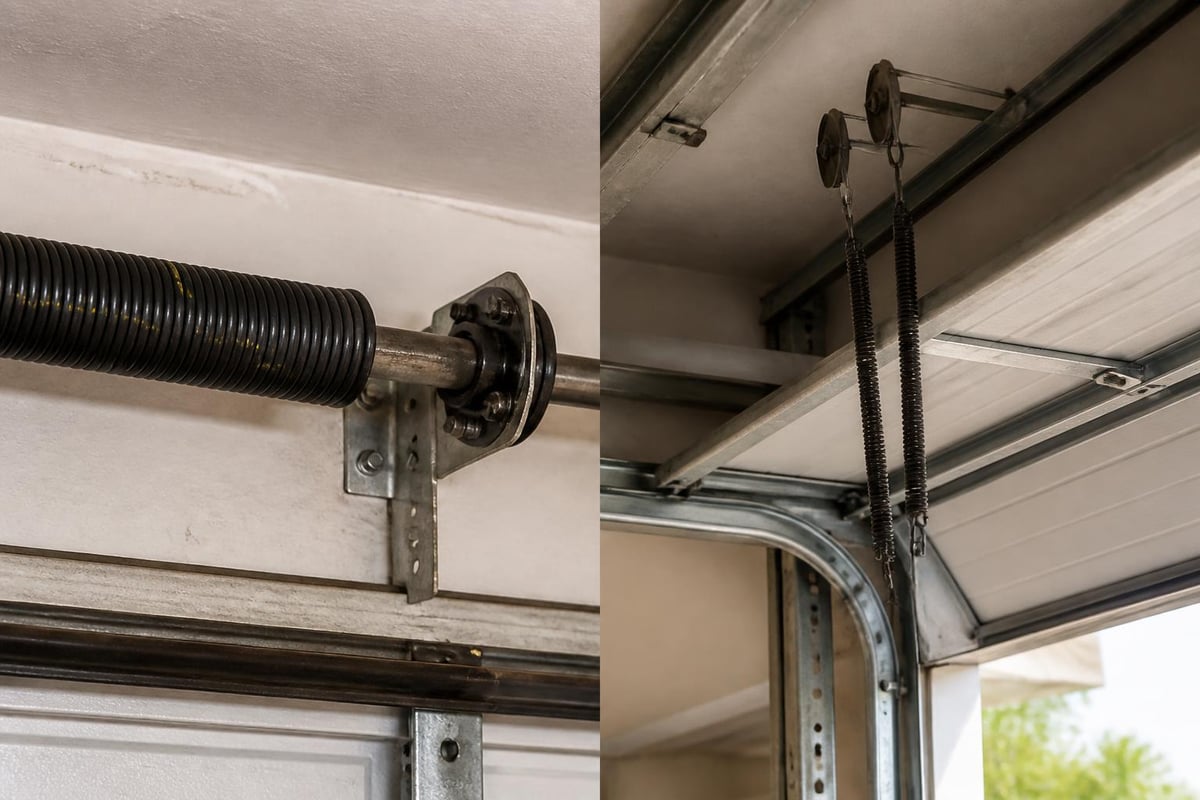
Torsion springs mount horizontally above the door opening on a metal shaft. These springs twist and coil to generate lifting force, typically lasting 10,000 to 20,000 cycles depending on quality and usage. Most modern garage doors in Kitsap County utilize torsion spring systems due to their superior balance and longevity.
Extension springs stretch along the horizontal tracks on either side of the door. They expand and contract to facilitate movement, generally providing 7,000 to 12,000 cycles before failure. While less common in newer installations, many older garage doors still rely on extension spring configurations.
| Spring Type | Location | Lifespan (Cycles) | Safety Features | Cost Range |
|---|---|---|---|---|
| Torsion | Above door opening | 10,000-20,000 | Contained on shaft | $200-$350 |
| Extension | Along side tracks | 7,000-12,000 | Safety cables recommended | $150-$250 |
Recognizing the Signs of Spring Failure
Early detection of spring wear prevents sudden failures and potential safety hazards. Several warning indicators suggest your springs approach the end of their service life.
Visual and Audible Warnings
A broken garage door spring announces itself through unmistakable symptoms. The most dramatic signal arrives as a loud bang or snap, often mistaken for a car backfire or gunshot. This sound occurs when the tightly wound metal finally surrenders to accumulated stress.
Physical inspection reveals additional clues:
- Visible gaps or separation in the spring coils
- Rust accumulation along the spring body
- Stretched or elongated spring appearance
- Door hanging unevenly when partially open
- Excessive slack in cables (extension springs)
Operational Changes
Functional changes often precede complete failure. Your garage door may begin rising only a few inches before stopping, struggle to open manually, or descend too quickly when closing. These behaviors indicate diminished spring tension affecting normal operation.
The opener may sound strained or refuse to lift the door entirely. Modern openers include sensors that detect excessive resistance, automatically shutting down to prevent motor damage when confronted with a broken garage door spring scenario.
Safety Risks and Immediate Concerns
Spring failures present serious safety hazards that demand respect and caution. The extreme tension stored in these components creates dangerous conditions when compromised.
Injury Prevention Protocols
Never attempt to manually operate a door with a broken garage door spring. The full weight of the door, no longer counterbalanced, can exceed 200 pounds for double doors. Attempting to lift this weight manually risks severe muscle strain, crushed fingers, or the door falling unexpectedly.
Broken extension springs pose unique dangers. Without safety cables installed, a snapped spring becomes a high-velocity projectile capable of damaging vehicles, walls, or causing personal injury. Professional safety protocols emphasize the importance of proper containment systems.
Children and pets should remain clear of the garage until repairs are completed. The compromised door may shift or settle unpredictably, and broken spring fragments can have sharp edges.
Secondary System Damage
Continuing to operate your opener with a broken garage door spring accelerates wear on the motor assembly, drive system, and internal gears. The opener was engineered to lift a balanced door, not the full unassisted weight. This excessive load can burn out the motor, strip gears, and void manufacturer warranties.
Door panels themselves suffer stress fractures and warping when forced to operate without proper spring support. Rollers may jump tracks, cables can fray or snap, and brackets may bend under abnormal stress patterns.
Emergency Response When Springs Break
Discovering a broken garage door spring requires immediate, methodical response to prevent escalating problems and maintain home security.
Securing Your Garage
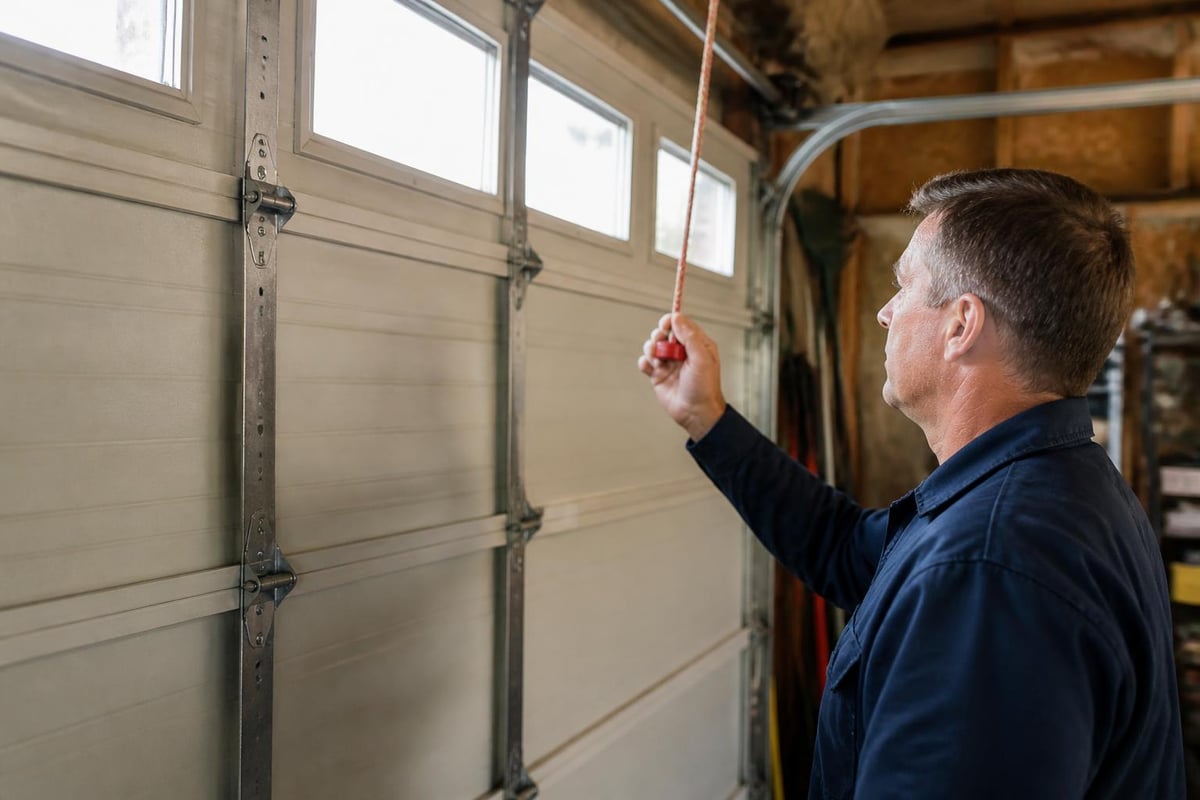
First, disengage the opener by pulling the emergency release cord. This red handle disconnects the carriage from the door, preventing automatic operation attempts. Never reconnect until repairs are complete.
If the door is closed, it typically remains secure in position. An open door presents challenges. Use C-clamps or locking pliers on the track immediately below the bottom roller to prevent unintended movement. This emergency stabilization technique provides temporary security until professional service arrives.
For vehicles trapped inside, carefully assess whether manual lifting is feasible. Enlist multiple people to share the weight, lift slowly from the center bottom panel, and immediately secure the door with blocks or clamps once raised. This emergency procedure carries significant risk and should only be attempted when absolutely necessary.
Temporary Access Solutions
Many Bainbridge Island homeowners require garage access for daily routines. Alternative entry through service doors provides the safest solution. If your garage lacks a separate entrance, consider this valuable addition during your repair consultation.
Avoid propping the door open with ladders, jack stands, or other improvised supports. These create unstable conditions and false security. The door's weight and potential for settling makes any temporary support system inherently dangerous.
Professional Repair Considerations
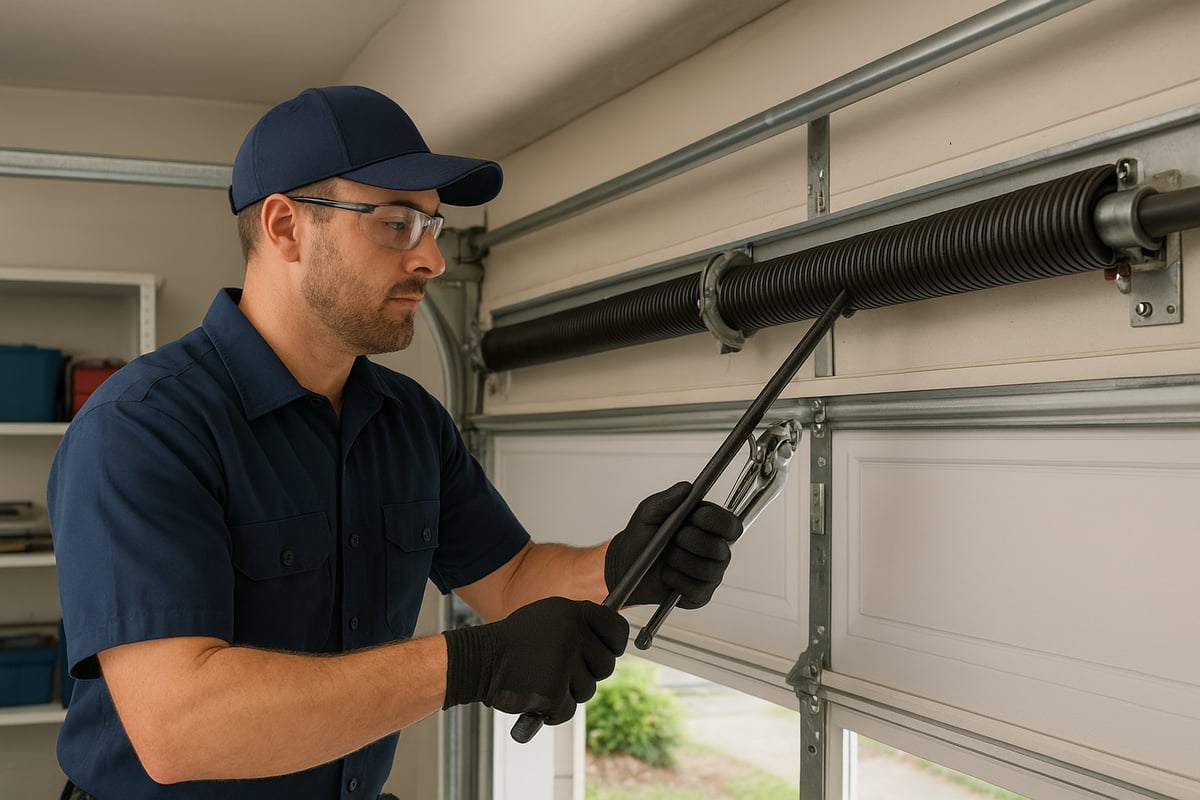
Spring replacement demands specialized knowledge, tools, and safety equipment that justify professional service investment.
Why DIY Spring Repair Fails
Garage door springs operate under 200-400 pounds of tension. Winding bars, proper torque calculations, and containment procedures separate safe professional service from dangerous amateur attempts. Detailed spring replacement guides illustrate the complexity involved.
Incorrect spring selection leads to ongoing problems. Springs are specified by wire size, inside diameter, and length. Installing incorrect specifications creates imbalanced doors, premature opener failure, and safety hazards. Professional technicians calculate precise spring requirements based on door weight, height, and track configuration.
What Professional Service Includes
Comprehensive spring repair extends beyond simple component replacement. NextLevel Garage Co. and other professional providers deliver complete system assessment and adjustment during spring service calls.
Quality repairs include:
- Complete spring system replacement (both springs on double-spring doors)
- Cable inspection and replacement if worn
- Roller examination and lubrication
- Track alignment verification
- Balance testing and adjustment
- Opener force recalibration
- Safety reversal system testing
Professional service from experienced garage door technicians in Kitsap County ensures all components function harmoniously, maximizing longevity and safety for your entire garage door system.
Spring Replacement Costs and Timing
Understanding repair investments helps homeowners budget appropriately and evaluate service quotes accurately.
Pricing Factors
Several variables influence final spring replacement costs. Service providers consider door size, spring type, accessibility, and additional repairs needed during the service call.
Standard residential repairs typically range from $200 to $350 for complete torsion spring replacement on a two-car garage door. Extension spring replacement generally costs $150 to $250. These estimates include labor, materials, and system testing.
Premium high-cycle springs cost more initially but deliver extended service life. Upgrading from standard 10,000-cycle springs to 25,000 or 50,000-cycle options adds $50 to $150 to the base price. For frequently used doors, this investment pays dividends through reduced service frequency.
| Service Component | Cost Range | Notes |
|---|---|---|
| Standard torsion spring | $200-$350 | Includes both springs, labor, testing |
| Extension spring set | $150-$250 | Both sides, cables, adjustment |
| High-cycle upgrade | +$50-$150 | Extended lifespan option |
| Cable replacement | $75-$125 | Per cable if damaged |
| Emergency service | +$75-$200 | After-hours premium |
Scheduling Considerations
Broken garage door spring repairs qualify as urgent service needs. Most professional garage door companies, including NextLevel Garage Co., prioritize spring failures for same-day or next-day service windows.
Spring replacement typically requires 60 to 90 minutes for standard residential doors. Complex configurations, additional repairs, or custom doors may extend service time. Schedule repairs when you can remain home, as technicians need access to both interior and exterior garage areas.
Extending Spring Lifespan Through Maintenance
Proactive maintenance significantly extends spring service life and reduces unexpected failure frequency.
Lubrication Protocols
Regular lubrication represents the single most effective maintenance task homeowners can perform. Apply white lithium grease or silicone-based garage door lubricant to spring coils every six months. This simple action reduces friction, prevents rust formation, and maintains smooth spring operation.
Clean springs before lubricating. Wipe away accumulated dirt, dust, and old lubricant with a clean cloth. Apply fresh lubricant sparingly along the full spring length, avoiding over-application that attracts debris.
Environmental Protection
Kitsap County's marine climate presents unique challenges for garage door components. Salt air accelerates corrosion, while moisture promotes rust formation. Regular overhead door maintenance addresses these environmental factors.
Garage ventilation helps control humidity levels that accelerate spring deterioration. Ensure adequate airflow, particularly in enclosed garages. Inspect springs monthly for rust spots, addressing surface oxidation promptly before it compromises structural integrity.
Cycle Management
Average springs deliver 10,000 to 15,000 cycles. A cycle consists of one complete opening and closing sequence. Households opening their garage four times daily accumulate approximately 1,500 annual cycles, suggesting seven to ten-year spring lifespan under normal conditions.
Minimize unnecessary cycles. Consolidate errands, use alternative home entrances when practical, and avoid repetitive door operation. These habits extend spring life while reducing overall system wear.
Choosing the Right Replacement Springs
Spring selection significantly impacts performance, longevity, and safety outcomes.
Material and Coating Options
Standard oil-tempered springs provide reliable performance at competitive prices. These represent the industry baseline for residential applications. Powder-coated springs resist rust formation, offering superior longevity in humid coastal environments common throughout Bainbridge Island and Kitsap County.
Galvanized springs deliver maximum corrosion resistance. The zinc coating protects against moisture and salt air exposure. While priced higher than standard options, galvanized springs often outlast alternatives by 50% or more in marine climates.
Cycle Rating Decisions
Manufacturers rate springs by expected cycle count. Understanding spring specifications helps homeowners make informed upgrade decisions.
- Standard 10,000-cycle springs: Budget-friendly baseline for average residential use
- 20,000-cycle springs: Extended life for moderate to heavy use patterns
- 25,000-cycle springs: Premium option balancing cost and longevity
- 50,000-cycle springs: Maximum lifespan for commercial or very frequent residential use
Calculate your annual cycle count, then select springs rated for 1.5 to 2 times your projected needs. This buffer accounts for manufacturing variations and provides comfortable service margins.
Common Spring Failure Causes
Understanding why springs fail informs prevention strategies and maintenance priorities.
Material Fatigue
Metal fatigue represents the primary spring failure mechanism. Each operational cycle stresses the spring material. Over thousands of repetitions, microscopic cracks develop and propagate until catastrophic failure occurs.
Quality materials and manufacturing processes delay fatigue onset. Economy springs use thinner wire gauges and lower-grade steel, accelerating fatigue development. Premium springs employ heavier wire and superior metallurgy, delivering extended service despite identical operational stresses.
Corrosion and Environmental Damage
Rust weakens spring material, creating stress concentration points that promote cracking. Washington's maritime climate accelerates corrosion through elevated humidity and salt air exposure. Uncoated springs in coastal areas often fail prematurely due to environmental degradation rather than pure mechanical fatigue.
Temperature extremes stress spring materials. Severe cold increases brittleness, while excessive heat can affect tempering. Garages lacking climate control subject springs to wider temperature swings, potentially reducing service life.
Improper Installation and Adjustment
Incorrectly installed springs operate under improper tension, creating unbalanced doors and accelerated wear patterns. Over-wound springs carry excessive stress, while under-wound springs force the opener to work harder. Both scenarios shorten component life and compromise safety.
Professional spring installation ensures proper winding, correct tension distribution, and balanced door operation. These factors directly influence how long your springs perform reliably.
Regional Considerations for Kitsap County
Local environmental conditions and building characteristics influence spring performance and maintenance needs throughout the region.
Marine Climate Impact
Bainbridge Island and surrounding Kitsap County communities experience consistent moisture exposure. This climate demands upgraded corrosion protection for optimal spring longevity. Homeowners investing in powder-coated or galvanized springs experience measurably longer service intervals.
Regular inspection schedules become particularly important in marine environments. Monthly visual checks for surface rust, coupled with prompt lubricant application, prevent minor oxidation from developing into structural compromise.
Insulated Door Considerations
Many Pacific Northwest homes feature insulated garage doors for energy efficiency and temperature regulation. These doors typically weigh more than uninsulated alternatives, requiring appropriately rated springs to provide proper counterbalance.
When replacing springs on insulated doors, ensure new components match or exceed the original weight rating. Undersized springs create operational problems and premature failure. Professional technicians calculate precise requirements based on actual door weight rather than assumed specifications.
When to Replace vs Repair
Certain scenarios justify complete system upgrades rather than isolated spring replacement.
Complete System Assessment
A broken garage door spring often reveals broader system wear. If your door exceeds 15 years of service, bears visible damage, or shows multiple failing components, comprehensive replacement may deliver better long-term value than repeated repairs.
Consider total system replacement when:
- Door panels show significant rust, dents, or structural damage
- Multiple components require simultaneous replacement
- The opener predates modern safety standards
- Energy efficiency improvements justify investment
- Home renovation or sale preparations are underway
Cost-Benefit Analysis
Comprehensive repair cost guides help homeowners evaluate repair versus replacement decisions. When accumulated repair costs approach 50% of new door installation prices, replacement typically provides superior value.
Factor ongoing maintenance costs, energy savings from improved insulation, enhanced security features, and aesthetic improvements into your decision matrix. Sometimes a broken garage door spring serves as the catalyst for beneficial comprehensive upgrades.
A broken garage door spring demands prompt attention, professional expertise, and careful safety consideration. Understanding spring types, recognizing failure symptoms, and implementing preventive maintenance helps homeowners minimize disruptions and maximize system longevity. Whether you're dealing with an immediate spring failure or planning proactive replacement, working with experienced professionals ensures safe, reliable results. NextLevel Garage Co. serves homeowners and businesses throughout Kitsap County with expert garage door spring repair, complete system installation, and comprehensive maintenance services designed to keep your garage operating smoothly for years to come.