

Requesting garage door estimates represents a critical first step when planning any door replacement, repair, or installation project. Whether you're dealing with a broken spring, upgrading to a modern insulated door, or installing a completely new system, understanding how contractors develop their estimates will help you make informed decisions and avoid unexpected costs. Homeowners throughout Kitsap County and Bainbridge Island face unique considerations when seeking estimates, from local labor rates to regional building codes that can impact final pricing. This comprehensive guide breaks down everything you need to know about obtaining, evaluating, and comparing garage door estimates in 2026.
What Makes Up a Garage Door Estimate
A professional garage door estimate includes several distinct components that together determine your total investment. Understanding these elements helps you identify whether a quote is comprehensive or missing critical details.
Material costs form the foundation of any estimate. This includes the door itself, springs, tracks, rollers, hinges, and weatherstripping. Higher-quality materials naturally increase costs but often deliver better performance and longevity. For instance, insulated steel doors cost more than non-insulated options but provide superior energy efficiency and noise reduction.
Labor charges reflect the time and expertise required to complete your project. Installation complexity varies significantly based on door type, size, and whether structural modifications are necessary. A straightforward single-car door replacement typically requires 3-4 hours, while custom installations or commercial doors may take considerably longer.
Breaking Down Labor Components
Professional installers account for multiple tasks within their labor estimates:
- Removal and disposal of existing doors and hardware
- Preparation of the opening and frame alignment
- Installation of tracks, springs, and mechanical components
- Door assembly and mounting
- Opener integration and safety testing
- Final adjustments and customer walk-through
Permit fees and inspections may apply depending on your local jurisdiction and project scope. Many residential replacements don't require permits, but commercial installations or significant structural changes often do. Your contractor should clarify whether permits are included in the estimate or represent an additional cost.

How to Request Accurate Garage Door Estimates
The quality of estimates you receive depends largely on the information you provide to contractors. Vague requests yield generic quotes that may not reflect your actual needs or site conditions.
Start by documenting your current situation with photographs and measurements. Capture your existing door, the opening dimensions, the ceiling height, and any obstructions like water heaters or storage shelves. These details help contractors prepare realistic estimates before visiting your property.
| Information to Provide | Why It Matters | How to Gather It |
|---|---|---|
| Opening dimensions | Determines door size and cost | Measure width and height at multiple points |
| Headroom clearance | Affects track configuration | Measure from top of opening to ceiling |
| Current door type | Establishes baseline comparison | Note material, insulation, panel design |
| Desired features | Shapes material recommendations | List priorities like insulation, windows, style |
| Budget parameters | Focuses contractor recommendations | Establish realistic range based on research |
When contacting contractors, be specific about your timeline. Rush jobs often carry premium pricing, while flexible schedules may allow contractors to offer more competitive rates during slower periods. For routine replacements, providing 2-3 weeks flexibility can sometimes reduce costs by 10-15%.
Describe any special requirements upfront. If you need matching doors for multiple bays, custom colors, specific hardware finishes, or integration with existing smart home systems, mention these details in your initial request. Contractors can then provide comprehensive estimates rather than base quotes requiring multiple revisions.
Comparing Multiple Garage Door Estimates
Responsible homeowners typically request 3-5 estimates before making final decisions. However, comparing quotes effectively requires more than simply choosing the lowest number.
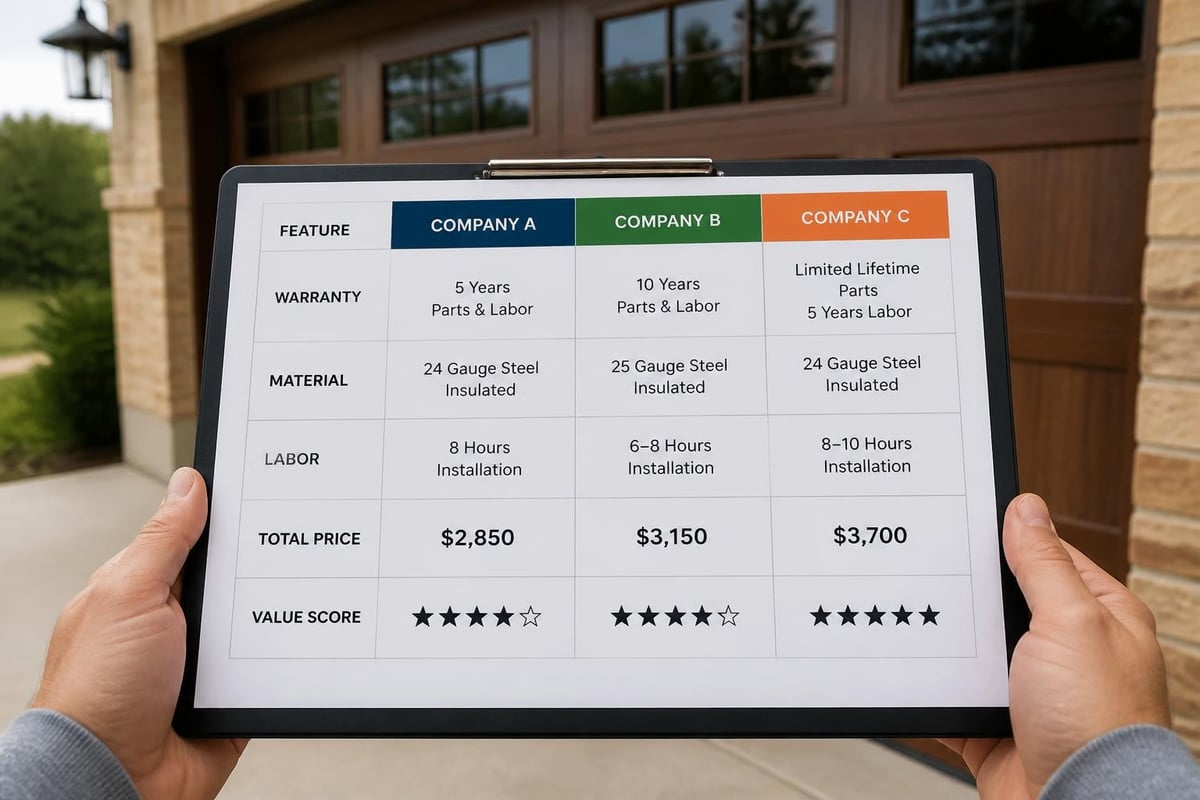
Create a comparison framework that evaluates estimates across consistent criteria. Price matters, but value encompasses warranty coverage, material quality, installation timeline, and contractor reputation. A slightly higher estimate from a well-established local company may deliver better long-term value than the cheapest option.
Key Comparison Points
When reviewing garage door estimates side by side, focus on these critical factors:
- Warranty coverage duration and scope for both materials and labor
- Specific brand and model numbers for doors and components
- Installation timeline from contract signing to project completion
- Payment terms including deposit requirements and final payment timing
- Included services such as disposal, haul-away, and cleanup
Watch for significant price variations that may signal underlying issues. If one estimate comes in 40% lower than others, investigate what's different. The contractor may be using inferior materials, omitting necessary work, or lacking proper licensing and insurance. Conversely, the highest estimate isn't automatically the best value.
Understanding garage door installation costs by type and size helps you recognize whether estimates fall within reasonable ranges for your specific project. Regional cost differences exist, but extreme outliers deserve scrutiny.
Factors That Impact Garage Door Estimate Pricing
Multiple variables influence the final numbers on your estimate. Recognizing these factors helps set realistic budget expectations and identify opportunities for cost management.
Door size represents the most obvious pricing factor. Standard single-car doors (8-9 feet wide) cost significantly less than double-car doors (16 feet wide) or oversized commercial openings. According to data from comprehensive cost guides, single doors typically range from $800-$1,500 installed, while double doors run $1,200-$3,500 or more.
Material selection dramatically affects both initial costs and long-term performance. Steel doors offer the best value for most homeowners, combining durability, low maintenance, and moderate pricing. Wood doors deliver premium aesthetics but require regular maintenance and cost 50-150% more than comparable steel options. Aluminum suits contemporary designs and coastal environments but dents more easily than steel.
Insulation and Energy Efficiency
The R-value of your door influences both comfort and utility costs. Non-insulated doors work fine for detached garages in mild climates, but insulated doors make sense when:
- Your garage shares walls with living spaces
- You use the garage as a workshop or hobby area
- Energy efficiency is a priority
- Noise reduction matters in your neighborhood
Insulated doors typically add $200-$600 to estimates compared to non-insulated equivalents, but this investment often pays back through reduced heating and cooling costs. For homes in the Pacific Northwest climate, insulation provides year-round benefits.
Window options enhance curb appeal but increase costs by $150-$500 depending on size, number, and glass type. Plain windows cost less than decorative or frosted glass. Consider whether natural light justifies the additional expense for your specific situation.
Smart technology integration adds convenience through smartphone control, automatic closing schedules, and delivery notifications. Professional garage door opener installation with smart features typically adds $300-$700 to base estimates but delivers substantial lifestyle improvements for tech-oriented homeowners.
What Detailed Garage Door Estimates Should Include
Comprehensive estimates provide transparency that protects both contractors and customers. Vague quotes create opportunities for misunderstanding and disputes when actual work begins.
Look for estimates that specify exact products by manufacturer name and model number. "Standard steel door" tells you nothing about quality, insulation value, or expected lifespan. "Clopay Gallery Collection, Model GD2LU, R-value 18.4" provides actionable information you can research independently.
Labor should break down into discrete tasks rather than a single lump sum. This transparency helps you understand what work the estimate covers and makes it easier to discuss adjustments if your needs change. Quality contractors stand behind detailed breakdowns because they reflect honest assessments of required work.
Red Flags in Garage Door Estimates
Certain warning signs suggest you should proceed cautiously or request clarification:
- No company letterhead, license number, or contact information
- Pressure to sign immediately or claims of "today only" pricing
- Requests for full payment upfront before work begins
- Verbal estimates without written documentation
- Reluctance to provide references or proof of insurance
- Significant price increases after initial estimate without clear justification
Professional contractors provide written estimates that remain valid for 30-60 days, giving you time to compare options without artificial urgency. They should also carry appropriate licensing and insurance, which you can verify through state and local authorities.
According to insights from Bob Vila’s cost guide, reputable contractors build contingency allowances into estimates for unforeseen conditions like concealed damage or non-standard framing. This approach prevents surprise charges when installation reveals hidden issues.
Understanding Estimate Validity and Change Orders
Garage door estimates typically include expiration dates, after which pricing may change due to material cost fluctuations or contractor scheduling changes. Most estimates remain valid for 30-60 days from issuance.
Scope changes trigger revised estimates called change orders. If you initially requested a standard door but later want to upgrade to a carriage-style design, the contractor will issue a change order documenting the cost difference. Always request written change orders before authorizing additional work.
Material price volatility affects estimate accuracy. Steel prices, in particular, fluctuate based on global supply and demand. Contractors sometimes include language in estimates noting that material costs are subject to change if orders aren't placed within specific timeframes.
| Estimate Type | Validity Period | Best For | Limitations |
|---|---|---|---|
| Free In-Home | 30-45 days | Standard installations | Requires site visit scheduling |
| Phone/Email Quote | 7-14 days | Preliminary budgeting | Less accurate without inspection |
| Detailed Written | 45-60 days | Formal comparison | May include contingencies |
| Firm Fixed Price | 60-90 days | Budget certainty | Often slightly higher |
Seasonal factors influence both pricing and availability. Spring and early summer represent peak seasons for garage work, potentially reducing contractor flexibility and increasing labor rates. Fall and winter projects may qualify for off-season discounts, particularly in regions with mild winters like Western Washington.
Commercial vs. Residential Garage Door Estimates
Commercial garage door estimates differ substantially from residential quotes due to scale, usage demands, and code requirements. Commercial doors endure higher cycle counts, require more robust components, and often need specialized features like high-speed operation or enhanced security.
Cycle ratings measure expected door lifespan based on daily operations. Residential doors typically rate for 10,000-15,000 cycles, sufficient for decades of typical home use. Commercial doors need 25,000-100,000+ cycle ratings depending on facility type. This durability requirement increases material and component costs significantly.
Loading dock doors, warehouse entrances, and auto service facilities present unique challenges that residential contractors may lack experience handling. When requesting commercial garage door estimates, verify that contractors have relevant commercial experience and can provide appropriate references.
Questions to Ask When Reviewing Estimates
Prepared questions help you extract maximum value from contractor meetings and estimate reviews. Don't hesitate to seek clarification on any aspect of an estimate.
About materials: What specific brands and models are you proposing? How do these compare to alternative options? What warranties cover the door and components? Can I see samples or visit installations using these materials?
About installation: What's your typical installation timeline from contract to completion? How many installers will work on my project? What preparation should I complete before your arrival? How do you protect my driveway and landscaping during installation?
About the company: How long have you been in business? Do you maintain current licensing and insurance? Can you provide recent customer references? Do you handle warranty service directly or through third parties?
For specialized needs like overhead door maintenance programs or emergency repair capabilities, ask whether these services are available and how they're priced relative to installation work.
Exploring different types of garage doors before meetings helps you ask informed questions about material performance, maintenance requirements, and long-term value.
When to Request Revised Garage Door Estimates
Initial estimates sometimes require revision as you refine project scope or discover site conditions that affect installation. Understanding when revisions make sense prevents unnecessary delays.
Request revised estimates when you want to explore different door styles or materials while keeping other variables constant. This comparison helps quantify exactly how material choices impact total cost. For example, you might request separate estimates for steel, wood, and composite doors on identical installations.
Unexpected structural issues discovered during pre-installation inspections justify revised estimates. If the contractor finds rotted framing, improper header support, or electrical complications, additional work becomes necessary. Reputable contractors present these findings with photographic documentation and clear explanations of required remediation.
Budget constraints sometimes require scaling back initial plans. Rather than abandoning the project, discuss value-engineering options with contractors. They might suggest alternative materials, different door configurations, or phased installation approaches that fit your budget while still delivering functional improvements.
Getting the Most Value from Your Estimate Process
The estimate process represents an opportunity to build relationships with contractors, not just collect numbers. The interactions you have while gathering estimates preview the communication style and professionalism you'll experience throughout the project.
Use estimates as educational tools. Ask contractors to explain pricing differences between options, discuss pros and cons of various approaches, and share insights from their experience. Quality contractors welcome these conversations because they demonstrate your serious interest and help ensure successful projects.
Pay attention to responsiveness. Contractors who return calls promptly, show up on time for estimate appointments, and follow through on promised information typically maintain these standards throughout projects. Poor communication during estimates rarely improves during installation.
Regional resources like local cost guides and national pricing data provide useful benchmarks, but remember that actual costs vary based on specific circumstances. Your estimate should reflect your unique situation, not just industry averages.
For situations requiring immediate attention, such as when you need to fix a garage door off track, estimates may need expedited timelines. Discuss emergency service capabilities and associated pricing when urgent needs arise.
Long-Term Cost Considerations Beyond Initial Estimates
Smart homeowners evaluate total ownership costs, not just installation pricing. A slightly more expensive door that requires minimal maintenance and delivers superior durability often costs less over its lifespan than a cheaper option needing frequent repairs.
Maintenance requirements vary significantly between door types. Steel doors need periodic lubrication and basic inspections but little else. Wood doors require regular painting or staining, weatherstripping replacement, and protection against moisture damage. Factor these ongoing costs into your value assessment.
Energy costs represent another long-term consideration. According to comprehensive pricing guides, insulated doors can reduce heating and cooling costs by 10-20% in attached garages, potentially saving $100-300 annually depending on climate and usage patterns. Over a 20-year door lifespan, this efficiency advantage can offset higher initial costs.
Repair probability correlates with component quality. Doors using lighter-gauge steel, lower-quality springs, or plastic components typically require repairs sooner than premium alternatives. Ask contractors about expected component lifespans and typical repair costs when evaluating estimates.
Regional Factors Affecting Garage Door Estimates
Location significantly impacts both material and labor costs in garage door estimates. Homeowners on Bainbridge Island and throughout Kitsap County face different cost structures than residents in other regions due to local wage rates, permitting requirements, and material availability.
Island locations sometimes include delivery surcharges for materials and equipment. While these charges are typically modest, they can add 5-10% to material costs. Understanding whether estimates include all delivery fees prevents surprise charges.
Coastal environments require special consideration for hardware and finish selection. Saltwater exposure accelerates corrosion on standard hardware. Stainless steel components, powder-coated finishes, and enhanced weatherstripping add upfront costs but deliver superior performance in marine climates.
Local building codes influence both installation requirements and permitting costs. Some jurisdictions mandate wind-load ratings, specific R-values for insulation, or particular safety features that affect estimate pricing. Contractors familiar with local requirements should include any code-driven costs in initial estimates.
Climate considerations extend to door selection recommendations. The Pacific Northwest's mild, wet winters favor materials that resist moisture without requiring extensive seasonal preparation. Understanding regional garage door pricing factors helps you evaluate whether estimates reflect appropriate climate-specific choices.
Obtaining and evaluating garage door estimates requires attention to detail, but the effort ensures you make informed decisions that deliver lasting value. By understanding estimate components, asking the right questions, and comparing proposals systematically, you position yourself for successful project outcomes.
When you're ready to move forward with your garage door project, NextLevel Garage Co. provides transparent estimates and professional service throughout Kitsap County and Bainbridge Island. Our team specializes in residential and commercial door installation, repair, and maintenance, delivering the quality workmanship and clear communication that turn estimates into completed projects you'll appreciate for years to come.