

When you press the button to open your garage door and nothing happens-or worse, you hear a loud bang followed by a door that won't budge-you're likely dealing with a garage door opener spring broken scenario. This common yet serious issue affects thousands of homeowners across Kitsap County and Bainbridge Island every year. Understanding the relationship between your garage door springs and opener system is essential for maintaining safe, reliable access to your home or business. The springs do the heavy lifting, counterbalancing the door's weight, while the opener provides the motion. When a spring fails, the entire system becomes compromised, potentially causing damage, safety hazards, and significant inconvenience.
Understanding the Role of Springs in Garage Door Systems
Garage door springs serve as the muscle behind your door's operation, bearing the responsibility of counterbalancing hundreds of pounds of steel, wood, or composite materials. Most residential garage doors weigh between 130 and 350 pounds, depending on size, material, and insulation. Without properly functioning springs, your garage door opener would need to lift this entire weight on its own-a task it was never designed to handle.
Torsion Springs vs. Extension Springs
Two primary spring types exist in modern garage door systems, each with distinct characteristics and failure patterns:
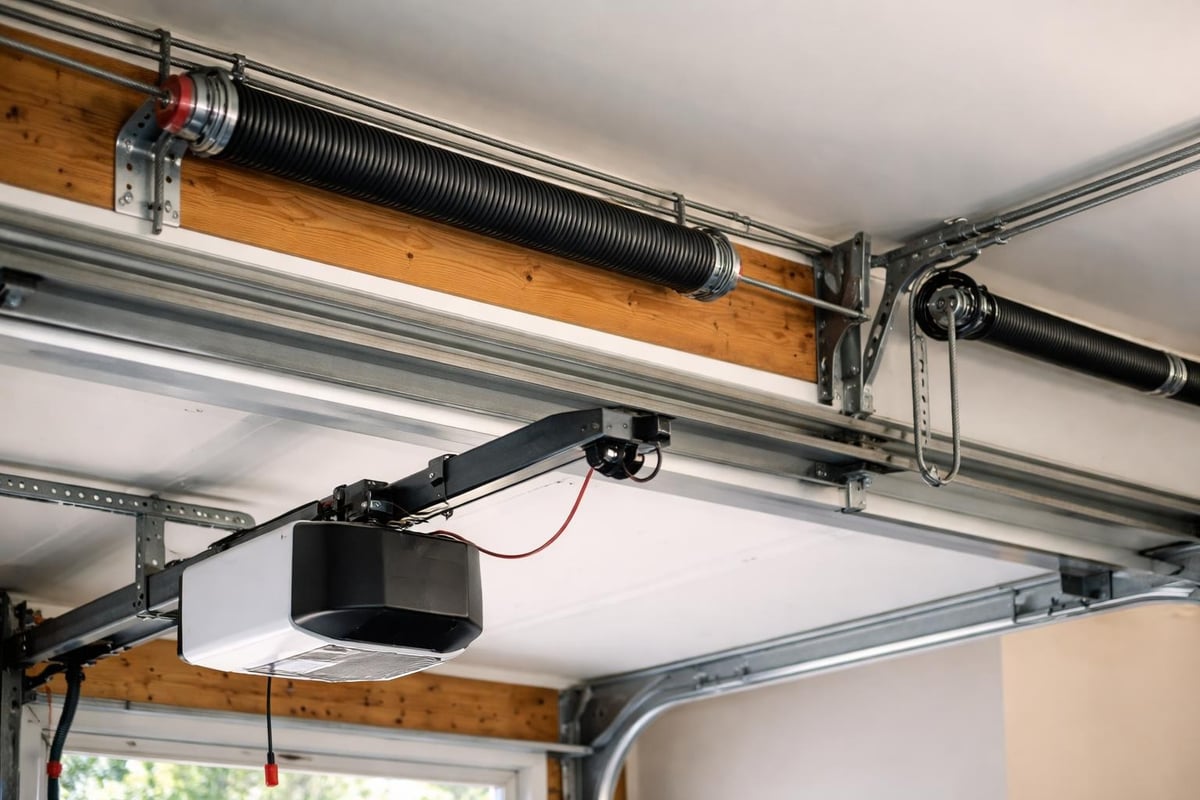
Torsion springs mount on a metal shaft above the door opening and use torque to lift the door. These springs typically last 10,000 to 20,000 cycles (one cycle equals opening and closing the door once). They're more durable and safer than extension springs, but when they break, they create a loud bang that often startles homeowners.
Extension springs run along the horizontal tracks on either side of the door and stretch to provide lifting force. These springs generally have a shorter lifespan of 5,000 to 10,000 cycles and pose greater safety risks when they snap, as broken pieces can become dangerous projectiles.
| Spring Type | Average Lifespan | Location | Safety Level | Cost Range |
|---|---|---|---|---|
| Torsion | 10,000-20,000 cycles | Above door opening | Higher | $200-$400 |
| Extension | 5,000-10,000 cycles | Along side tracks | Lower | $150-$300 |
| High-cycle torsion | 25,000-100,000 cycles | Above door opening | Highest | $300-$600 |
Recognizing Signs of a Garage Door Opener Spring Broken
Identifying spring failure early can prevent additional damage to your opener motor and other door components. Many homeowners initially believe they have a problem with their garage door opener when the real culprit is a broken spring.
Immediate Warning Signs
When a garage door opener spring broken situation occurs, you'll typically notice these immediate indicators:
- Loud bang or snap: The sound of a torsion spring breaking often resembles a firecracker or gunshot
- Door won't open: The opener runs but the door barely moves or doesn't lift at all
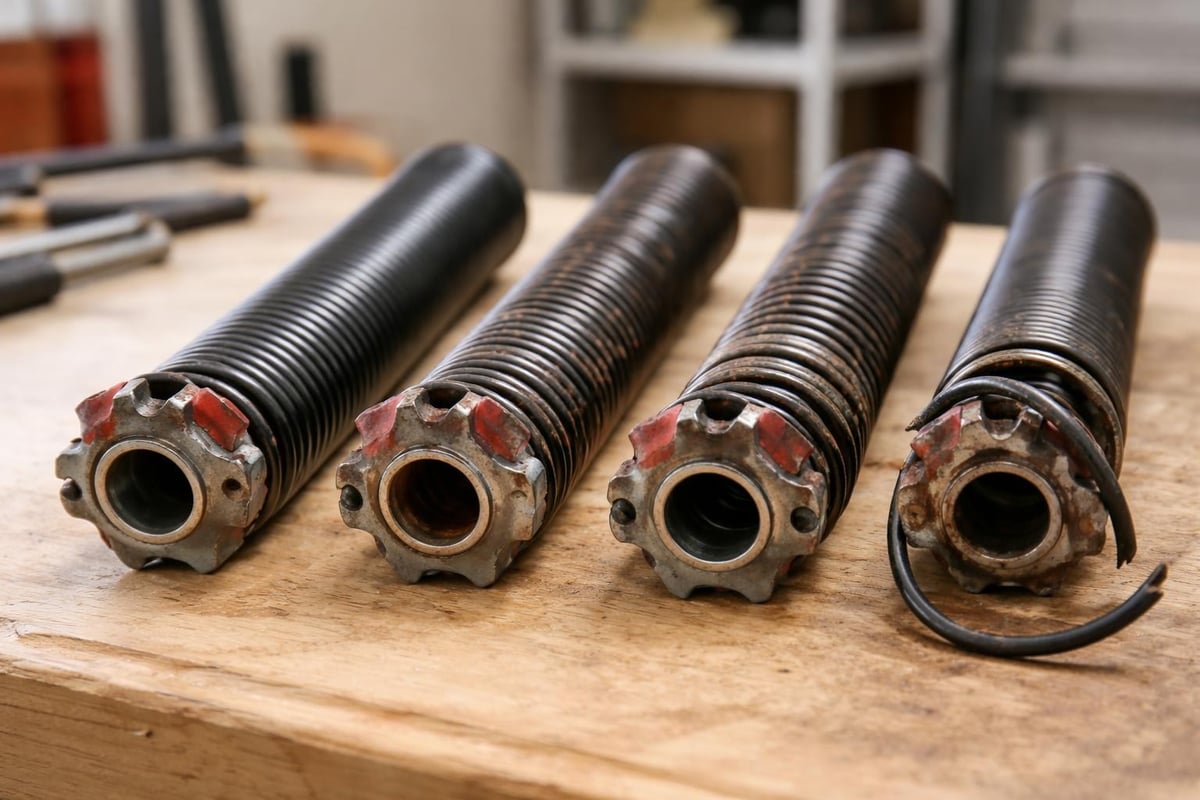
- Visible gap in spring: A broken torsion spring shows a clear separation in the coils
- Crooked or uneven door: One side hangs lower than the other when attempting to open
- Door falls quickly when closing: The spring no longer provides controlled descent
The door feeling unusually heavy when you attempt to manually lift it indicates that the springs aren't providing their normal counterbalancing force. A properly balanced door should stay in place when lifted halfway and released.
Progressive Warning Signs
Before complete failure, springs often provide subtle warnings that trouble is brewing:
Slow operation: Your door takes longer to open or close than usual, forcing the opener to work harder. This strain can damage your garage door motor over time.
Jerky movement: Instead of smooth travel, the door stutters or jumps during operation, indicating uneven spring tension.
Rust or wear on springs: Visible corrosion, gaps between coils, or stretching indicates springs nearing the end of their service life.
Why Garage Door Springs Break
Understanding the causes behind spring failure helps homeowners take preventive measures and set realistic expectations for repair timelines.
Normal Wear and Cycle Life
Every garage door spring has a predetermined cycle life based on its manufacturing specifications. A standard spring rated for 10,000 cycles will last approximately seven to nine years with average use (opening the door three to four times daily). High-use households or commercial properties may reach this threshold much faster.
The metal in springs experiences constant stress and fatigue. Each cycle creates microscopic damage that accumulates over time until the spring can no longer withstand the tension and fails catastrophically.
Environmental Factors in Kitsap County
Living near the Puget Sound creates unique challenges for garage door components:
- Moisture and humidity: Salt air accelerates rust formation on uncoated springs
- Temperature fluctuations: Expansion and contraction stress metal components
- Lack of maintenance: Infrequent lubrication increases friction and wear
- Freezing conditions: Cold weather makes metal brittle and prone to snapping
Regular maintenance becomes especially important in marine environments like Bainbridge Island, where corrosion can significantly reduce spring lifespan. Applying silicone-based lubricant every six months helps protect against moisture damage.
Installation and Balance Issues
Improperly installed or incorrectly sized springs create premature failure conditions. When springs don't match the door's weight specifications, they bear excessive tension from the first cycle. Similarly, poor installation techniques-such as incorrect winding or inadequate securing-compromise spring integrity.
The Dangerous Connection: Springs and Opener Motors
Many homeowners don't realize that continuing to operate a garage door with a garage door opener spring broken creates a domino effect of damage throughout the system.
How Broken Springs Damage Openers
Your garage door opener motor typically provides 0.5 to 1.5 horsepower, designed to overcome friction and provide motion-not to lift the door's full weight. The springs handle the actual lifting force. When springs fail, the opener attempts to compensate by working far beyond its design parameters.
This excessive strain causes several problems:
- Burned out motor: Continuous overload generates heat that degrades motor windings
- Stripped gears: Plastic or nylon drive gears crack under excessive torque
- Circuit board failure: Electrical components overheat from prolonged current draw
- Premature wear: Even if the motor survives, its lifespan decreases dramatically
According to safety experts, attempting to operate a door with broken springs can reduce your opener's lifespan by 50% or more. What should last 10-15 years may fail within months.
Safety Mechanisms and Limits
Modern garage door openers include force adjustment settings and safety reversing mechanisms that detect excessive resistance. When a spring breaks, these systems may prevent the door from opening at all-a frustrating but protective feature. Understanding how your opener technology works helps you recognize when safety systems are preventing damage.
Some homeowners mistakenly increase force settings to compensate for broken springs, overriding the safety mechanisms. This dangerous practice can result in:
Crushing hazards: Excessive force prevents proper obstacle detection
Structural damage: Overpowered motors can bend tracks or damage door panels
Warranty voidance: Improper adjustments typically void manufacturer warranties
What to Do When You Discover a Broken Spring
The moment you identify a garage door opener spring broken situation, taking the right steps protects your property and ensures safe, effective repairs.
Immediate Actions
First, stop using the garage door immediately. Disconnect the opener by pulling the emergency release cord (usually a red handle hanging from the opener track). This prevents accidental activation and additional strain on the motor.
Never attempt to force the door open or closed. A door without spring support can fall rapidly, causing severe injury or property damage. If your vehicle is trapped inside, attempting to open the door with a broken spring carries significant risks that require careful consideration of safety protocols.
Document the situation with photos showing:
- The broken spring location
- Any visible damage to cables, tracks, or door panels
- The opener model and condition
- Door position (fully closed, partially open, or stuck mid-travel)
Assessing the Damage
Check for secondary damage that often accompanies spring failure. Common issues include:
Cable damage: Springs and cables work together, so spring failure often damages or loosens cables
Roller problems: Sudden weight shifts can force rollers off tracks or cause bearing failures
Panel dents: A falling door may dent bottom panels or damage the threshold
Opener mounting: Excessive motor strain can loosen mounting brackets or bend rails
Professional technicians experienced with garage door spring replacement service can identify these secondary issues during inspection, preventing future problems.
Professional Repair: The Only Safe Option
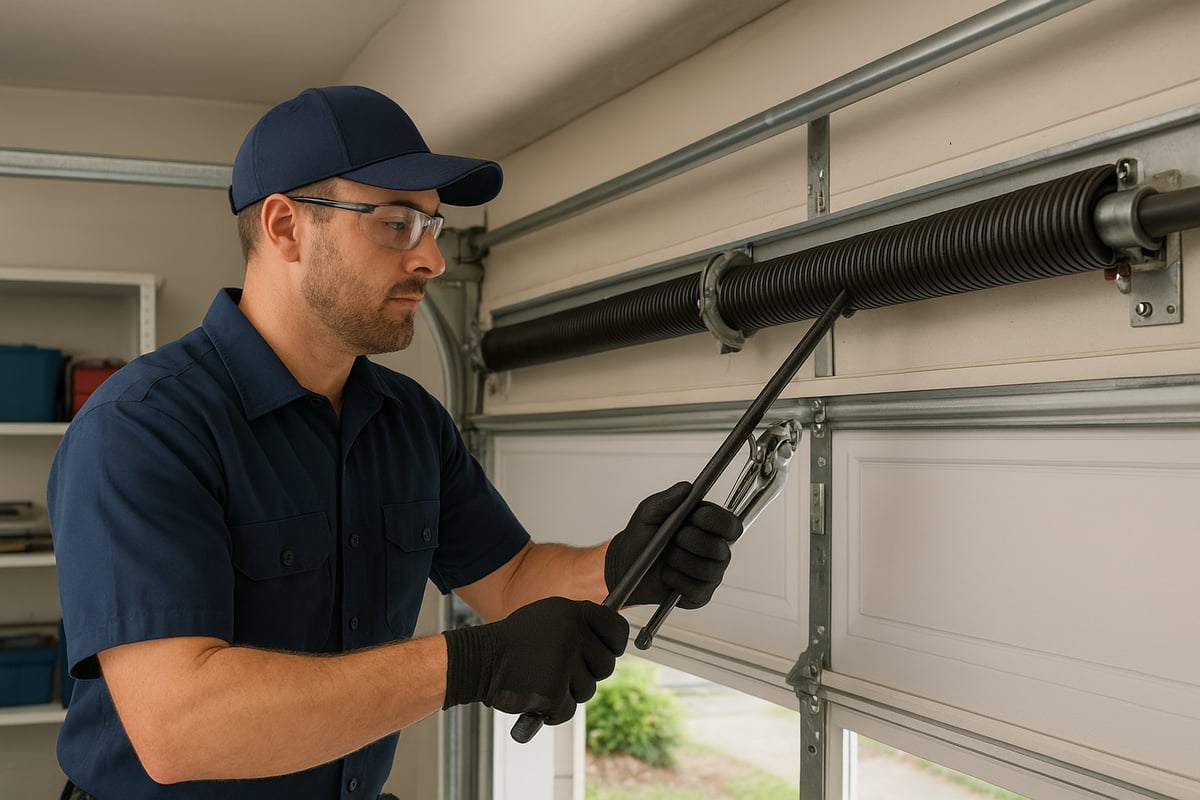
While DIY enthusiasts tackle many home improvement projects successfully, garage door spring replacement demands professional expertise due to extreme safety hazards.
Why DIY Spring Replacement Is Dangerous
Torsion springs store tremendous energy even when the door is closed. A standard two-car garage door spring holds approximately 200-400 foot-pounds of torque. Releasing this energy improperly can cause:
- Severe injuries: Broken bones, lacerations, or worse from spring recoil
- Property damage: Uncontrolled spring release damages vehicles, tools, and garage contents
- Improper tension: Incorrectly wound springs create imbalanced doors that malfunction or cause opener damage
- Missing safety features: DIY installations often omit containment cables on extension springs
Even experienced mechanics acknowledge the complexity involved, as demonstrated in this spring replacement demonstration showing the specialized tools and techniques required.
What Professional Repair Includes
Qualified technicians provide comprehensive service that addresses all aspects of spring failure:
- Safety inspection: Full door assessment identifying hidden damage
- Proper spring selection: Matching wire size, length, and cycle rating to door specifications
- Precise installation: Correct winding, tensioning, and securing techniques
- System balancing: Ensuring even weight distribution and smooth operation
- Opener adjustment: Recalibrating force and travel limits for optimal performance
- Safety testing: Verifying all safety mechanisms function correctly
Professional repair typically includes warranties on parts and labor, providing peace of mind that DIY attempts cannot offer. Understanding common signs of broken springs helps homeowners know when to call for service.
When dealing with a garage door opener spring broken situation, choosing qualified professionals ensures your system receives proper attention. Garage Door Spring Repair provides safe, professional replacement of broken or worn torsion and extension springs, restoring proper balance and smooth operation while protecting your opener from damage.
Repair Costs and Timeline Expectations
Understanding the financial and time investment required for spring replacement helps homeowners plan appropriately when facing this common repair.
Cost Breakdown for Kitsap County
Garage door spring repair costs vary based on several factors specific to your door and location:
| Factor | Impact on Cost | Typical Range |
|---|---|---|
| Spring type | Torsion costs more than extension | $150-$600 |
| Number of springs | Double doors have two torsion springs | Add $100-$200 |
| Spring quality | High-cycle springs cost more upfront | Add $50-$200 |
| Emergency service | After-hours or weekend calls | Add $75-$150 |
| Secondary repairs | Cables, rollers, or track adjustment | Add $50-$300 |
Most standard residential repairs range from $200 to $400 for complete professional service, including parts, labor, and warranty coverage. This investment proves far less expensive than replacing a damaged opener motor, which can cost $300-$800 or requiring a new garage door installation at $1,000-$4,000.
Repair Timeline
Professional spring replacement typically takes one to two hours for standard residential doors. Factors affecting timeline include:
Same-day service: Many companies stock common spring sizes for immediate replacement
Custom springs: Non-standard doors may require ordering specific springs (1-3 day wait)
Extensive damage: Doors needing cable replacement, track repair, or panel work take longer
Parts availability: Supply chain issues occasionally delay specialty component delivery
Scheduling repairs promptly prevents additional complications and restores normal garage access quickly. Most reputable companies offer emergency service for situations where vehicles are trapped or security is compromised.
Preventing Future Spring Failures
While all springs eventually wear out, proper maintenance and early intervention significantly extend service life and reduce unexpected failures.
Regular Maintenance Schedule
Implementing a simple maintenance routine adds thousands of cycles to spring lifespan:
Monthly visual inspection: Check springs for rust, gaps, or visible wear
Quarterly lubrication: Apply silicone spray to springs, hinges, and rollers
Semi-annual balance test: Disconnect opener and manually lift door halfway to check balance
Annual professional inspection: Have qualified technicians assess all components
This proactive approach aligns with general garage door maintenance best practices that protect your entire system.
Upgrading to High-Cycle Springs
When replacing broken springs, consider upgrading to high-cycle options rated for 25,000 to 100,000 cycles. While these premium springs cost $50-$200 more initially, they provide:
- Longer service life: Three to ten times standard spring longevity
- Better corrosion resistance: Powder-coated or galvanized finishes
- Improved performance: More consistent tension throughout service life
- Greater value: Lower lifetime cost despite higher upfront investment
For homes with frequent door usage or harsh environmental conditions near the Puget Sound, high-cycle springs represent a smart long-term investment.
Environmental Protection
Protecting springs from Kitsap County's marine environment requires specific attention:
- Rust prevention: Apply rust inhibitor or keep springs lubricated
- Humidity control: Improve garage ventilation to reduce moisture accumulation
- Temperature management: Insulated doors protect springs from temperature extremes
- Regular cleaning: Remove salt deposits and debris from spring surfaces
These simple measures combat the accelerated wear that coastal environments create.
Choosing the Right Repair Company
When facing a garage door opener spring broken emergency, selecting qualified professionals ensures safe, lasting repairs.
Qualifications to Verify
Look for companies demonstrating these professional standards:
Proper licensing and insurance: Verify active contractor licenses and liability coverage
Manufacturer certifications: Training from major door and spring manufacturers
Local experience: Familiarity with Kitsap County environmental challenges
Warranty coverage: Written guarantees on parts and workmanship
Transparent pricing: Clear estimates without hidden fees
Established local companies like NextLevel Garage Co. build reputations on quality workmanship and clear communication, providing confidence during stressful repair situations.
Red Flags to Avoid
Certain warning signs indicate companies that may provide substandard service:
- Unusually low quotes: Quality springs and proper installation require fair pricing
- Pressure tactics: Legitimate companies don't use high-pressure sales techniques
- Cash-only payment: Professional businesses accept multiple payment methods
- No physical address: Verify companies have established local presence
- Poor communication: Difficulty reaching representatives or getting clear answers
Taking time to research and select qualified professionals prevents future problems and ensures your safety during repairs.
The Impact of Delaying Repairs
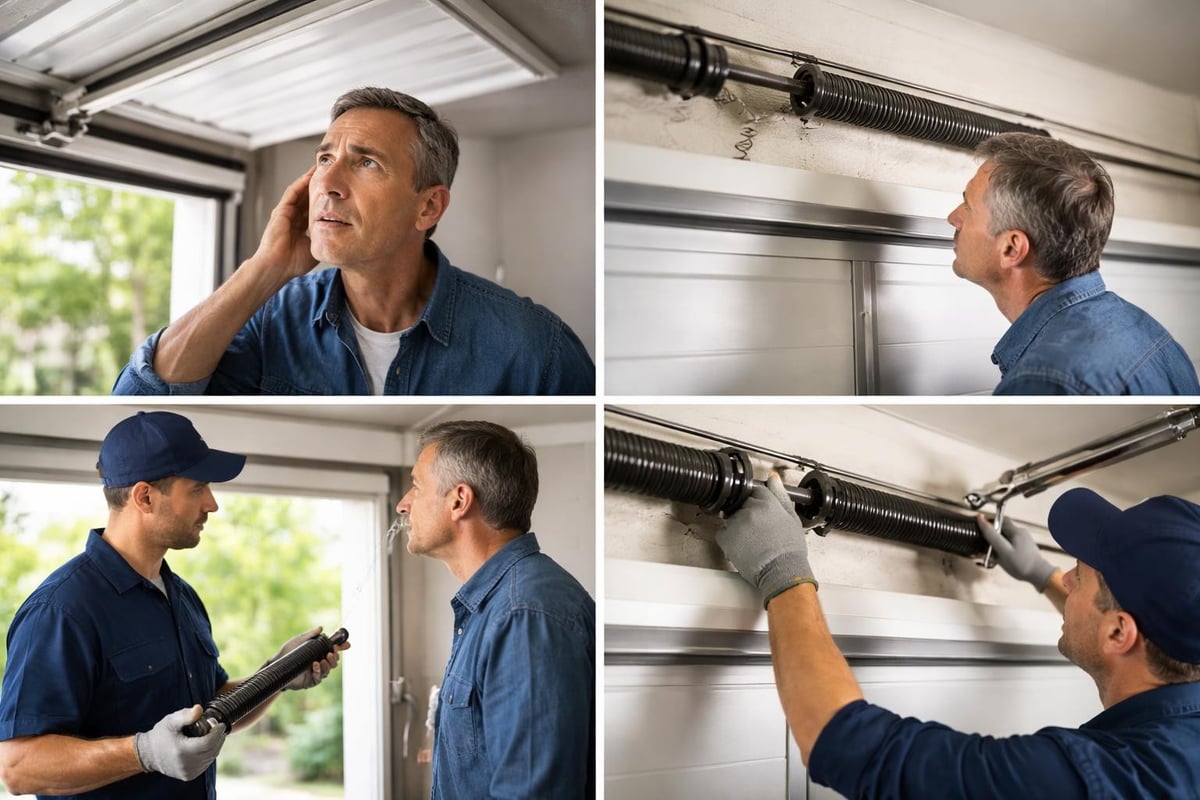
Understanding the consequences of postponing spring replacement motivates prompt action when problems arise.
Compounding Damage
Every day you operate or attempt to use a garage door with broken springs increases damage severity:
Opener motor degradation: Continuous overload reduces motor lifespan exponentially
Cable stress and failure: Cables wear rapidly without proper spring tension
Track damage: Unbalanced doors bend tracks and damage mounting hardware
Safety hazard accumulation: Risk of complete door failure increases daily
What starts as a $250 spring replacement can escalate to $1,500+ in comprehensive system repairs when left unaddressed.
Security and Convenience Issues
A non-functional garage door creates immediate practical problems:
- Vehicle access: Inability to park in or remove vehicles from the garage
- Home security: Compromised entry points vulnerable to intrusion
- Weather protection: Exposure of garage contents to rain, wind, and temperature extremes
- Daily disruption: Inconvenience affecting work schedules and household routines
For many families, the garage serves as the primary home entrance. Losing this access disrupts daily life significantly.
Insurance Considerations
Some homeowners insurance policies cover garage door repairs resulting from specific events, but coverage varies widely. Review your policy regarding:
Covered perils: Wind damage, vehicle impact, or vandalism may qualify
Normal wear exclusions: Most policies exclude routine maintenance and wear-related failures
Deductibles: Compare repair costs to policy deductibles before filing claims
Documentation requirements: Proper damage documentation supports potential claims
Consult your insurance agent when uncertain about coverage eligibility.
Modern Solutions and Technology Upgrades
When replacing broken springs, consider complementary upgrades that enhance performance, safety, and convenience.
Smart Opener Integration
Modern garage door technology offers features that prevent many spring-related problems:
Motor monitoring: Smart openers detect unusual resistance indicating spring wear
Force sensitivity: Advanced sensors prevent operation when springs fail
Smartphone alerts: Notifications warn of potential problems before complete failure
Usage tracking: Cycle counters help predict maintenance needs
These technologies integrate with overall smart home safety systems, providing comprehensive protection.
Complete System Evaluation
Spring failure often indicates that other components approach end-of-life. Professional technicians can assess:
- Opener age and condition: Motors over 15 years old may warrant replacement
- Door condition: Panels, insulation, and weatherstripping effectiveness
- Hardware status: Hinges, rollers, and cable wear
- Safety features: Photo-eye alignment and auto-reverse functionality
Addressing multiple issues during spring replacement prevents repeated service calls and maximizes long-term value.
Commercial Considerations for Kitsap County Businesses
Business owners face unique challenges when dealing with garage door opener spring broken scenarios affecting commercial operations.
Operational Impact
Commercial facilities depend on reliable door operation for:
- Loading dock access: Receiving and shipping operations halt without functional doors
- Customer service: Retail establishments lose accessibility and climate control
- Security: After-hours protection of inventory and equipment
- Compliance: Meeting building codes and safety regulations
Downtime directly impacts revenue, making rapid professional response essential for business continuity.
Heavy-Duty Spring Requirements
Commercial and industrial doors require specialized springs designed for increased cycle counts and heavier door weights:
| Door Type | Weight Range | Cycle Rating | Spring Type |
|---|---|---|---|
| Standard residential | 130-200 lbs | 10,000-20,000 | Single torsion |
| Heavy residential | 200-350 lbs | 10,000-25,000 | Double torsion |
| Light commercial | 350-600 lbs | 25,000-50,000 | Commercial torsion |
| Heavy commercial | 600-1,200 lbs | 50,000-100,000 | Industrial torsion |
Professional assessment ensures proper spring specification for commercial applications, preventing premature failure and equipment damage.
Dealing with a garage door opener spring broken situation requires immediate professional attention to prevent damage, ensure safety, and restore normal operation. Understanding spring function, recognizing failure symptoms, and avoiding DIY repair attempts protects your property and family from serious hazards. Whether you're facing an emergency repair or planning preventive maintenance for your Kitsap County home or business, NextLevel Garage Co. provides expert spring replacement, comprehensive system evaluation, and quality workmanship backed by clear communication and reliable service.