

When you hear a loud bang from your garage and suddenly your door won't open, you've likely experienced one of the most common garage door failures. A garage door spring snapped scenario affects thousands of homeowners across Kitsap County each year, leaving vehicles trapped and creating potential safety hazards. Understanding what happens when springs fail, recognizing the warning signs, and knowing the proper response can save you time, money, and prevent injuries. This comprehensive guide walks you through everything you need to know about broken garage door springs, from identification to professional repair options.
Understanding Garage Door Spring Systems
Garage door springs serve as the primary counterbalance mechanism that makes it possible to lift a door weighing 150 to 400 pounds with minimal effort. These hardworking components operate under extreme tension, supporting the door's full weight thousands of times throughout their lifespan.
Torsion Springs vs Extension Springs
Most modern residential garage doors use one of two spring systems, each with distinct characteristics and failure patterns.
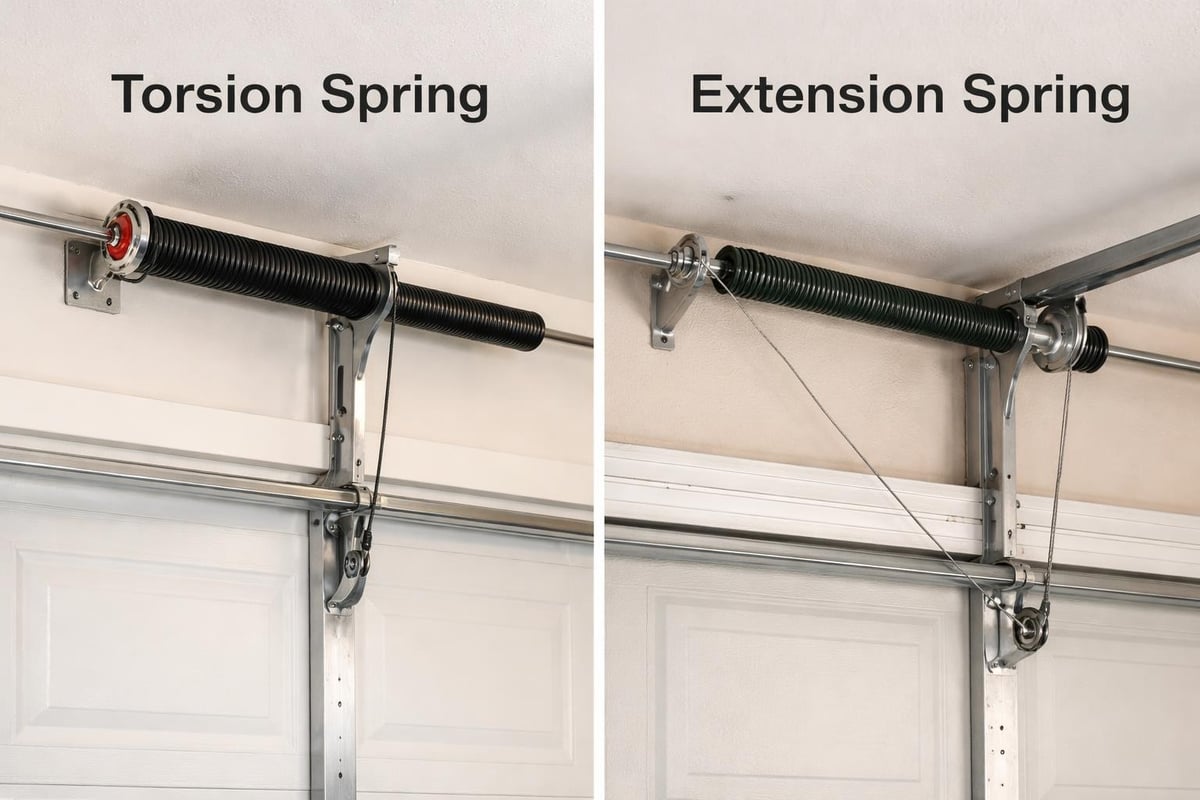
Torsion springs mount horizontally above the door opening on a metal shaft. They work by twisting and storing energy as the door closes, then releasing that energy to assist in lifting. These springs typically last 10,000 to 20,000 cycles, translating to roughly seven to twelve years for average households.
Extension springs run parallel to the door tracks on both sides, stretching and contracting as the door moves. When a garage door spring snapped in an extension system, you'll notice the door becomes extremely heavy on one side. These springs generally have a shorter lifespan than torsion springs and require safety cables running through their center.
| Spring Type | Location | Lifespan | Failure Pattern | Safety Features |
|---|---|---|---|---|
| Torsion | Above door on shaft | 10,000-20,000 cycles | Usually breaks in center | Contained on shaft |
| Extension | Along side tracks | 8,000-15,000 cycles | Stretches and snaps | Requires safety cables |
How Springs Fail Over Time
Spring failure rarely happens without warning. Metal fatigue accumulates with each cycle, creating microscopic stress fractures that gradually weaken the spring's structure. Temperature fluctuations in Pacific Northwest winters accelerate this process, as cold metal becomes more brittle and prone to sudden failure.
The springs in your garage door system work harder than you might realize. Every time you open and close your door, the springs complete one full cycle. For families who use their garage as the primary entrance, this can mean 1,500 or more cycles per year.
Immediate Signs Your Garage Door Spring Snapped
Recognizing a broken spring quickly helps prevent additional damage to your opener and other door components. Several distinctive symptoms indicate spring failure, some obvious and others more subtle.
The most dramatic indication is the loud bang that accompanies spring breakage. Homeowners often describe it as similar to a gunshot or firecracker, loud enough to wake people sleeping in bedrooms far from the garage. This noise results from the sudden release of stored energy as the spring breaks and unwinds violently.
Visual and Functional Indicators
After the initial break, you'll notice several operational changes:
- Door won't open or lifts only a few inches before stopping
- Garage door opener strains and may activate its safety disconnect
- Visible gap in the torsion spring above the door
- Door feels extremely heavy when attempting manual operation
- Crooked door position when one extension spring fails
- Cables hanging loose or wrapped around pulleys
When you inspect the spring itself, a broken torsion spring shows a clear separation, typically near the center or at the stationary cone connection point. The warning signs of spring failure become obvious once you know what to look for, but attempting to operate the door after spring failure can damage the opener permanently.
Why the Opener Can't Compensate
Modern garage door openers provide approximately 15 to 20 pounds of lifting force. The springs, however, do the real work by supporting 90 percent of the door's weight. When a garage door spring snapped, the opener attempts to lift the full weight alone, triggering its thermal overload protection or stripping plastic gears inside the motor housing.
Many homeowners on Bainbridge Island discover their spring failure when the opener won’t function properly, not realizing the spring is the underlying problem. Continuing to press the remote or wall button only creates additional damage that increases repair costs.
Common Causes of Spring Failure
Understanding why springs fail helps homeowners prevent premature breakage and plan for inevitable replacement. Several factors contribute to spring deterioration, some controllable and others simply the result of normal wear.
Cycle Life Expectancy
Every garage door spring has a rated cycle life determined by its wire size, coil diameter, and length. Standard springs sold with new doors typically carry a 10,000-cycle rating, while upgraded springs may offer 25,000 or even 50,000 cycles.
Calculate your spring usage:
- Count how many times you open and close your garage door daily
- Multiply by 365 for annual cycles
- Divide the spring's rated cycles by your annual usage
- The result shows your expected spring lifespan in years
For a family opening their garage door four times daily with standard 10,000-cycle springs, replacement becomes necessary around year seven. Households with multiple vehicles or those using the garage as their primary entrance may need replacement much sooner.
Environmental and Maintenance Factors
Kitsap County's marine climate creates specific challenges for garage door springs. Salt air accelerates corrosion, while temperature swings cause metal expansion and contraction that weakens spring structure over time.
Primary factors affecting spring longevity:
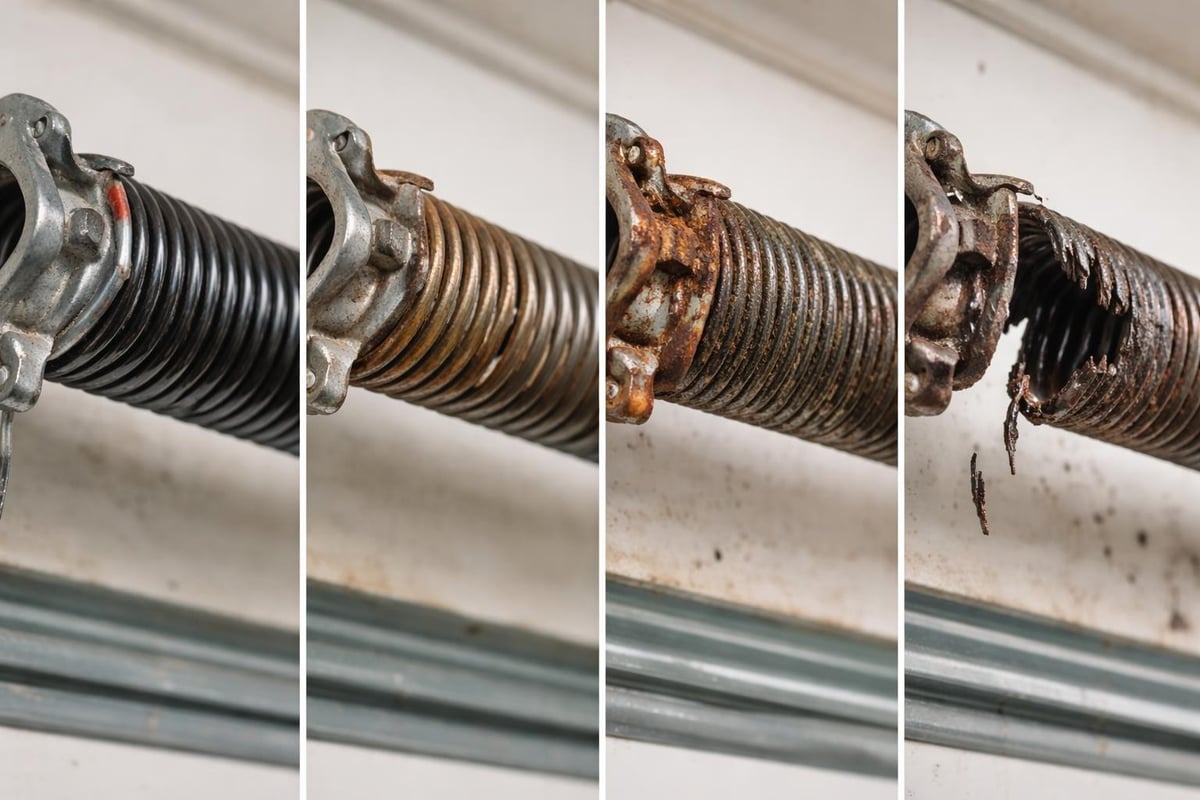
- Rust and corrosion from moisture exposure
- Lack of lubrication causing increased friction
- Improper installation creating uneven stress
- Wrong spring size for door weight
- Temperature extremes in unheated garages
- Poor quality springs using inferior materials
Regular maintenance extends spring life significantly. Annual garage door inspections should include spring lubrication with silicone-based spray and visual checks for rust, gaps, or deformation. These simple steps can add years to spring lifespan and provide early warning before catastrophic failure occurs.
What Happens When a Spring Breaks
The moment a garage door spring snapped, a cascade of mechanical changes affects your entire door system. Understanding these effects helps explain why professional repair is essential and why attempting DIY fixes creates serious safety risks.
Immediate Mechanical Effects
When the spring releases its stored tension, the door loses its counterbalance support instantly. If the door was closed at the time of failure, it remains safely on the ground. However, if the spring breaks while the door is open, the results can be dangerous.
A door held open by only the opener when the spring fails may drop suddenly. Modern openers have safety features that should prevent complete freefall, but the door will descend rapidly enough to damage vehicles, equipment, or injure anyone underneath. This scenario demonstrates why you should never work under an open garage door without proper support.
Effects on Other Door Components
Spring failure creates stress on components designed to work with a balanced door:
| Component | Impact of Broken Spring | Potential Damage |
|---|---|---|
| Opener | Excessive load, thermal shutdown | Stripped gears, burned motor |
| Cables | Increased tension, rapid wear | Fraying, breakage |
| Rollers | Uneven pressure, binding | Cracked wheels, bent stems |
| Tracks | Misalignment from door weight | Bent sections, loose mounting |
| Panels | Stress at hinge points | Cracked or dented panels |
The interconnected nature of garage door systems means that operating with a broken spring accelerates wear throughout the mechanism. What starts as a simple spring replacement can become a major repair project if the door continues to be used improperly.
Safety Concerns and Risks
The dangers associated with broken garage door springs extend beyond inconvenience. These components store enough energy to cause serious injury or death when handled improperly, making professional repair not just recommended but essential for household safety.
Tension and Energy Release
A standard torsion spring on a two-car garage door may store over 200 foot-pounds of energy. When wound, this spring exerts hundreds of pounds of rotational force on the shaft. If the winding cone slips or the spring unwraps unexpectedly during DIY repair, the rotating shaft can strike with bone-breaking force.
Extension springs present different but equally serious hazards. When stretched, these springs contain massive linear force. A breaking extension spring can fly across the garage with enough velocity to penetrate drywall or cause severe injury. This is why safety cables through the spring center became standard practice, containing the spring if it breaks.
Why DIY Spring Replacement Is Dangerous
Hardware stores sell garage door springs, and numerous online videos demonstrate replacement procedures. However, professionals strongly advise against homeowner spring replacement for compelling reasons:
- Winding bars must be inserted correctly and turned precisely
- Wrong spring size or turns creates immediate failure risk
- Specialized tools prevent slippage during tensioning
- One mistake can release hundreds of pounds of force
- No margin for error in measurements or installation
- Matching springs requires specific calculations
Professional technicians receive extensive training in spring selection, installation, and safety procedures. They carry the proper tools, understand spring calculations, and maintain insurance coverage for the inherent risks. For homeowners throughout Kitsap County, the cost savings of DIY repair never justify the injury risk.
Steps to Take After Your Spring Breaks
When you discover a garage door spring snapped, taking the right immediate actions prevents further damage and maintains safety until professional repair can be completed. Follow this systematic approach to handle the situation properly.
Immediate Response Protocol
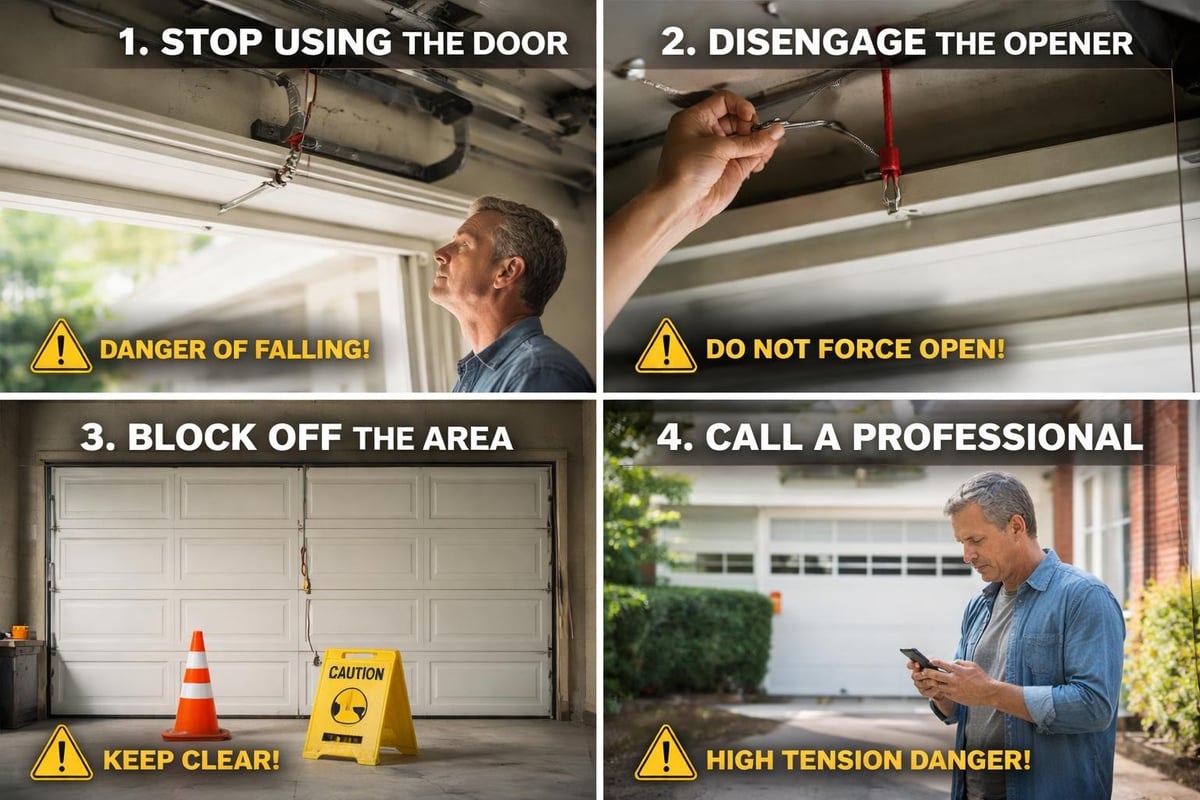
Step 1: Stop using the door immediately. Disconnect the opener by pulling the emergency release handle (usually a red cord hanging from the trolley). This prevents accidental operation and protects the opener motor from damage.
Step 2: Secure the area. Keep children and pets away from the garage door. If the door is partially open, do not attempt to close it. If it's closed, leave it that way until repair.
Step 3: Do not attempt manual operation. A door without spring support weighs its full amount, making it extremely dangerous to lift manually. Attempting to do so can cause the door to fall, crushing fingers or causing back injury.
Step 4: Check for additional damage. Look for cables that may have come off pulleys, bent track sections, or panels that shifted when the spring failed. Document everything with photos for repair estimates.
Step 5: Contact professional repair service. Schedule spring replacement as soon as possible. Emergency garage door repair services can often respond same-day for urgent situations where vehicles are trapped.
Temporary Access Solutions
If your vehicle is trapped inside the garage when the garage door spring snapped, you have limited options. Never attempt to lift the door yourself or recruit neighbors to help. The weight and potential for sudden dropping make this extremely dangerous.
Instead, consider these safer alternatives:
- Use another exit from the garage if available (side door or rear access)
- Remove items blocking alternate vehicle access through yard or driveway
- Arrange alternative transportation until professional repair
- Request emergency service if immediate vehicle access is critical
Some homeowners ask whether they can manually open their garage door in emergencies, but this applies only to functioning doors during power outages, not doors with broken springs. The safety mechanisms that make manual operation possible require the spring counterbalance to work properly.
Professional Spring Replacement Process
Understanding what happens during professional spring replacement helps homeowners appreciate the complexity involved and the value of expert service. Qualified technicians follow specific procedures to ensure safe, lasting repairs that restore proper door operation.
Assessment and Spring Selection
Professional repair begins with comprehensive door assessment. Technicians measure the door dimensions, weigh the door or calculate weight from panel specifications, and determine the correct spring specifications needed. Spring selection requires precise calculations based on multiple factors:
- Door weight and height
- Track radius and type
- Current spring wire size and length
- Number of springs required
- Cycle rating needed
Many professionals recommend upgrading to higher-cycle springs during replacement, especially if the original springs failed prematurely or the homeowner wants extended service life. The incremental cost of upgraded springs is minimal compared to the labor involved in replacement.
Installation and Balancing
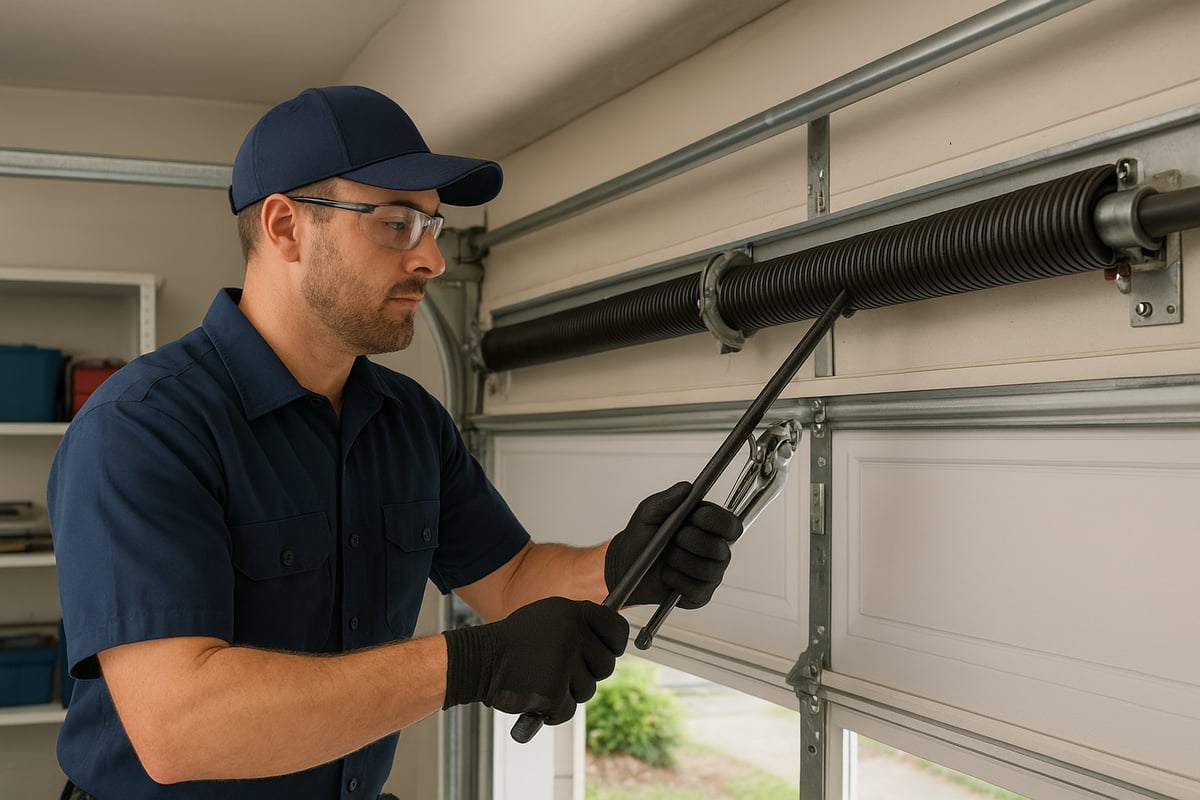
The actual spring installation requires specialized tools and careful attention to safety protocols. For torsion springs, technicians:
- Secure the door in the closed position with locking pliers on the track
- Release tension from the old spring using winding bars
- Remove the broken spring and inspect the shaft, bearings, and cones
- Install new springs oriented in the correct direction for door operation
- Wind the springs to precise tension based on door weight
- Test balance by disconnecting the opener and manually lifting the door
- Adjust tension until the door holds position at any height
- Reconnect opener and test full operation cycle
NextLevel Garage Co. provides expert Garage Door Spring Repair throughout Kitsap County, ensuring your door receives proper spring installation with the right tension for smooth, safe operation. Our technicians carry a complete inventory of spring sizes, allowing same-visit completion for most repairs.
Extension spring replacement follows similar safety protocols but involves different mounting hardware. Technicians must ensure safety cables run through the spring center and that pulleys and cables are in good condition before completing the installation.
Cost Factors and Service Expectations
Understanding the investment required for professional spring replacement helps homeowners budget appropriately and recognize fair pricing. Several variables affect the final cost, making estimates more useful than fixed price quotes.
Typical Price Ranges for Spring Replacement
For most residential single and double garage doors, spring replacement costs in the Pacific Northwest range from $200 to $400 for professional service. This includes labor, springs, and any small hardware items like cones or bearings that need replacement.
Cost variation factors:
- Number of springs (one vs. two)
- Spring quality/cycle rating (standard vs. high-cycle)
- Door size and weight (heavier doors need larger springs)
- Spring type (torsion typically costs more than extension)
- Additional repairs needed (cables, rollers, bearings)
- Emergency service timing (after-hours or weekend calls)
Homeowners should be cautious of unusually low quotes that may indicate inferior spring quality or incomplete service. Quality springs from reputable manufacturers cost more than hardware store alternatives but deliver significantly longer service life and more reliable performance.
What's Included in Professional Service
Reputable garage door service companies provide comprehensive spring replacement that addresses the entire door system, not just the broken spring. Your service should include:
| Service Component | Purpose | Value |
|---|---|---|
| Complete door inspection | Identify other wear or damage | Prevents future failures |
| Both springs replaced | Ensures balanced operation | Second spring near failure anyway |
| Proper spring sizing | Matches door weight exactly | Smooth operation, longer life |
| Balance testing | Verifies correct tension | Reduces opener strain |
| Safety inspection | Checks sensors, cables, hardware | Prevents accidents |
| Operation demonstration | Confirms proper function | Customer confidence |
Most professionals recommend replacing both springs even when only one broke. Since springs wear at similar rates, the second spring likely approaches failure as well. Replacing both prevents a second service call weeks or months later when the other spring fails.
Preventing Future Spring Failures
While garage door springs will eventually need replacement regardless of maintenance quality, proper care significantly extends their lifespan and helps identify problems before catastrophic failure occurs. Implementing a regular maintenance schedule protects your investment and maintains reliable operation.
Regular Maintenance Schedule
Creating a systematic maintenance routine takes minimal time but delivers substantial benefits. Schedule these tasks at specific intervals throughout the year:
Monthly visual inspection:
- Look for rust, corrosion, or worn coils on springs
- Check for loose hardware on cones, brackets, and cables
- Listen for unusual noises during operation
- Observe balance by disconnecting opener and testing manual lift
Quarterly lubrication:
- Apply silicone-based spray to springs, hinges, and rollers
- Wipe excess lubricant to prevent dust accumulation
- Avoid using WD-40 or similar penetrating oils (wrong viscosity)
- Include the opener chain or belt in lubrication routine
Annual professional inspection:
Many garage door companies offer annual maintenance programs that include comprehensive inspection, adjustment, and minor repairs. These services typically cost $75 to $150 but catch developing problems before they cause door failure or safety hazards.
Environmental Protection
Kitsap County's coastal location means garage door components face constant moisture exposure. Taking steps to protect springs from environmental damage extends their service life considerably.
Protective measures:
- Maintain adequate garage ventilation to reduce humidity
- Apply rust-preventive coating to springs during installation
- Seal gaps around door edges to minimize salt air intrusion
- Consider climate-controlled garage space for valuable vehicles
- Replace standard springs with coated or stainless options in harsh environments
When selecting a new garage door or planning garage upgrades, consider how insulation and weather-sealing affect the environment where springs operate. A more controlled environment reduces corrosion and temperature stress.
Recognizing Warning Signs Before Complete Failure
Garage door springs rarely break without any advance indication. Learning to recognize the 15 warning signs of impending spring failure allows proactive replacement before you experience a garage door spring snapped emergency.
Early Warning Indicators
Springs approaching the end of their service life exhibit subtle changes in appearance and performance:
- Visible gaps between coils that weren't present previously
- Rust formation especially near the ends where moisture collects
- Squeaking or grinding sounds during door operation
- Slower door movement as spring tension weakens
- Incomplete opening with the door stopping short of fully open position
- Door drifts downward when released at partially open positions
When you notice these symptoms, schedule spring replacement at your convenience rather than waiting for emergency failure. Planned replacement costs less than emergency service and prevents the inconvenience of being unable to access your garage when you need it most.
Testing Door Balance
Proper door balance indicates healthy spring condition. Perform this simple test quarterly:
- Disconnect the opener by pulling the emergency release
- Manually lift the door halfway (about three to four feet)
- Release the door and observe its behavior
- A properly balanced door stays in place or moves very slowly
- A door that falls indicates weak or broken springs
- A door that rises suggests too much spring tension
If your door fails this balance test, contact a professional for spring assessment and adjustment. Operating an unbalanced door strains the opener and accelerates wear on all components, ultimately leading to more expensive repairs when multiple parts fail simultaneously.
Understanding common garage door problems helps homeowners distinguish spring issues from other mechanical failures. Some symptoms that seem like spring problems actually indicate opener malfunctions, track misalignment, or other issues requiring different repairs.
When your garage door spring snapped, quick action and professional repair ensure safe restoration of normal operation without risking injury or causing additional damage to your door system. Understanding spring function, recognizing failure signs, and maintaining your door properly extends component life and prevents unexpected failures. NextLevel Garage Co. serves homeowners and businesses throughout Kitsap County with expert garage door spring replacement, comprehensive inspections, and quality repairs that restore reliable operation. Contact our team today for prompt, professional service that gets your garage door working safely again.