

When a single panel of your garage door sustains damage from an errant basketball, vehicle impact, or weather-related wear, you might wonder whether replacing just that section makes financial and practical sense. For homeowners across Kitsap County and Bainbridge Island, understanding garage door section replacement can save thousands of dollars compared to full door replacement while restoring both function and curb appeal. This targeted repair approach addresses localized damage without the expense and disruption of installing an entirely new door system, though success depends heavily on factors like panel availability, door age, and damage severity.
Understanding Garage Door Section Replacement
Garage door section replacement involves removing and replacing individual horizontal panels rather than the entire door assembly. Modern sectional garage doors consist of multiple interlocking panels that move along tracks using roller assemblies and are counterbalanced by spring systems.
Each section typically measures between 18 and 24 inches in height and spans the full width of your door opening. These panels connect through hinges and feature weatherstripping between sections to create an insulated barrier. Understanding how these sections work together helps homeowners appreciate both the repair possibilities and limitations.
When Section Replacement Makes Sense
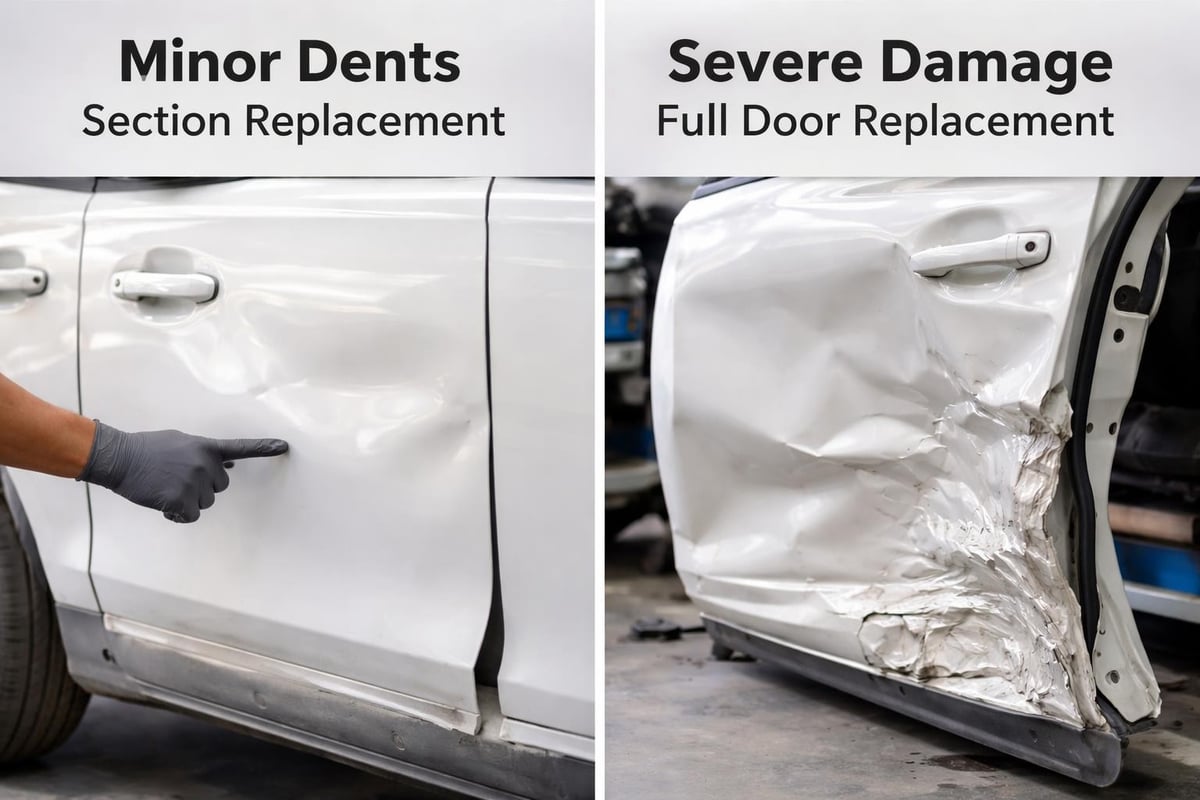
Replacing individual sections proves most practical under specific circumstances. Isolated damage confined to one or two panels without affecting the door's structural integrity represents the ideal scenario for this repair approach.
Consider section replacement when:
- Damage affects only one or two adjacent panels
- The door is less than 10 years old with readily available matching sections
- The door's overall condition remains good with functional hardware
- Matching panels are available from the original manufacturer
- The damaged section hasn't compromised the track alignment or spring balance
Cost considerations play a significant role in this decision. Single section replacement typically costs between $200 and $400 for materials and labor, while complete door replacement ranges from $800 to $4,000 depending on door size and quality. For homeowners looking to maintain their garage doors year-round, addressing damage promptly prevents more extensive repairs.
Assessing Whether Replacement Is Viable
Before committing to garage door section replacement, several technical and practical factors determine feasibility. The most critical consideration involves panel availability from your door's original manufacturer.
| Factor | Replacement Feasible | Full Replacement Better |
|---|---|---|
| Door Age | Less than 10 years | More than 15 years |
| Damage Extent | 1-2 panels | 3+ panels or structural |
| Panel Availability | In stock or orderable | Discontinued model |
| Color Match | Exact match available | Significant fading |
| Overall Condition | Good working order | Multiple worn components |
Manufacturers typically maintain panel inventory for current models and discontinue older designs after 10-15 years. Even when panels remain available, color matching challenges can create aesthetic concerns as UV exposure fades original panels over time.
Color and Style Matching Challenges
Achieving a seamless appearance after garage door section replacement requires matching not just the color but also the texture, embossing pattern, and finish of existing panels. Steel doors particularly show weathering effects including chalking, fading, and oxidation that make new panels stand out noticeably.
Wood and composite doors face similar challenges. Natural wood grain variations mean even same-species replacements rarely match perfectly. Composite materials from different production runs may show subtle texture or color variations under certain lighting conditions.
Professional assessment helps determine whether aesthetic differences will prove acceptable or whether painting the entire door post-replacement provides a better solution. Some homeowners choose to replace all panels on the street-facing side while leaving rear sections original, balancing cost with appearance.
The Section Replacement Process
Garage door section replacement demands precision, proper tools, and critical safety awareness. The process involves working with high-tension spring systems that store enough energy to cause severe injury or death if mishandled.
Essential Safety Considerations
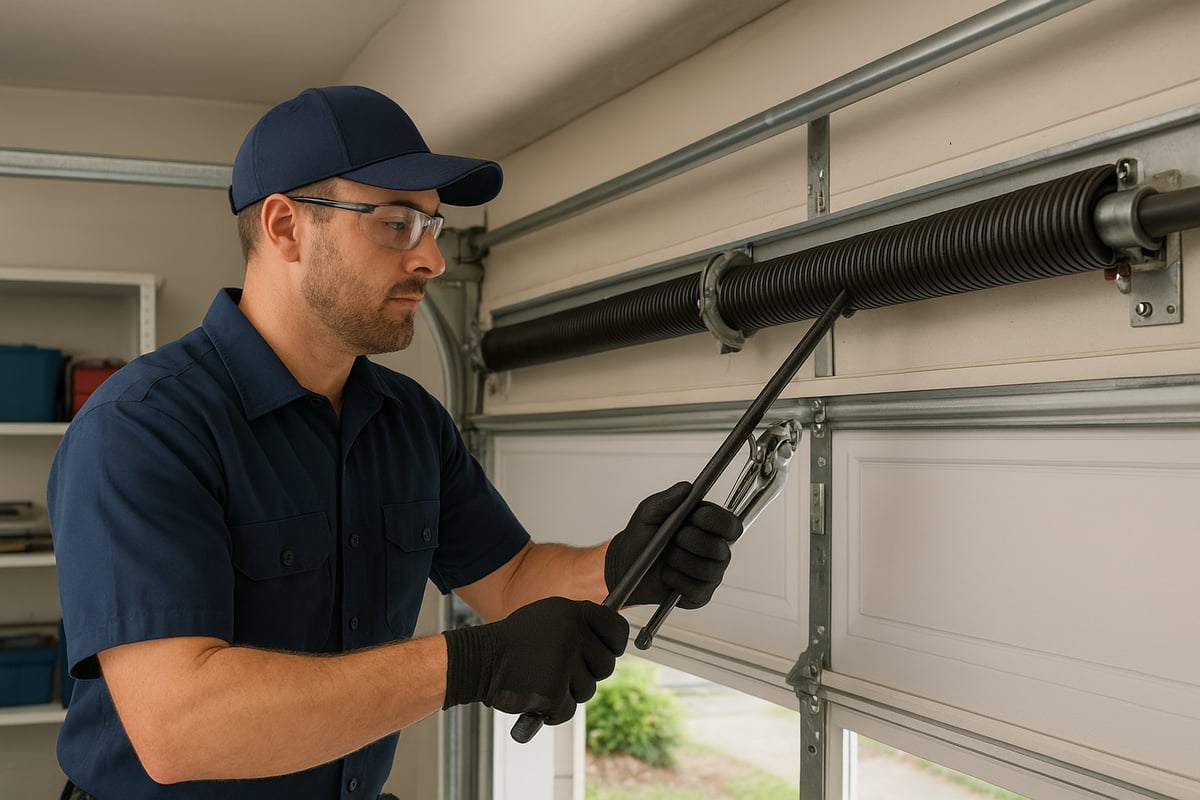
Spring tension represents the primary hazard during any garage door repair. Torsion springs mounted above the door maintain 150-250 pounds of force, while extension springs along the tracks carry similar loads. Proper safety precautions include releasing spring tension before beginning panel removal.
Never attempt section replacement without:
- Proper safety equipment including protective eyewear, heavy work gloves, and steel-toed boots
- Correct tools such as winding bars, locking pliers, and C-clamps rated for garage door work
- Assistant support as panels weigh 40-75 pounds each and require balanced handling
- Spring tension release procedures specific to your door's spring configuration
- Track securing using C-clamps to prevent unexpected door movement
For most homeowners, the risks associated with DIY garage door section replacement outweigh potential cost savings. Professional technicians carry specialized tools, maintain proper insurance, and understand the nuanced adjustments required for safe, lasting repairs.
Step-by-Step Replacement Overview
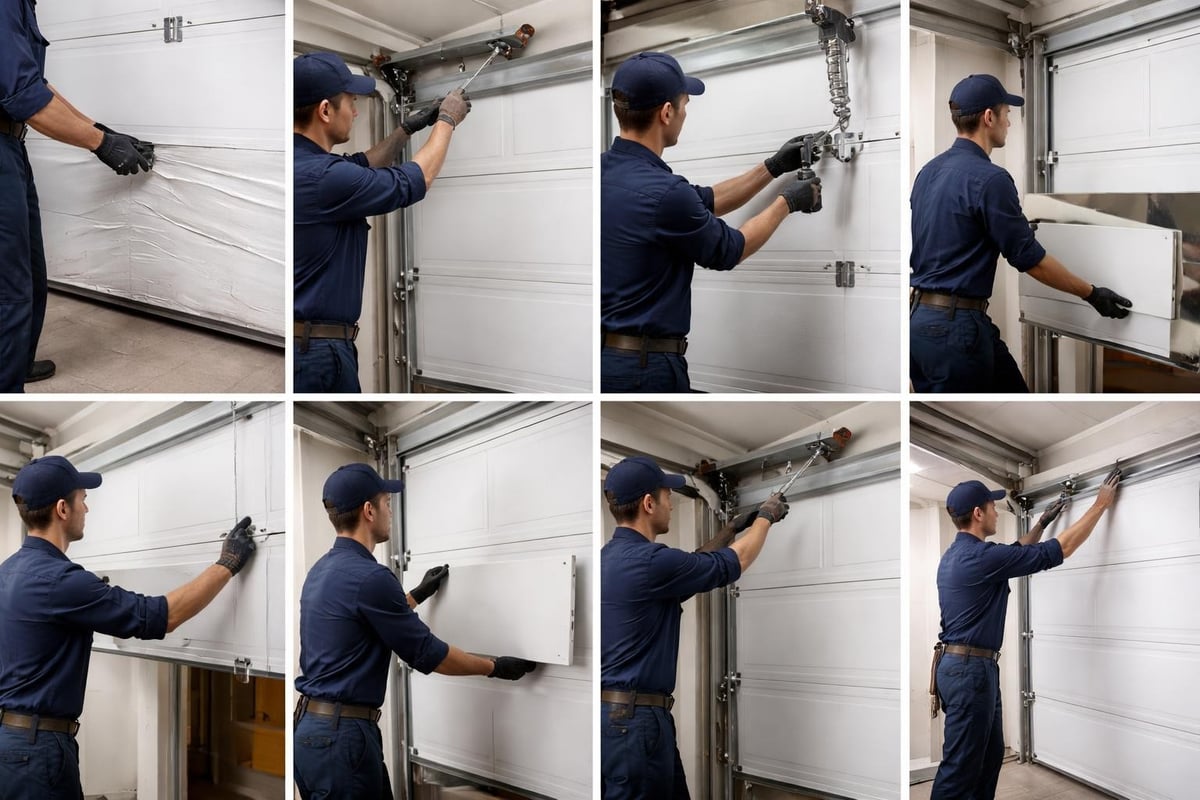
Professional garage door section replacement follows a systematic approach. The complete replacement process typically requires 2-4 hours depending on door size and damage complexity.
Preparation phase:
- Disconnect the automatic opener to prevent accidental activation
- Secure the door in a partially open position using C-clamps on the tracks
- Release torsion spring tension using proper winding bars
- Document cable positioning and track alignment for reassembly
Removal phase:
- Remove the top fixture bracket if replacing upper sections
- Disconnect hinges connecting the damaged section to adjacent panels
- Carefully slide rollers out of tracks while supporting the panel weight
- Extract the damaged section from the door assembly
Installation phase:
- Position the new section with proper alignment to adjacent panels
- Insert rollers into tracks at the correct depth
- Secure hinges to connect the new section with existing panels
- Verify weatherstripping creates proper seals between sections
Adjustment phase:
- Restore spring tension incrementally while testing door balance
- Adjust cable tension to ensure even lifting on both sides
- Lubricate all moving parts including hinges, rollers, and tracks
- Test door operation through multiple cycles before reconnecting the opener
Addressing garage door issues promptly helps maintain property value and security. NextLevel Garage Co. brings specialized expertise to every repair, ensuring your garage door section replacement meets manufacturer specifications and safety standards while providing the long-term performance Kitsap County homeowners expect.
Cost Factors and Budgeting
Understanding the financial implications of garage door section replacement helps homeowners make informed repair-versus-replace decisions. Multiple variables influence the total project cost beyond simple panel pricing.
Material and Labor Cost Breakdown
Panel costs vary significantly based on door construction, size, and manufacturer. Basic steel sections for single-car doors range from $150 to $250, while insulated panels cost $200-$350. Premium materials including wood composites, custom designs, or commercial-grade sections may exceed $500 per panel.
Labor charges typically add $150-$300 depending on job complexity and regional pricing. Factors affecting labor costs include:
- Panel location with bottom sections requiring full door disassembly
- Spring system type as torsion springs demand more specialized handling than extension springs
- Track condition with bent or misaligned tracks requiring additional correction
- Hardware replacement when hinges, rollers, or brackets show wear
- Emergency service with after-hours or weekend calls carrying premium rates
| Cost Component | Low Range | High Range |
|---|---|---|
| Single Panel | $150 | $500 |
| Labor | $150 | $300 |
| Hardware | $25 | $100 |
| Track Adjustment | $0 | $150 |
| Total | $325 | $1,050 |
For homeowners exploring garage door installation cost comparisons, section replacement typically costs 30-50% of complete door replacement when feasible, making it an attractive option for newer doors with limited damage.
Hidden Costs and Considerations
Several indirect expenses often surface during garage door section replacement projects. Matching challenges may require painting the entire door at an additional $200-$400 to achieve uniform appearance.
Structural issues discovered during panel removal can escalate costs significantly. Bent tracks requiring correction add $200-$400, while spring replacement due to wear adds $150-$300. If the damaged section has stressed the opener mechanism, motor repairs or replacement might become necessary.
Transportation and disposal fees for the damaged section typically add $25-$75 to the project total. Some municipalities require proper disposal of insulation materials or specific panel types, particularly those manufactured before 2000 that might contain regulated substances.
Alternative Solutions to Section Replacement
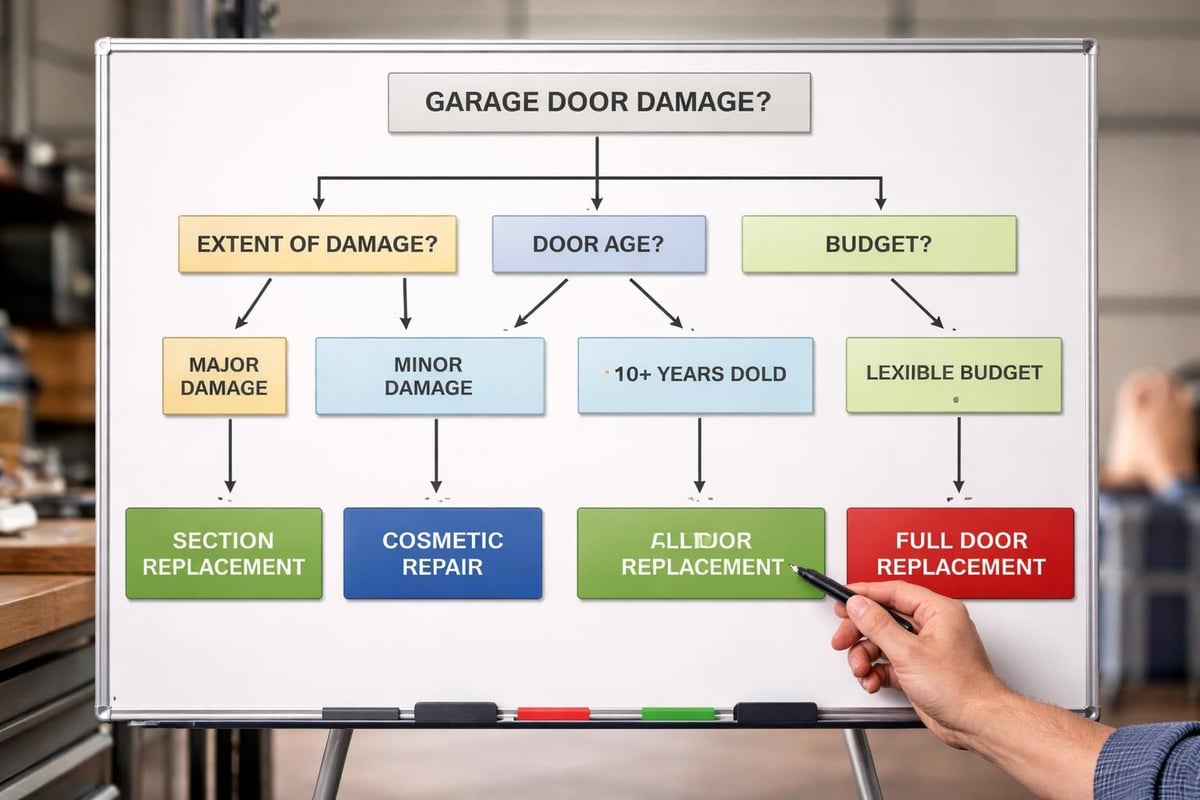
When garage door section replacement proves impractical due to availability issues, excessive cost, or poor door condition, homeowners have several alternative approaches worth considering.
Full Door Replacement Versus Repair
Complete door replacement eliminates matching concerns while providing opportunities to upgrade insulation, style, and functionality. Modern garage doors offer significantly improved energy efficiency, noise reduction, and smart home integration compared to models from even a decade ago.
Decision factors favoring full replacement:
- Multiple damaged sections making individual replacement costs approach new door pricing
- Discontinued models where matching sections prove unavailable regardless of price
- Overall door age exceeding 15-20 years with multiple worn components
- Energy efficiency upgrades desired to reduce heating and cooling costs
- Style modernization to improve curb appeal and property value
Property owners considering upgrades should explore how to choose the best garage door for your home based on climate conditions, usage patterns, and architectural compatibility. Kitsap County's marine environment particularly benefits from doors with enhanced weatherstripping and corrosion-resistant materials.
Cosmetic Repair Options
Minor damage sometimes allows for cosmetic restoration rather than garage door section replacement. Small dents in steel panels often respond well to professional dent removal techniques similar to automotive paintless dent repair.
Surface damage solutions include:
- Professional dent removal using specialized tools for shallow impacts ($75-$200 per panel)
- Body filler and repainting for deeper damage affecting surface finish ($150-$300 per panel)
- Vinyl overlay systems providing decorative covering for minor cosmetic issues ($200-$400 for full door)
- Sectional refinishing including sanding, priming, and painting affected areas ($100-$250)
These approaches work best when structural integrity remains intact and damage affects appearance rather than function. Warning signs requiring more extensive intervention include panels that bow outward, cracks compromising weathersealing, or damage affecting roller mounting points.
Professional Versus DIY Replacement
The choice between professional installation and do-it-yourself garage door section replacement involves weighing cost savings against significant safety risks and technical challenges. While capable homeowners successfully complete many garage projects, door work presents unique hazards requiring specialized knowledge.
Why Professional Installation Matters
Safety expertise represents the primary advantage of professional service. Technicians undergo extensive training in spring tension management, understand manufacturer-specific requirements, and carry insurance protecting homeowners from liability for work-related injuries or property damage.
Professional advantages include:
- Proper spring tension calculation ensuring correct counterbalance for safe operation
- Specialized tools including calibrated winding bars, spring tension gauges, and panel alignment jigs
- Warranty protection as many manufacturers void warranties for improper DIY installation
- Efficiency completing in hours what might take inexperienced homeowners a full weekend
- Problem diagnosis identifying underlying issues that caused or accompanied panel damage
Licensed contractors also ensure compliance with local building codes and safety standards. Commercial garage door panel replacement particularly demands professional expertise given the larger panels, heavier springs, and liability considerations for business properties.
When DIY Might Be Appropriate
Limited scenarios exist where experienced homeowners with proper tools and thorough research might reasonably attempt garage door section replacement. Extension spring systems on lightweight, single-car doors present significantly lower risk than torsion spring configurations.
DIY considerations:
- Experience level with previous successful garage door repairs or similar mechanical projects
- Available assistance from capable helpers who understand the safety risks involved
- Tool access including all specialized equipment rather than improvised substitutes
- Time flexibility allowing methodical work without rushing through critical safety steps
- Research commitment including reviewing comprehensive replacement guides and manufacturer instructions
Even under ideal circumstances, the $150-$300 labor savings rarely justify the injury risk for most homeowners. Professional installation provides peace of mind, proper warranty coverage, and assurance that the repaired door operates safely for family members and visitors.
Maintaining Your Garage Door After Section Replacement
Following garage door section replacement, proper maintenance extends the repair's lifespan and prevents future damage. Regular care also helps new sections blend with older panels as natural weathering occurs uniformly across the entire door.
Regular Inspection and Care
Monthly visual inspections catch developing issues before they require expensive repairs. Check weatherstripping between all sections for compression, cracking, or separation that allows water infiltration or air leakage.
Essential maintenance tasks include:
- Lubrication every 90 days using silicone-based spray on hinges, rollers, springs, and tracks
- Balance testing twice yearly by disconnecting the opener and manually lifting the door halfway
- Hardware tightening quarterly as vibration gradually loosens bolts and screws
- Roller inspection for wear patterns, flat spots, or binding within track channels
- Paint touch-up addressing chips or scratches before rust develops on steel components
For comprehensive maintenance guidance, homeowners should consult resources on overhead door maintenance specific to their door type and local climate conditions. Bainbridge Island's marine environment accelerates corrosion on unprotected metal surfaces, making regular inspection particularly important.
Protecting Your Investment
Preventive measures minimize the likelihood of future damage requiring additional garage door section replacement. Install protective bollards or padding in garages where vehicle clearance remains tight or teenage drivers are learning vehicle handling skills.
Consider these protection strategies:
- Parking guides including floor markings, mirror positioning aids, or laser alignment systems
- Lower section protection using rubber bumpers or protective films on the bottom two panels
- Weather monitoring closing doors during severe wind events that can blow debris against panels
- Professional servicing annually to address spring wear, cable fraying, and opener calibration
Property owners dealing with recurring garage door problems should evaluate whether underlying issues like foundation settling, track misalignment, or opener malfunction contribute to panel stress and damage.
Frequently Asked Questions About Section Replacement
Homeowners across Kitsap County regularly ask similar questions when evaluating garage door section replacement options. Understanding common concerns helps property owners make confident decisions about their repair approach.
How Long Does Replaced Section Last
Properly installed replacement sections typically match the lifespan of the original door when maintained correctly. Steel panels generally last 15-30 years, while wood sections require more frequent maintenance but can endure 20-40 years with proper care.
Factors affecting longevity include:
- Material quality with heavier gauge steel and premium finishes outlasting economy options
- Installation precision ensuring proper alignment reduces stress on hinges and rollers
- Climate exposure as marine environments accelerate corrosion compared to dry climates
- Maintenance consistency with regular lubrication and paint touch-up preventing premature failure
- Usage frequency given that doors operating 10+ cycles daily experience more wear
Panel replacement considerations extend beyond immediate functionality to include how the repair integrates with the door's overall remaining service life. Replacing sections on a door nearing end-of-life may prove economically questionable compared to complete replacement.
Can Any Garage Door Have Sections Replaced
Sectional doors designed with horizontal panels obviously accommodate individual section replacement, while one-piece tilt-up doors cannot. Even among sectional designs, some manufacturers use proprietary connection systems complicating or preventing section swapping.
Compatibility considerations include:
- Panel design matching the specific hinge placement, roller configuration, and thickness
- Track compatibility as section depth must match track dimensions precisely
- Spring system requiring recalculation if replacement panel weight differs from original
- Manufacturer support with some brands offering excellent parts availability while others discontinue quickly
Homeowners uncertain about their door's replacement compatibility should consult garage door experts who can identify the manufacturer, model, and parts availability before damage occurs. This proactive approach streamlines emergency repairs when panels sustain unexpected damage.
Will Replaced Sections Match Perfectly
Perfect matching proves extremely difficult due to weathering, fading, and manufacturing variations. Even new panels from the same production run show subtle differences in finish texture, color depth, and reflectivity compared to sections installed years earlier.
Matching strategies:
- Original manufacturer panels provide the best color and texture compatibility
- Full-side replacement creating uniform appearance on the most visible door face
- Professional painting applying fresh finish to the entire door after section replacement
- Strategic positioning placing new sections in less visible locations when possible
- Accelerated weathering allowing time for UV exposure to fade new sections naturally
Many homeowners find that while replacement panels initially appear noticeably different, the contrast diminishes over 6-12 months as weathering creates more uniform appearance. Comprehensive replacement FAQs address additional common concerns about color matching and aesthetic outcomes.
Garage door section replacement offers a cost-effective solution for localized damage when panel availability, door age, and overall condition align favorably. Whether you're dealing with accident damage, weather-related wear, or normal aging, understanding your options helps you make the best decision for your property and budget. When you need expert guidance on garage door section replacement or any garage service throughout Kitsap County, NextLevel Garage Co. delivers professional assessment, quality workmanship, and transparent communication that Bainbridge Island homeowners trust for all their garage needs.